
Expert Femur Nail: 7 Essential Facts About Femur Fixation
Expert Femur Nail is an intramedullary implant used as part of a femur fracture fixation system. Understanding its anatomical design, locking configurations, dimensions, and compatible components helps surgeons and purchasing teams evaluate the product for appropriately selected cases.
A useful product assessment goes beyond the phrase “femur nailing system.” Hospitals need an identifiable configuration, distributors need accurate ordering information, and clinical teams need the applicable instructions for use.
This guide explains seven important considerations using the Stahlmann Pro catalogue information. Visit the Expert Femur Nail product page for product enquiries and available configurations.
1. What Is an Expert Femur Nail?
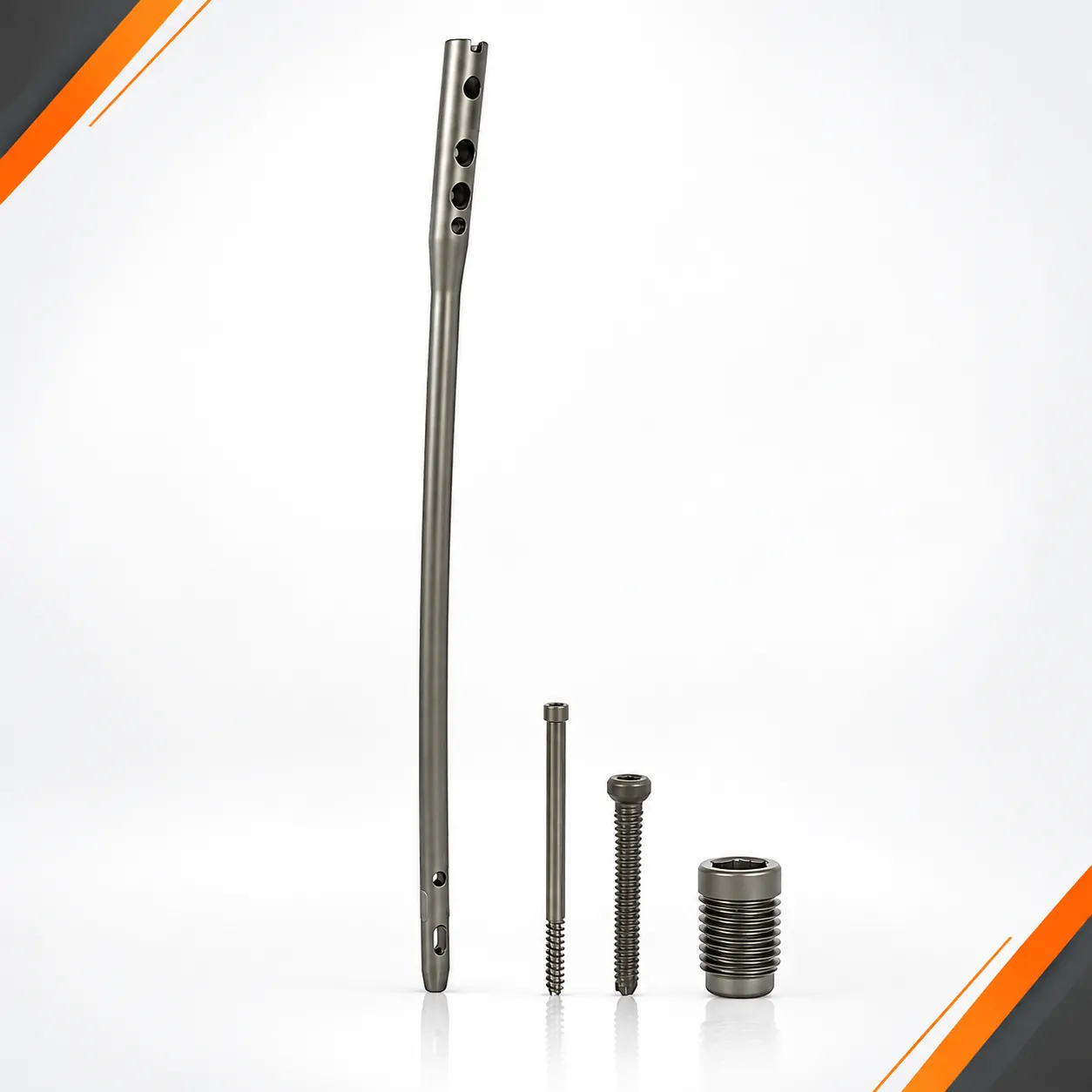
An Expert Femur Nail is positioned within the femur’s medullary canal and used with compatible locking components. The nail and screws form a fixation construct intended to support the selected relationship between fracture fragments.
The product name identifies a system, but it does not establish suitability for every femur fracture. Fracture location, anatomy, bone quality, and the available fixation points all affect implant selection.
General intramedullary nailing principles should also be distinguished from product-specific indications. A clinical reference describing one configuration does not automatically validate a different implant or surgical approach.
For related products, explore the Stahlmann Pro Intramedullary Nailing System.
2. Why Does Anatomical Design Matter?
The supplied catalogue describes a cannulated anatomical nail with a 5° proximal bend and separate left and right configurations.
These features are relevant to product selection because a femur nail must be evaluated against the planned entry approach and the patient’s anatomy. An anatomical profile should not be described as providing a perfect fit in every patient.
The catalogue also lists a proximal diameter of 13.5 mm, separate from the available shaft diameters. This distinction matters when reviewing implant dimensions.
Left and Right Configurations
The side designation forms part of the product code. A complete order should identify the required side, shaft diameter, length, and quantity.
For example, specifying only “10 mm femur nail” leaves the order incomplete. Purchasing teams should include the length and left or right configuration requested by the clinical team.
Cannulated Construction
Cannulation accommodates guide-wire-assisted insertion when used with the appropriate compatible instruments. It does not establish compatibility with another system’s guide wires, handles, or targeting equipment.
3. What Are the Expert Femur Nail Locking Options?
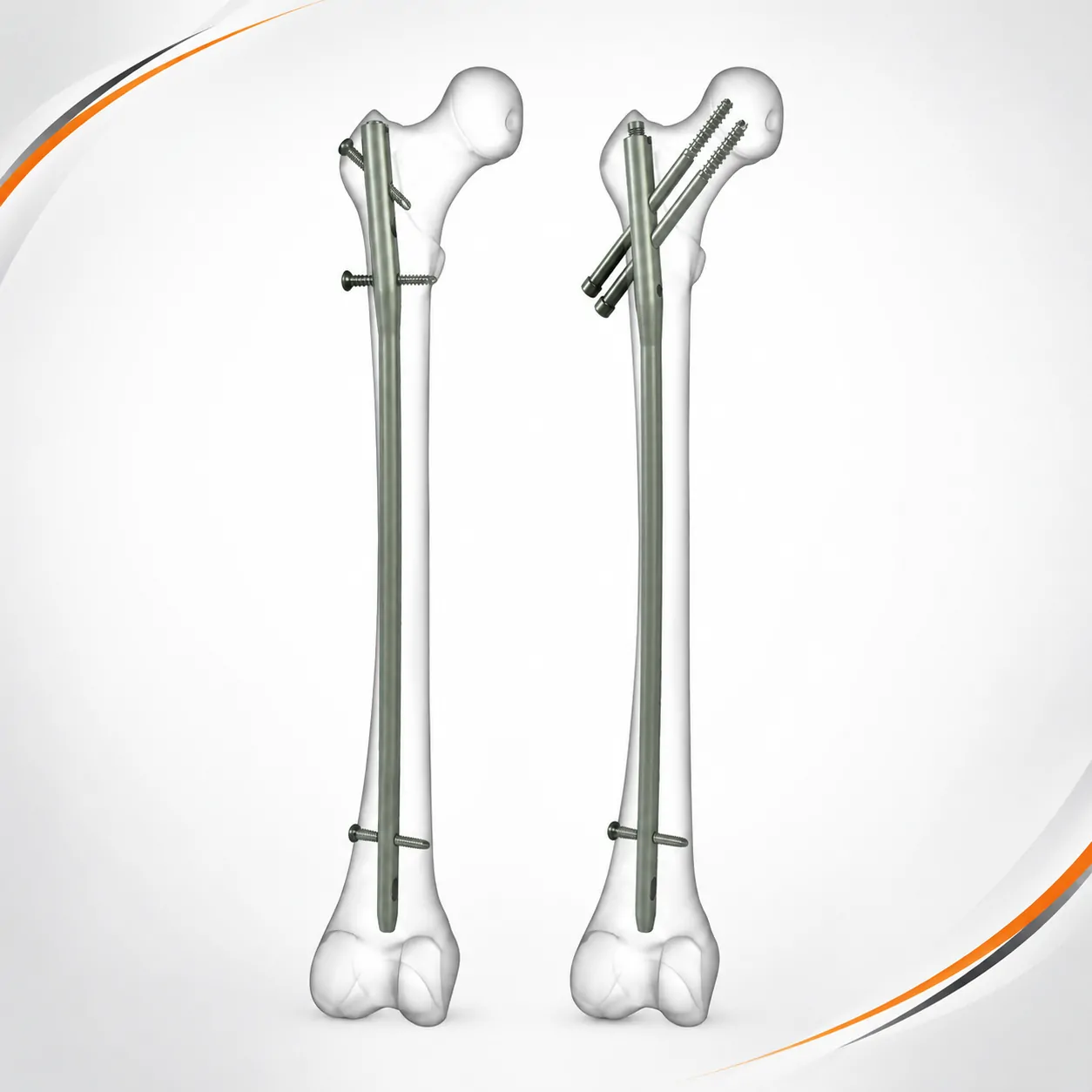
The supplied catalogue shows standard static locking, dynamic locking, and compression with dynamization.
These features describe different mechanical configurations. They should not be presented as interchangeable options that are equally appropriate for every fracture.
| Configuration | General purpose |
|---|---|
| Static locking | Restricts axial movement through the selected construct |
| Dynamic locking | Permits defined axial movement through a designated slot |
| Compression | Uses the supported mechanism to bring suitable fracture surfaces closer together |
| Secondary dynamization | A later clinical adjustment to the fixation construct |
AO’s femoral nailing guidance distinguishes static and dynamic locking and discusses dynamization in selected circumstances. The exact implementation depends on the implant design and treatment plan.
Static Locking
Static locking is used when the selected construct needs to control axial movement and rotation. The number and placement of screws depend on the fracture and available fixation.
Dynamic Locking
Dynamic locking permits a defined amount of axial movement through the appropriate slot. Its selection requires consideration of alignment, stability, and potential shortening.
Compression and Dynamization
Compression and secondary dynamization are different interventions. Neither should be described as guaranteeing union or resolving every delayed-healing fracture.
4. How Does Reconstruction Locking Differ?
The catalogue describes standard locking for femur shaft fractures and reconstruction locking for selected shaft fractures associated with a femoral neck fracture on the same side.
Reconstruction locking uses a proximal screw arrangement directed toward the femoral neck and head. Standard locking uses a different proximal fixation arrangement.
The distinction matters because a shaft fracture with an associated neck fracture is not the same injury as an isolated neck fracture.
Anti-Rotation Component
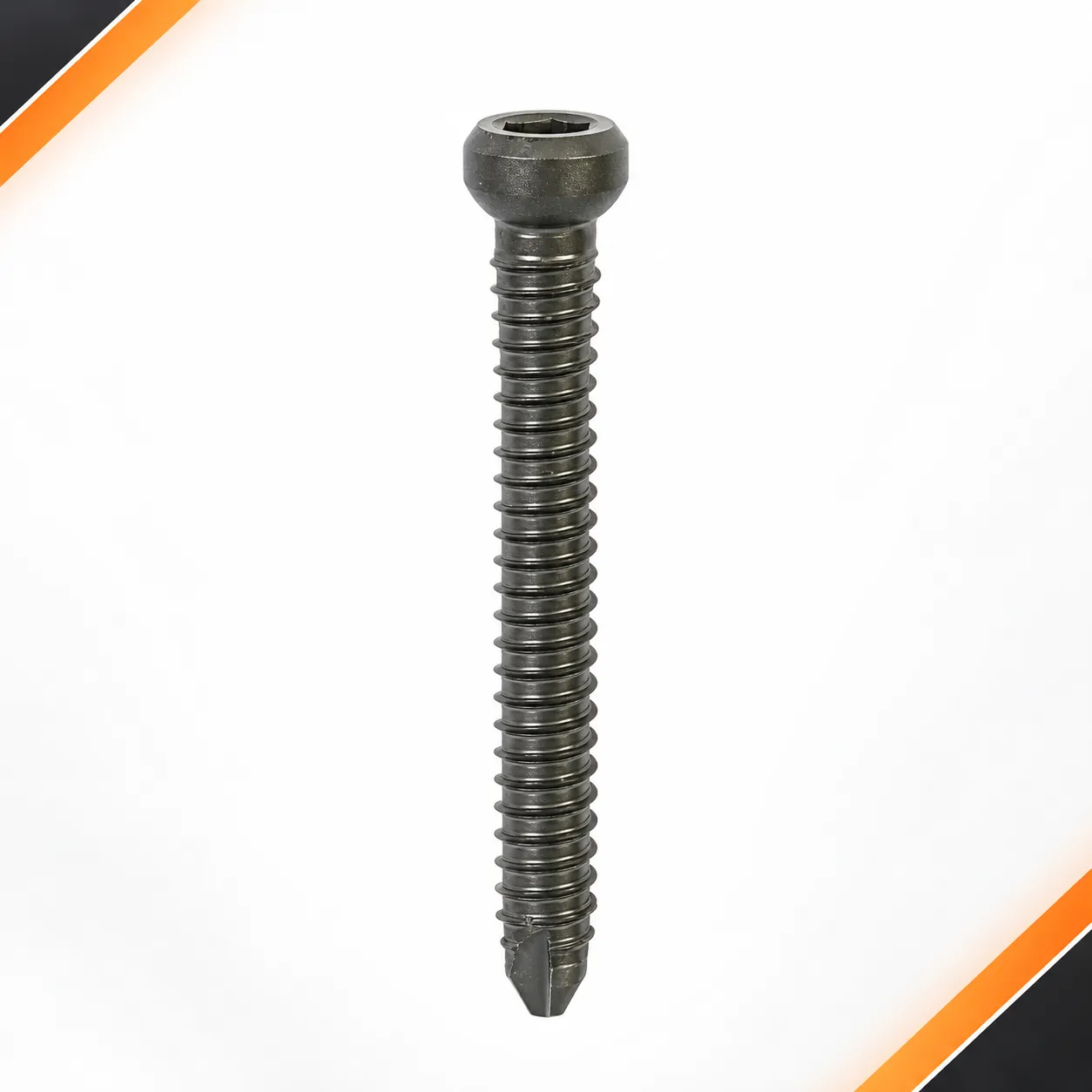
The supplied component information identifies a 6.4 mm cannulated anti-rotation screw associated with reconstruction fixation. It lists a 3.5 mm hexagonal drive and screw lengths from 60–130 mm in 5 mm increments.
These details help identify the component during purchasing. Its clinical use and compatibility must follow the selected system’s instructions.
Catalogue-Listed Restrictions
Your supplied catalogue lists the following contraindications:
- Isolated femoral neck fractures.
- Isolated intertrochanteric fractures.
- Isolated subtrochanteric fractures.
- Skeletally immature patients.
- Active local or systemic infection.
- Severe bone loss or inadequate bone quality preventing stable fixation.
- Other patient-specific contraindications to intramedullary nailing.
These restrictions should remain visible when the product is evaluated. Reconstruction capability must not be interpreted as approval for every proximal femur fracture.
5. Which Sizes and Components Are Listed?
The catalogue provides a range of dimensions rather than a single standard nail.
| Feature | Supplied catalogue detail |
|---|---|
| Shaft diameters | 9, 10, 11, 12, and 13 mm |
| Nail lengths | 320, 340, 360, 380, 400, 420, and 440 mm |
| Length increments | 20 mm |
| Proximal diameter | 13.5 mm |
| Proximal bend | 5° |
| Configurations | Left and right |
| Construction | Cannulated |
| Proximal locking | Three locking holes with reconstruction capability |
| Distal locking | Two static holes and one dynamic slot |
This is a catalogue summary, not a statement of current stock availability. Confirm each required configuration through the Expert Femur Nail product enquiry.
Locking Screws and End Caps
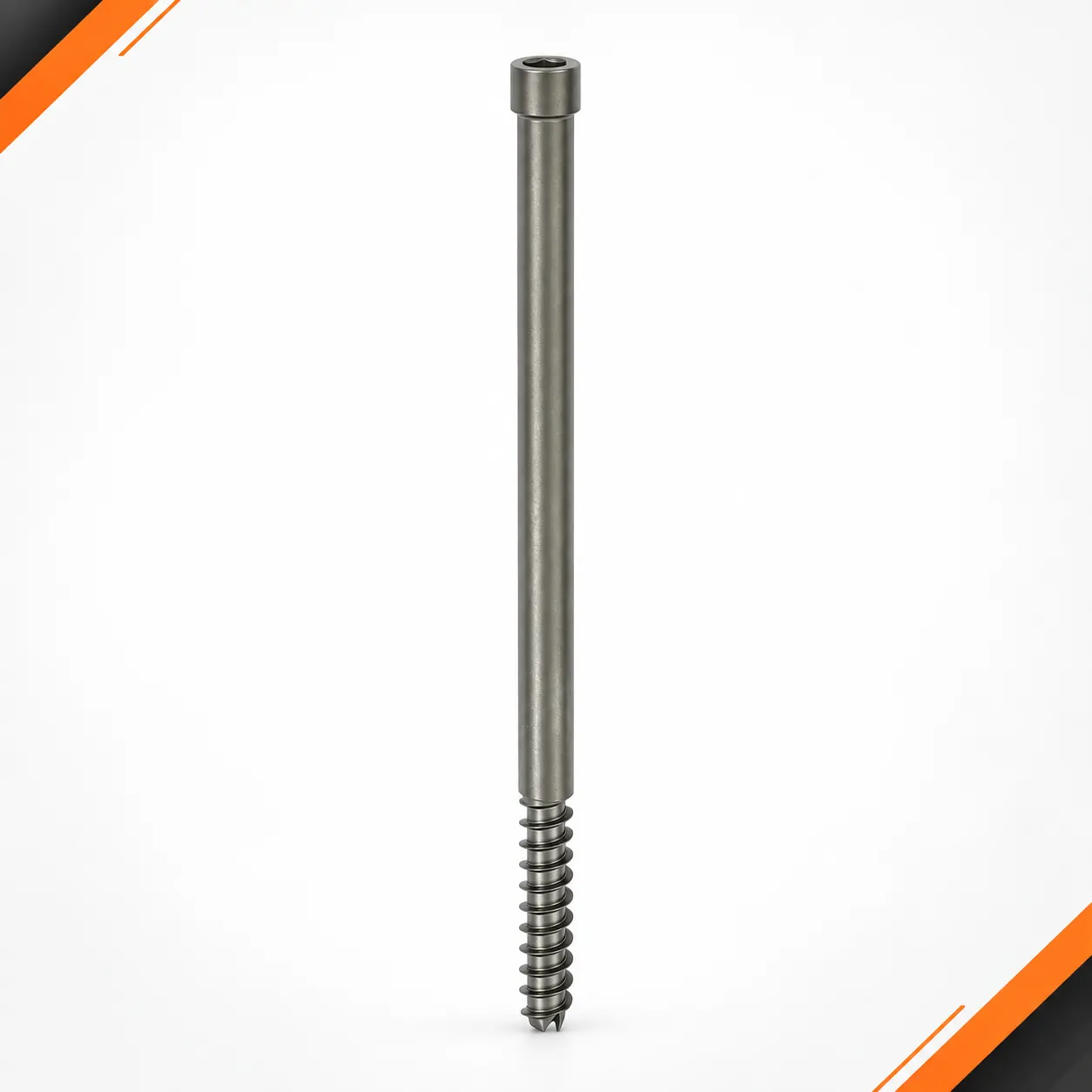
The supplied pages describe:
- End caps with flush and extended options.
- 4.9 mm self-tapping locking screws with a 3.5 mm hexagonal drive.
- 6.4 mm cannulated anti-rotation screws for the described reconstruction configuration.
Confirm the product code, size, quantity, and compatibility of every component. A nail quotation should not be assumed to include screws, end caps, or instruments unless they are listed.
Material Documentation
Earlier commercial details identify TC4, while the catalogue lists Ti-6Al-4V ELI titanium alloy and stainless steel options. These descriptions require reconciliation for the selected product.
For purchasing, rely on the confirmed product specification and applicable material documentation. A general statement that titanium is superior does not establish product performance.
6. What Should Hospitals Confirm Before Purchasing?
A complete purchasing specification links the clinical requirement to an identifiable implant and compatible system.
| Information to confirm | Why it matters |
|---|---|
| Nail diameter, length, and side | Identifies the requested configuration |
| Product code | Reduces ambiguity in quotations |
| Standard or reconstruction components | Defines the required locking arrangement |
| Screw sizes and quantities | Clarifies the complete implant order |
| Compatible instrumentation | Establishes system requirements |
| Material documentation | Supports the stated specification |
| Sterile or non-sterile condition | Clarifies handling and processing |
| Instructions for use | Provides product-specific limitations |
| Labeling and traceability | Supports purchasing records |
| Applicable certificates | Confirms documentation covers the product |
Similar appearance or matching nominal dimensions do not establish interchangeability between systems.
Stahlmann Pro’s previously supplied commercial details state a minimum order quantity of one piece and a delivery timeframe of 5–15 days. Confirm these terms for the selected configuration and destination through the contact page.
7. What Should Readers Know About Recovery?
A product description cannot establish a universal recovery timetable.
Weight-bearing and rehabilitation depend on the fracture, fixation stability, associated injuries, and healing progress. Clinical follow-up informs decisions about activity and any later intervention.
Implant removal is also an individual decision. It should not be promised at a fixed interval or automatically described as a minor procedure.
This distinction makes educational content more useful: design features explain the implant, while the treating team determines patient care.
Purchasing Enquiries from Africa, Latin America, and Russia
Hospitals and distributors in Africa, Latin America, and Russia should provide destination-specific requirements when requesting a quotation.
Include the required configurations, quantities, documentation, labeling language, and delivery destination. Broad regional availability should not be interpreted as evidence of authorization in every country.
For a wider orthopedic enquiry, browse the Stahlmann Pro Trauma Implants range.
Frequently Asked Questions
What is the Expert Femur Nail primarily described for?
The supplied catalogue describes femur shaft fixation, with reconstruction locking for selected shaft fractures associated with a femoral neck fracture on the same side.
Does reconstruction locking mean it can treat every hip fracture?
No. The catalogue lists isolated femoral neck, intertrochanteric, and subtrochanteric fractures as contraindications.
What dimensions are listed?
Shaft diameters range from 9–13 mm. Lengths range from 320–440 mm in 20 mm increments, with separate left and right configurations.
Can the nail be inserted through either the hip or knee?
The intended approach must be confirmed for the specific implant configuration. Antegrade and retrograde techniques should not be assumed interchangeable.
Are screws and instruments included?
Confirm the quotation. The nail, screws, end caps, and instruments may be listed separately.
Can patients bear weight immediately?
The treating surgeon determines permitted weight-bearing according to the injury and fixation. The product name alone does not establish an activity timetable.
Professional Reference
For general clinical background, consult the AO Surgery Reference guidance on femoral shaft intramedullary nailing.
This resource explains clinical principles. It does not replace Stahlmann Pro product instructions or represent an endorsement of the brand.
Request Expert Femur Nail Information
Visit the Stahlmann Pro Expert Femur Nail page for product enquiries, or contact the team with your required dimensions, side, components, and quantities.
Email: info@stahlmannpro.ae
Phone / WhatsApp: +971 50 975 0822
Enquiries: Contact Stahlmann Pro
