
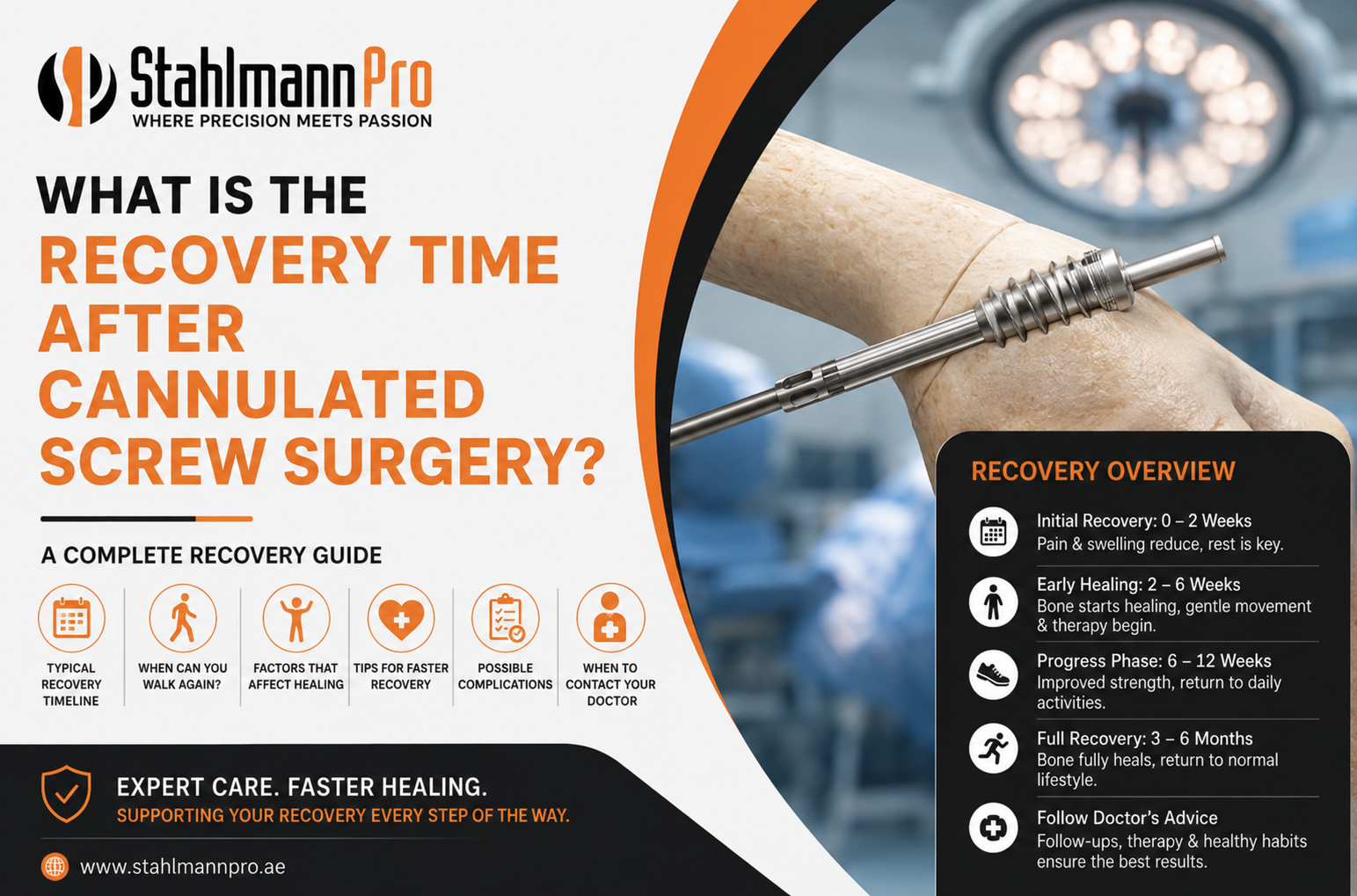
Cannulated screw surgery is a common orthopedic procedure used to stabilize broken bones and support proper healing. Surgeons frequently recommend this technique for fractures of the hip, ankle, wrist, foot, and other small bones where accurate screw placement is essential. One of the most common questions patients ask is, “What is the recovery time after cannulated screw surgery?”
The answer depends on several factors, including the type of fracture, the patient’s age, overall health, and how well the bone heals. In general, recovery takes 6 to 12 weeks, although complete healing and return to full activity may take several months.
Understanding Cannulated Screw Surgery
Cannulated screws are hollow orthopedic screws designed to be inserted over a guidewire. This allows surgeons to achieve highly accurate placement while minimizing damage to surrounding tissues. These screws are commonly used in minimally invasive orthopedic procedures and are ideal for fixing fractures that require precise alignment.
Because the procedure is less invasive than traditional open surgery, many patients experience reduced pain, smaller incisions, and faster recovery.
Average Recovery Timeline
While every patient heals differently, the following timeline provides a general idea of what to expect after cannulated screw surgery.
First Week After Surgery
The first few days focus on pain management and reducing swelling. Patients may experience mild discomfort, bruising, and limited movement around the surgical area.
During this stage, doctors typically recommend:
- Keeping the operated limb elevated
- Applying ice packs if advised
- Taking prescribed pain medication
- Caring for the surgical wound
- Using crutches, walkers, or braces if necessary
Most patients begin gentle movement exercises under medical supervision to prevent stiffness.
Weeks 2 to 6
During this phase, the bone begins forming new healing tissue. Follow-up appointments usually include X-rays to ensure the fracture is healing correctly.
Patients may:
- Begin physical therapy
- Increase joint mobility
- Continue limited weight-bearing if instructed
- Gradually reduce pain medication
Many people notice significant improvement in pain and mobility during these weeks.
Weeks 6 to 12
By this stage, many fractures have healed enough to allow increased activity.
Depending on the location of the injury, patients may:
- Walk with less assistance
- Return to desk jobs
- Improve muscle strength
- Resume light daily activities
However, heavy lifting, running, jumping, or sports are usually restricted until the surgeon confirms complete bone healing.
Three to Six Months
Although many patients feel much better after 8 to 12 weeks, complete recovery often takes longer.
During this period:
- Bone strength continues improving.
- Physical therapy focuses on restoring full function.
- Balance and coordination gradually return.
- Most patients resume normal daily activities.
Athletes or individuals with physically demanding jobs may require additional rehabilitation before returning to full performance.
Factors That Affect Recovery Time
Several factors influence how quickly someone recovers after cannulated screw surgery.
Type of Fracture
Simple fractures generally heal faster than complex or multiple fractures. Hip fractures, for example, often require longer rehabilitation than wrist fractures.
Age
Younger patients usually heal more quickly because their bones regenerate faster. Older adults may need additional time for complete recovery.
Overall Health
Patients with good nutrition, healthy body weight, and no chronic illnesses often experience faster healing.
Conditions that may slow recovery include:
- Diabetes
- Osteoporosis
- Poor circulation
- Smoking
- Vitamin D deficiency
Following Postoperative Instructions
Patients who follow their surgeon’s recommendations regarding weight-bearing, medication, and physical therapy usually recover more successfully.
Ignoring activity restrictions may delay healing or cause complications.
Importance of Physical Therapy
Physical therapy plays a major role in recovery after cannulated screw surgery.
A rehabilitation program helps patients:
- Restore joint flexibility
- Improve muscle strength
- Reduce stiffness
- Improve balance
- Return safely to normal activities
Therapists gradually increase exercise intensity based on healing progress.
Pain During Recovery
Some discomfort after surgery is completely normal.
Pain usually decreases significantly during the first few weeks.
Doctors may recommend:
- Prescription pain medication
- Anti-inflammatory medicine
- Ice therapy
- Rest
- Gentle exercises
If pain suddenly worsens instead of improving, patients should contact their healthcare provider.
When Can You Walk Again?
Walking depends on the location of the fracture.
For example:
- Foot and ankle fractures may require several weeks of protected weight-bearing.
- Hip fracture patients often begin assisted walking within a few days using walkers or crutches.
- Some patients remain non-weight-bearing for six weeks or longer.
The orthopedic surgeon determines when full weight-bearing is safe.
Returning to Work
Recovery varies depending on job requirements.
Typical timelines include:
- Office work: 2 to 6 weeks
- Light-duty work: 6 to 8 weeks
- Physically demanding jobs: 3 to 6 months
Always obtain medical clearance before returning to strenuous activities.
Possible Complications That May Delay Recovery
Although cannulated screw surgery has a high success rate, complications can occasionally occur.
These may include:
- Infection
- Delayed bone healing
- Nonunion
- Screw loosening
- Hardware irritation
- Blood clots
Early diagnosis and proper treatment help minimize long-term problems.
Tips for Faster Recovery
Patients can support healing by following healthy recovery habits.
Helpful recommendations include:
- Eat a protein-rich diet.
- Get enough calcium and vitamin D.
- Stay hydrated.
- Attend all follow-up appointments.
- Complete physical therapy exercises.
- Avoid smoking and excessive alcohol.
- Follow weight-bearing restrictions carefully.
Healthy lifestyle choices promote stronger bone healing and reduce complications.
Frequently Asked Questions
How long does bone healing take after cannulated screw surgery?
Most fractures heal within 6 to 12 weeks, while complete recovery may take 3 to 6 months depending on the injury.
Are cannulated screws permanent?
In many cases, the screws remain in place permanently. However, they may be removed if they cause discomfort or interfere with movement after the bone has fully healed.
Is physical therapy necessary?
Yes. Physical therapy helps restore strength, flexibility, and normal function while reducing stiffness and improving mobility.
Can I exercise after surgery?
Light exercises may begin early under medical supervision. High-impact activities should only resume after your orthopedic surgeon confirms complete healing.
Will I have pain after recovery?
Most patients experience significant pain relief once the fracture heals. Mild discomfort around the implant may occur occasionally but often improves over time.
Conclusion
Recovery after cannulated screw surgery varies from person to person, but most patients experience significant improvement within 6 to 12 weeks. Complete healing may require 3 to 6 months, especially after complex fractures or major orthopedic procedures. Following your surgeon’s instructions, maintaining a healthy lifestyle, and participating in physical therapy are the most effective ways to achieve a successful recovery.
With proper treatment and rehabilitation, cannulated screw fixation provides excellent stability, promotes accurate bone healing, and helps patients safely return to their normal daily activities.
FAQs
How long does it take to recover after cannulated screw surgery?
Most patients recover within 6 to 12 weeks, while complete healing and a return to full physical activity may take 3 to 6 months, depending on the fracture and overall health.
When can I walk after cannulated screw surgery?
Walking depends on the location and severity of the fracture. Some patients begin walking with crutches or a walker within a few days, while others may need to avoid weight-bearing for several weeks.
Is cannulated screw surgery painful?
Some pain and swelling are normal after surgery, especially during the first few days. Pain usually improves gradually with medication, rest, and physical therapy.
Are cannulated screws removed after the bone heals?
Cannulated screws are often left in place permanently. However, your surgeon may recommend removal if they cause pain, irritation, or interfere with movement after the bone has fully healed.
How can I speed up recovery after cannulated screw surgery?
Following your surgeon’s instructions, attending physical therapy, eating a nutrient-rich diet, avoiding smoking, and following weight-bearing restrictions can help promote faster bone healing.
