
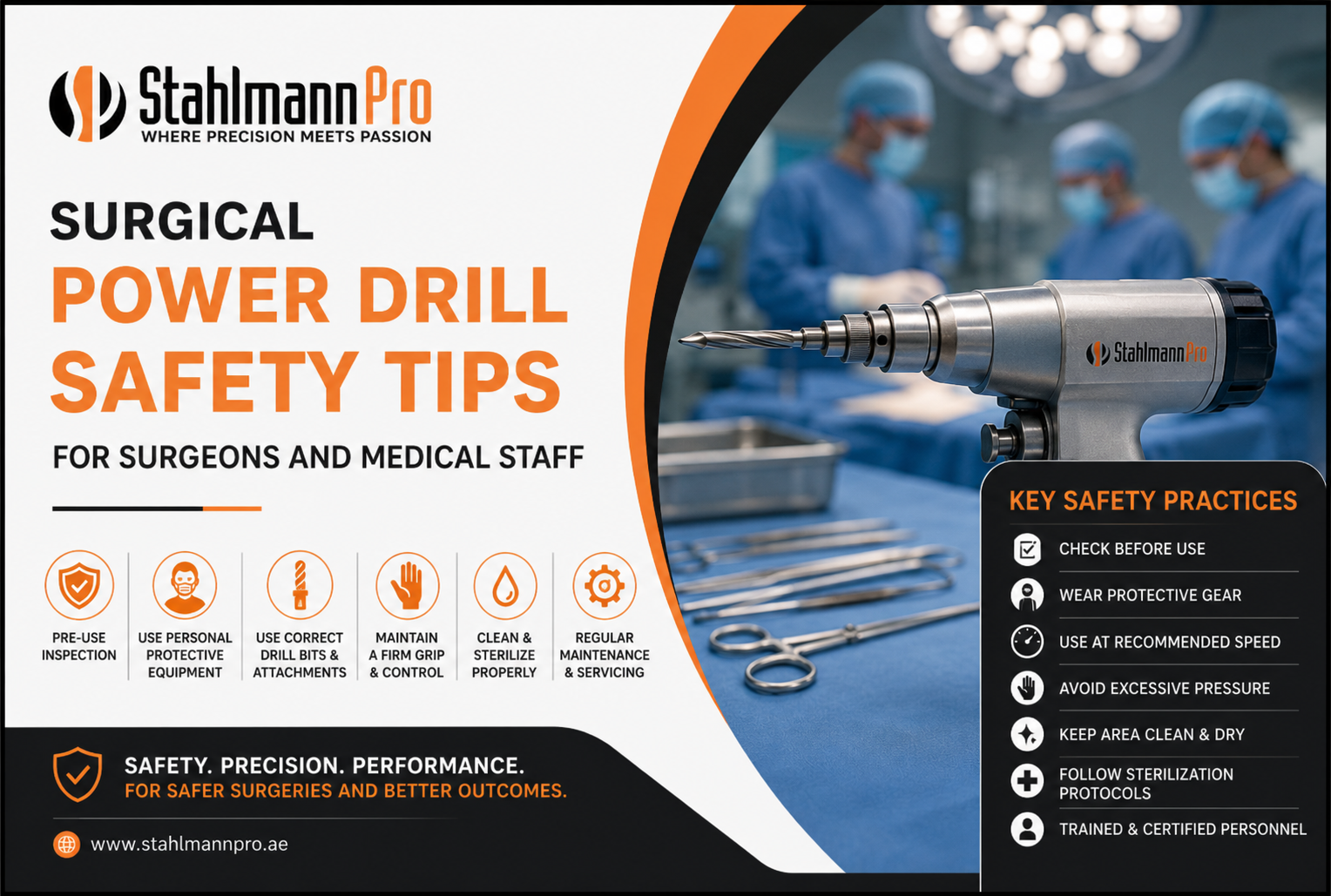
A surgical power drill is one of the most essential powered instruments used in orthopedic, trauma, spine, maxillofacial, and neurosurgical procedures. Designed to create precise holes in bone, prepare implant sites, and assist with fixation techniques, this advanced tool has become a standard component of modern operating rooms. While a surgical power drill improves surgical efficiency and precision, its safe operation depends on proper handling, regular maintenance, and adherence to established safety protocols.
For surgeons, nurses, and operating room technicians, understanding best practices for using a surgical power drill helps minimize complications, protect patients, and extend the lifespan of valuable surgical equipment. This guide outlines practical safety tips every medical professional should follow.
Understanding the Role of a Surgical Power Drill
A surgical power drill is specifically engineered for medical procedures requiring controlled bone drilling. Unlike industrial drills, surgical models are designed with high precision, sterilizable components, and ergonomic features that allow surgeons to work accurately within delicate anatomical structures.
Common applications include:
- Orthopedic trauma surgery
- Joint replacement procedures
- Spine surgery
- Maxillofacial reconstruction
- Neurosurgery
- Veterinary orthopedic procedures
Because these procedures often involve critical anatomical structures, safe operation is essential.
Why Safety Matters
Even the highest-quality surgical power drill requires proper handling. Unsafe practices may lead to:
- Thermal damage to bone tissue
- Drill bit slippage
- Equipment malfunction
- Delayed surgical procedures
- Increased infection risks
- Reduced implant stability
Following standardized safety protocols helps reduce these risks while improving surgical outcomes.
Inspect the Surgical Power Drill Before Every Procedure
Every surgical team should inspect the surgical power drill before entering the operating room.
Key inspection points include:
- Check battery charge or pneumatic connection.
- Verify smooth trigger operation.
- Inspect drill bits for wear or damage.
- Confirm all attachments lock securely.
- Ensure cables and hoses are undamaged.
- Test rotation before patient use.
Early inspection allows staff to identify problems before surgery begins.
Always Use Compatible Drill Bits
Using incompatible accessories may reduce drilling accuracy and damage the surgical power drill.
Medical staff should:
- Use manufacturer-approved drill bits.
- Select the correct size for the procedure.
- Replace dull or bent drill bits.
- Secure bits firmly before activation.
Proper accessories improve both safety and surgical precision.
Maintain a Sterile Operating Environment
Sterility is essential whenever a surgical power drill enters the surgical field.
Best practices include:
- Follow validated sterilization protocols.
- Store sterilized equipment correctly.
- Avoid contamination during assembly.
- Use sterile covers when recommended.
- Handle instruments with sterile gloves.
Maintaining sterility significantly reduces the risk of surgical site infections.
Prevent Excessive Heat Generation
Bone can be damaged if excessive heat develops during drilling.
To minimize thermal injury:
- Apply gentle, controlled pressure.
- Avoid prolonged drilling in one location.
- Use irrigation when appropriate.
- Select optimal drill speed.
- Replace worn drill bits promptly.
These techniques help preserve healthy bone tissue and improve implant fixation.
Choose the Correct Speed and Torque
Modern surgical power drill systems often offer adjustable speed and torque settings.
Higher speeds may be appropriate for:
- Initial bone penetration
- Smaller drill bits
Lower speeds may be preferable for:
- Dense cortical bone
- Larger diameter drilling
- Controlled implant preparation
Following manufacturer recommendations helps maintain accuracy throughout the procedure.
Secure the Surgical Site
Patient movement during drilling can increase surgical risks.
Medical teams should ensure:
- Proper patient positioning
- Stable limb fixation
- Clear surgical visualization
- Appropriate retractors
- Effective communication among staff
A stable operating field improves control when using a surgical power drill.
Use Proper Hand Positioning
Correct grip improves stability and reduces accidental movement.
Surgeons should:
- Maintain a firm ergonomic grip.
- Keep wrists aligned.
- Avoid awkward angles.
- Stabilize hands whenever possible.
- Position fingers away from moving components.
Ergonomic handling reduces fatigue during lengthy procedures.
Avoid Excessive Force
One common mistake is applying unnecessary pressure.
A high-quality surgical power drill is designed to cut efficiently without excessive force.
Too much pressure may:
- Increase heat production
- Damage drill bits
- Reduce drilling accuracy
- Increase bone trauma
Allow the drill to perform the cutting rather than forcing it through bone.
Ensure Proper Battery Management
Battery-powered surgical systems require careful battery management.
Recommendations include:
- Fully charge batteries before surgery.
- Keep backup batteries available.
- Replace aging batteries.
- Inspect battery contacts regularly.
- Follow manufacturer charging guidelines.
Reliable power helps prevent interruptions during critical procedures.
Perform Routine Maintenance
Regular servicing extends the life of a surgical power drill and reduces unexpected failures.
Maintenance schedules typically include:
- Lubrication where specified
- Mechanical inspections
- Functional testing
- Calibration verification
- Replacement of worn components
Hospitals should maintain documented preventive maintenance programs.
Train All Operating Room Staff
Safe operation depends on a knowledgeable surgical team.
Training should cover:
- Equipment setup
- Drill bit installation
- Speed selection
- Sterilization procedures
- Emergency troubleshooting
- Safe storage
Continuing education helps staff stay current with evolving surgical technologies.
Communicate Throughout the Procedure
Effective communication improves patient safety.
Before activating the surgical power drill, the surgeon should clearly communicate intentions to:
- Surgical assistants
- Scrub nurses
- Circulating nurses
- Anesthesia staff
Clear communication reduces unexpected movement and improves coordination.
Store Equipment Properly
Improper storage can damage precision surgical instruments.
Best practices include:
- Store drills in protective cases.
- Keep equipment dry.
- Avoid impact during transport.
- Organize accessories properly.
- Separate sterilized and non-sterilized components.
Proper storage extends equipment lifespan and maintains readiness.
Recognize Signs of Equipment Wear
Medical staff should immediately report:
- Unusual vibration
- Excessive noise
- Reduced drilling power
- Overheating
- Trigger malfunction
- Loose attachments
Removing damaged equipment from service helps prevent intraoperative complications.
Follow Manufacturer Instructions
Although general safety principles apply to every surgical power drill, manufacturers may provide specific guidance regarding:
- Operating speed
- Sterilization cycles
- Cleaning methods
- Battery handling
- Maintenance intervals
- Compatible accessories
Following these recommendations ensures safe and reliable performance.
Benefits of Safe Surgical Power Drill Practices
Consistent safety procedures provide numerous advantages, including:
- Improved patient safety
- Greater surgical accuracy
- Lower infection risk
- Reduced equipment downtime
- Longer instrument lifespan
- Better operating room efficiency
- Enhanced surgeon confidence
- Consistent clinical outcomes
Frequently Asked Questions
What is a surgical power drill used for?
A surgical power drill is used to drill precise holes in bone during orthopedic, spine, trauma, neurosurgical, and maxillofacial procedures.
How often should a surgical power drill be inspected?
The instrument should be inspected before every surgical procedure and undergo scheduled preventive maintenance according to manufacturer guidelines.
Why is irrigation important during drilling?
Irrigation helps reduce heat generation, minimizing the risk of thermal damage to surrounding bone tissue.
Can worn drill bits affect patient safety?
Yes. Worn or damaged drill bits can reduce drilling precision, increase heat production, and prolong surgical time.
How can hospitals extend the lifespan of a surgical power drill?
Regular maintenance, proper sterilization, correct storage, staff training, and using compatible accessories all help maximize equipment longevity.
Conclusion
A surgical power drill is a vital tool that supports precision and efficiency in modern surgery. However, achieving the best clinical outcomes requires more than advanced technology—it depends on disciplined safety practices followed by surgeons, nurses, and operating room staff. Routine equipment inspections, proper sterilization, correct drill bit selection, preventive maintenance, and ongoing training all contribute to safer procedures and improved patient care. By following these safety tips, healthcare facilities can maximize the performance, reliability, and lifespan of every surgical power drill while maintaining the highest standards of surgical excellence.
