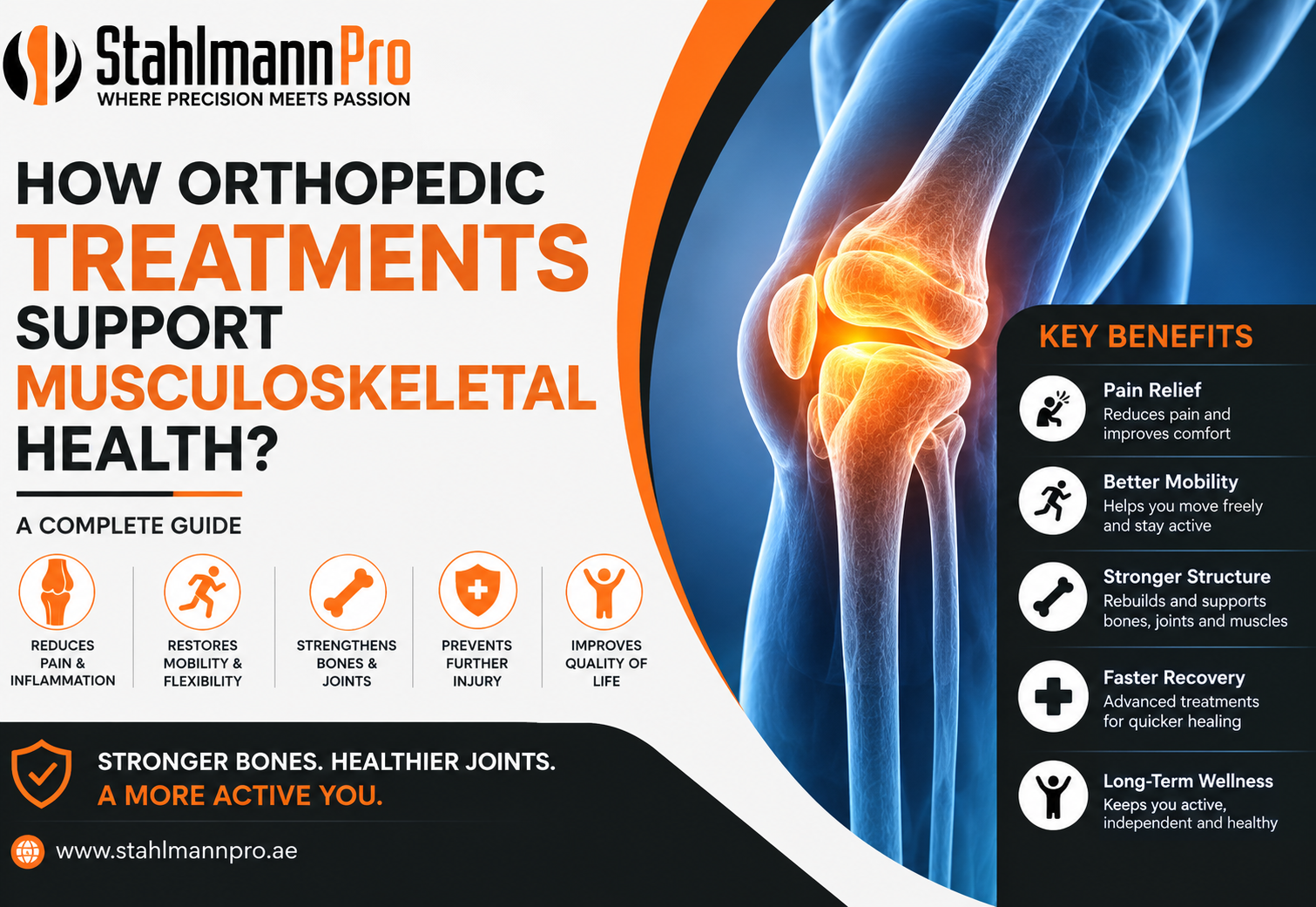
The musculoskeletal system plays an essential role in everyday life. It includes the bones, joints, muscles, Musculoskeletal health plays an important role in everyday movement, physical independence, and overall quality of life. The musculoskeletal system includes bones, joints, muscles, ligaments, tendons, cartilage, and other connective tissues that work together to provide stability and movement. Injuries, age related changes, overuse, and certain medical conditions can affect these structures and make routine activities more difficult.
Orthopedic treatments are designed to assess, manage, and support conditions affecting the musculoskeletal system. Depending on the condition, treatment may involve lifestyle changes, physical therapy, medication, orthopedic devices, minimally invasive procedures, or surgery. Understanding how these treatments work can help people make informed decisions about their musculoskeletal health.
What Is Musculoskeletal Health?
Musculoskeletal health refers to the proper function and condition of the body’s bones, joints, muscles, tendons, ligaments, and related tissues. A healthy musculoskeletal system helps people walk, lift objects, maintain posture, exercise, and perform daily activities.
Problems can develop from different causes, including:
- Sports and workplace injuries
- Fractures and dislocations
- Arthritis and joint degeneration
- Muscle strains
- Tendon and ligament injuries
- Spinal conditions
- Repetitive movements and overuse
- Age related changes
- Congenital or structural abnormalities
Early assessment can help identify the underlying cause and determine an appropriate treatment approach.
The Role of Orthopedic Care
Orthopedic care focuses on conditions involving the musculoskeletal system. Orthopedic specialists evaluate symptoms, review medical history, perform physical examinations, and may use diagnostic imaging such as X rays, MRI scans, or CT scans when appropriate.
The objective is not always to perform surgery. Many orthopedic conditions can initially be managed through conservative approaches. Treatment is generally selected according to the affected structure, severity of the condition, symptoms, activity level, and individual circumstances.
Non Surgical Orthopedic Treatments
Many musculoskeletal conditions can be managed without surgery. Non surgical treatment may be recommended for mild injuries, chronic conditions, or patients who can benefit from rehabilitation and other conservative approaches.
Physical Therapy
Physical therapy is commonly used to improve strength, flexibility, balance, coordination, and range of motion. A structured rehabilitation program may also help patients gradually return to normal activities after an injury or procedure.
Exercises can be tailored to the affected area. For example, strengthening exercises may support weakened muscles around a joint, while stretching and mobility exercises may help improve movement.
Activity Modification
Changing certain activities can reduce stress on injured or painful structures. Patients may be advised to temporarily avoid movements that aggravate symptoms while maintaining safe levels of physical activity.
Proper posture, lifting techniques, workplace ergonomics, and gradual progression during exercise can also support long term musculoskeletal health.
Medications and Other Conservative Approaches
Depending on the condition, healthcare professionals may recommend medications to help manage pain and inflammation. Other approaches may include braces, supports, orthotics, or assistive devices.
These treatments are generally intended to reduce symptoms and support function while the underlying condition is addressed.
Orthopedic Treatments for Fractures
Fractures are among the common conditions treated by orthopedic professionals. Treatment depends on the location and type of fracture, the amount of displacement, bone quality, and other factors.
Some fractures can heal with immobilization using a cast or brace. More complex fractures may require surgical stabilization to restore alignment and provide mechanical stability.
Orthopedic implants such as plates, screws, rods, and other fixation devices may be used when surgical stabilization is necessary. Proper fixation can help maintain the position of bone fragments while healing takes place.
Joint Related Orthopedic Treatments
Joints can be affected by injuries, arthritis, cartilage damage, and other conditions. Treatment may range from conservative care to surgical procedures.
For some patients, physical therapy and activity modification may be sufficient to improve function. When significant joint damage affects mobility and quality of life, surgical options may be considered.
Joint replacement procedures are one example of orthopedic surgery used for advanced joint disease. During these procedures, damaged joint surfaces may be replaced with artificial components designed to restore joint function.
The Importance of Orthopedic Implants
Orthopedic implants can play an important role in certain surgical treatments. Depending on the procedure, implants may help stabilize fractures, maintain bone alignment, repair damaged structures, or support reconstruction.
The selection of an implant depends on factors such as anatomy, bone condition, injury characteristics, surgical technique, and the patient’s individual needs. Healthcare professionals carefully evaluate these factors when developing a treatment plan.
Supporting Recovery Through Rehabilitation
Orthopedic treatment does not necessarily end when a procedure is completed. Rehabilitation can be an important part of recovery.
A rehabilitation program may focus on:
- Restoring mobility
- Improving muscle strength
- Increasing flexibility
- Developing balance and coordination
- Reducing stiffness
- Gradually returning to daily activities
- Supporting safe physical activity
Following professional rehabilitation recommendations can help patients progress safely and avoid unnecessary strain on recovering tissues.
Preventive Orthopedic Care
Maintaining musculoskeletal health is also about prevention. Regular physical activity, adequate nutrition, healthy body weight, appropriate exercise techniques, and injury prevention strategies can help support bones and joints.
Strength training can help maintain muscle support around joints, while flexibility and balance exercises may contribute to better movement and stability. Using appropriate protective equipment during sports can also reduce the risk of certain injuries.
People involved in physically demanding work or repetitive activities can benefit from proper ergonomics and regular movement breaks.
Orthopedic Musculoskeletal Health and Aging
Musculoskeletal changes become increasingly common with age. Bone density may decrease, joints can experience wear, and muscle mass may decline over time.
An orthopedic musculoskeletal approach considers how these changes affect movement and function. Orthopedic professionals may recommend appropriate exercise, rehabilitation, nutritional guidance, assistive devices, or other treatments based on an individual’s condition.
Maintaining mobility is particularly important for older adults because reduced movement can contribute to muscle weakness and loss of independence.
When Should You Seek Orthopedic Evaluation?
Not every ache or minor injury requires specialist care. However, persistent or worsening symptoms may require professional evaluation.
Consider seeking medical advice when you experience:
- Persistent joint or bone pain
- Significant swelling
- Limited range of motion
- Repeated joint instability
- Difficulty walking or using a limb
- Symptoms following a significant injury
- Pain that interferes with everyday activities
- Suspected fractures or dislocations
Prompt assessment can help identify the cause of symptoms and determine whether treatment is necessary.
A Comprehensive Approach to Musculoskeletal Health
Orthopedic treatment is most effective when it considers the patient’s overall function rather than focusing only on symptoms. Diagnosis, treatment, rehabilitation, lifestyle factors, and prevention can work together to support long term musculoskeletal health.
Some conditions respond well to conservative treatment, while others may require surgical intervention. The appropriate approach depends on the individual diagnosis and should be determined by a qualified healthcare professional.
Conclusion
Orthopedic treatments provide a range of options for managing injuries, joint conditions, fractures, and other problems affecting the musculoskeletal system. From physical therapy and activity modification to fracture fixation and joint surgery, treatment approaches can be adapted to individual needs.
A strong focus on orthopedic musculoskeletal care can help support mobility, stability, recovery, and physical function. Early evaluation, appropriate treatment, rehabilitation, and preventive habits can all contribute to healthier bones, joints, and muscles throughout different stages of life.
FAQs
What does orthopedic musculoskeletal care involve?
Orthopedic musculoskeletal care focuses on conditions affecting bones, joints, muscles, ligaments, tendons, and other supporting tissues. Treatment may include rehabilitation, medication, bracing, injections, or surgery depending on the condition.
What are common orthopedic musculoskeletal conditions?
Common conditions include fractures, arthritis, sports injuries, ligament and tendon injuries, joint degeneration, meniscus problems, and shoulder, hip, knee, or spinal conditions.
Can orthopedic treatments improve mobility?
Yes. Depending on the underlying condition, orthopedic treatments can help reduce pain, improve joint movement, restore strength, and support functional recovery.
When is orthopedic surgery necessary?
Surgery may be considered when an injury is severe, structural damage requires repair, or conservative treatments have not provided sufficient improvement. The appropriate treatment depends on an individual’s diagnosis and clinical needs.
How can I support my musculoskeletal health?
Regular physical activity, strength and flexibility exercises, proper posture, healthy body weight, safe exercise techniques, and early evaluation of persistent injuries can help support musculoskeletal health.
