
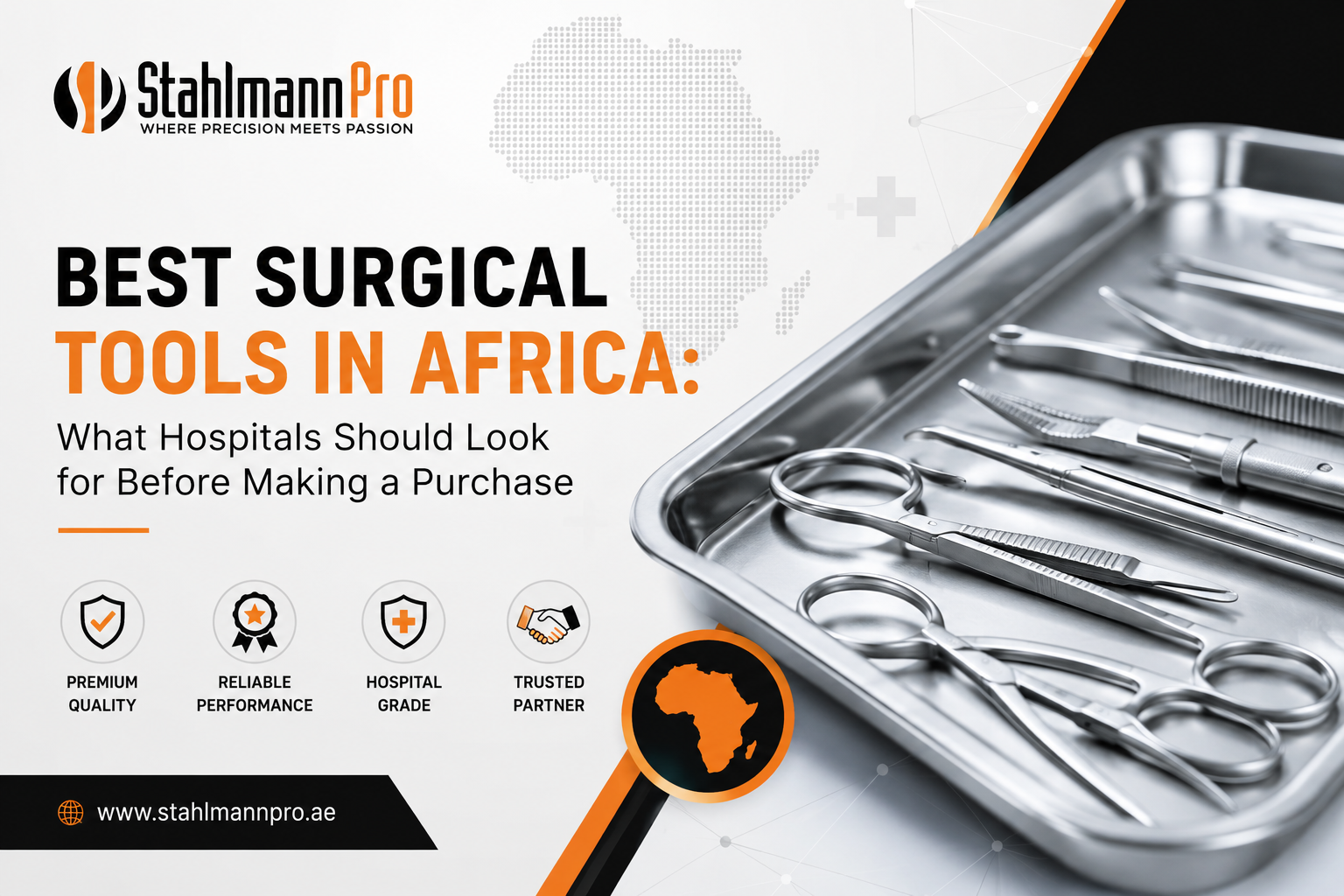
Healthcare facilities across Africa are continuously expanding their capabilities to meet the growing demand for quality medical care. Whether it is a large urban hospital, a private surgical center, or a rural healthcare facility, the quality of surgical tools directly impacts patient safety, surgical efficiency, and long-term operational costs. Choosing the right instruments is no longer just about comparing prices. Hospitals must evaluate product quality, international certifications, durability, supplier reliability, and after-sales support before making a purchasing decision.
As healthcare standards continue to improve across African countries, procurement teams are expected to invest in surgical tools that deliver precision, consistency, and long service life. A well-informed purchasing decision reduces replacement costs, improves surgical outcomes, and ensures compliance with international healthcare standards.
This guide explains everything hospitals should consider before purchasing the best surgical tools in Africa and how selecting the right supplier can improve both patient care and operational efficiency.
Why Choosing High-Quality Surgical Tools Matters
Every successful surgical procedure depends on precision. Surgeons rely on high-quality instruments that perform consistently throughout every operation. Low-quality or poorly manufactured surgical tools can create unnecessary complications, increase maintenance costs, and shorten the lifespan of medical equipment.
Investing in premium surgical instruments offers several long-term benefits:
- Greater surgical precision
- Improved patient safety
- Reduced maintenance and replacement costs
- Better infection prevention through superior material quality
- Increased confidence among surgeons and operating room staff
- Compliance with international healthcare regulations
Rather than focusing solely on the lowest purchase price, hospitals should evaluate the overall value that surgical instruments provide throughout their lifecycle.
Growing Demand for Surgical Tools in Africa
Africa’s healthcare sector has experienced significant growth over the past decade. Governments, private healthcare providers, NGOs, and international healthcare organizations continue investing in modern hospitals and specialized surgical centers.
Several factors contribute to the increasing demand for quality surgical tools across Africa:
Expansion of Healthcare Infrastructure
Many African countries are building new hospitals while upgrading existing medical facilities. These projects require thousands of reliable surgical instruments across multiple specialties.
Rising Number of Surgical Procedures
As healthcare access improves, more patients undergo elective and emergency surgeries, increasing demand for dependable surgical equipment.
Focus on International Healthcare Standards
Many hospitals aim to meet internationally recognized quality standards, making certified surgical instruments a priority during procurement.
Medical Tourism Growth
Several African countries are investing in advanced healthcare services to attract regional and international patients. This trend increases demand for premium surgical equipment.
Key Factors Hospitals Should Consider Before Purchasing Surgical Tools
Choosing surgical instruments involves much more than selecting items from a catalog. Procurement teams should evaluate multiple quality indicators before placing large orders.
1. Material Quality
One of the first considerations should be the material used in manufacturing surgical instruments.
Medical-grade stainless steel remains the preferred choice because it offers:
- Excellent corrosion resistance
- Long-lasting durability
- High resistance to repeated sterilization
- Superior cutting performance
- Easy maintenance
Premium stainless steel instruments retain their sharpness and functionality even after years of continuous use.
2. Manufacturing Standards
Hospitals should verify whether the manufacturer follows internationally accepted production standards.
Look for manufacturers that comply with:
- ISO quality management standards
- CE certification
- EU MDR compliance where applicable
- Strict quality inspection procedures
- Good Manufacturing Practices (GMP)
Certified manufacturers demonstrate their commitment to product quality and patient safety.
3. Precision Engineering
Precision is one of the defining characteristics of premium surgical tools.
Well-manufactured instruments provide:
- Smooth movement
- Perfect alignment
- Comfortable grip
- Balanced weight distribution
- Accurate cutting and clamping performance
Even small manufacturing defects can affect surgical performance during critical procedures.
Types of Surgical Instruments Hospitals Commonly Purchase
Hospitals typically require instruments across multiple surgical disciplines.
General Surgery Instruments
General surgery sets often include:
- Forceps
- Scissors
- Needle holders
- Retractors
- Clamps
- Tissue forceps
- Hemostats
These instruments form the foundation of most operating rooms.
Orthopedic Instruments
Orthopedic departments require specialized tools designed for bone procedures, including:
- Bone cutters
- Rongeurs
- Osteotomes
- Bone chisels
- Mallets
- Drill guides
These instruments must withstand heavy surgical use while maintaining structural integrity.
Dental Surgical Instruments
Dental hospitals and clinics frequently purchase:
- Dental forceps
- Elevators
- Bone files
- Surgical curettes
- Root elevators
- Extraction instruments
Precision is particularly important in dental surgery.
Gynecology Instruments
Women’s healthcare departments require instruments such as:
- Speculums
- Uterine forceps
- Dilators
- Curettes
- Scissors
- Needle holders
These tools must provide exceptional comfort and accuracy during procedures.
Neurosurgery Instruments
Neurosurgical procedures require extremely delicate instruments capable of maintaining exceptional precision under microscopic conditions.
Importance of Ergonomic Design
Modern surgeons spend several hours performing complex procedures. Poorly designed instruments can cause fatigue and reduce surgical accuracy.
Ergonomically designed surgical tools provide:
- Better grip
- Reduced hand fatigue
- Improved maneuverability
- Greater precision
- Enhanced surgeon comfort
Hospitals should request product samples whenever possible to evaluate instrument handling before large purchases.
Sterilization Compatibility
Surgical instruments undergo repeated sterilization throughout their lifespan.
Hospitals should verify that instruments can withstand:
- Steam sterilization
- Autoclave cycles
- Chemical sterilization
- High-temperature disinfection
Premium instruments retain their finish and functionality after hundreds of sterilization cycles.
Corrosion Resistance Is Essential
Many healthcare facilities operate in humid climates where corrosion becomes a serious concern.
High-quality stainless steel instruments offer superior protection against:
- Rust
- Surface staining
- Pitting
- Chemical exposure
- Sterilization damage
Corrosion-resistant instruments reduce replacement frequency and maintain consistent surgical performance.
Supplier Reputation Matters
Selecting the right supplier is equally important as selecting the right instruments.
Reliable surgical instrument suppliers typically offer:
- Consistent product quality
- International certifications
- Transparent manufacturing processes
- Fast order fulfillment
- Technical support
- Product warranties
Hospitals should research supplier experience before entering long-term procurement agreements.
Bulk Purchasing Considerations
Many hospitals purchase surgical tools in bulk to reduce procurement costs.
Before placing large orders, buyers should evaluate:
- Production capacity
- Lead times
- Packaging quality
- Export experience
- Documentation
- Quality control procedures
Reliable manufacturers maintain consistent quality regardless of order size.
Importance of Quality Inspection
Every surgical instrument should undergo thorough quality inspection before shipment.
Comprehensive inspection includes:
- Surface finish examination
- Functional testing
- Joint movement verification
- Sharpness testing
- Dimension accuracy
- Packaging inspection
This process minimizes defects and ensures hospitals receive ready-to-use instruments.
Understanding Total Cost of Ownership
The cheapest instrument is rarely the most economical option.
Hospitals should consider the total cost of ownership, including:
- Product lifespan
- Maintenance costs
- Sterilization durability
- Replacement frequency
- Surgical performance
- Warranty coverage
High-quality instruments often provide significantly lower lifetime costs than cheaper alternatives.
Questions Procurement Teams Should Ask Before Purchasing
Before finalizing any purchase, procurement departments should ask suppliers:
- Are your instruments manufactured using medical-grade stainless steel?
- Which international certifications do your products carry?
- How is product quality inspected?
- Can you provide technical documentation?
- Do you manufacture custom surgical instruments?
- What warranty is included?
- What is the expected production timeline?
- Can you support large international orders?
These questions help hospitals identify reliable long-term partners.
Why Long-Term Supplier Relationships Benefit Hospitals
Hospitals that work with trusted surgical instrument manufacturers often experience:
- Stable pricing
- Consistent quality
- Faster deliveries
- Easier inventory planning
- Better technical support
- Customized instrument solutions
Long-term partnerships simplify procurement while improving operational efficiency.
Future Trends in Surgical Instrument Procurement in Africa
Healthcare procurement continues evolving across Africa.
Several trends are shaping purchasing decisions:
Greater Focus on Certified Products
Hospitals increasingly prioritize internationally certified surgical instruments to meet global healthcare standards.
Digital Procurement Systems
Many healthcare organizations now use digital procurement platforms to improve transparency and inventory management.
Sustainable Manufacturing
Healthcare providers are becoming more interested in environmentally responsible manufacturing processes and durable reusable instruments.
Customized Surgical Sets
Hospitals increasingly request customized instrument sets tailored to specific surgical specialties and operating room requirements.
Final Thoughts
Selecting the best surgical tools in Africa requires careful evaluation of quality, certifications, manufacturing standards, supplier reputation, and long-term value. Hospitals should prioritize precision-engineered instruments made from premium medical-grade stainless steel that can withstand repeated sterilization while delivering consistent surgical performance.
A trusted manufacturer that follows strict quality control procedures and international standards becomes a valuable long-term partner for hospitals seeking reliable surgical solutions. By focusing on quality rather than initial purchase price alone, healthcare facilities can improve patient outcomes, reduce maintenance expenses, and support their medical teams with instruments they can rely on every day.
Frequently Asked Questions (FAQs)
What are the best surgical tools for hospitals in Africa?
The best surgical tools are those manufactured from medical-grade stainless steel, certified to international quality standards, and designed for durability, precision, and repeated sterilization.
Why is stainless steel preferred for surgical instruments?
Medical-grade stainless steel offers excellent corrosion resistance, durability, strength, and compatibility with repeated sterilization, making it ideal for surgical applications.
How can hospitals verify the quality of surgical instruments?
Hospitals should review manufacturer certifications, inspect product samples, request quality documentation, and confirm compliance with international manufacturing standards.
Should hospitals focus on price when buying surgical instruments?
No. Hospitals should evaluate the total cost of ownership, including durability, maintenance, replacement frequency, and overall surgical performance rather than only the initial purchase price.
What certifications should surgical instrument manufacturers have?
Manufacturers should ideally comply with ISO quality management systems, CE requirements where applicable, and other internationally recognized manufacturing standards.
How often should surgical instruments be replaced?
Replacement depends on usage frequency, maintenance practices, sterilization cycles, and instrument quality. Premium surgical instruments can remain functional for many years with proper care.
Why is supplier reputation important?
A reputable supplier provides consistent product quality, reliable delivery, technical support, warranty services, and compliance with international healthcare standards.
