
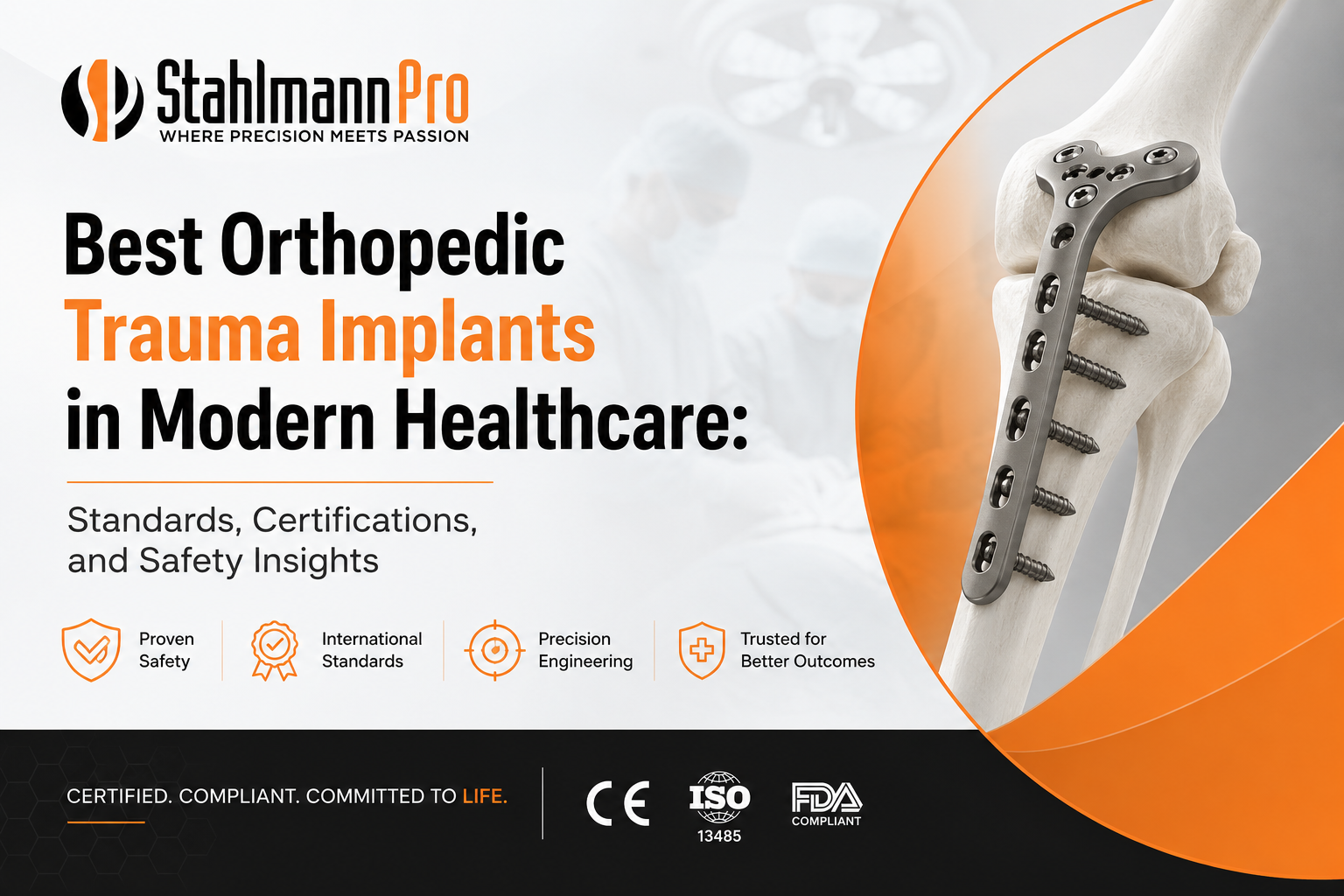
Orthopedic trauma implants have become a cornerstone of modern surgical care, helping millions of patients recover from fractures, bone deformities, and severe musculoskeletal injuries. From titanium plates and screws to intramedullary nails and joint fixation systems, these medical devices play a vital role in restoring mobility and improving quality of life.
However, the effectiveness of orthopedic trauma implants is not determined by design alone. It is equally influenced by international standards, regulatory certifications, material safety, and clinical validation. In today’s healthcare environment, where patient safety is the highest priority, understanding these elements is essential for surgeons, healthcare providers, and medical device manufacturers.
This article explores the best orthopedic trauma implants in modern healthcare, focusing on the standards, certifications, and safety insights that define quality and reliability in the medical device industry.
What Are Orthopedic Trauma Implants?
Orthopedic trauma implants are specialized medical devices used to stabilize and support fractured or damaged bones during the healing process. These implants ensure proper alignment, reduce pain, and allow early mobilization.
Common types include:
- Bone plates and locking plates
- Cortical and cancellous screws
- Intramedullary nails and rods
- External fixators
- Cannulated screws and pins
These implants are typically made from biocompatible materials such as titanium alloys, stainless steel, and medical-grade polymers, ensuring durability and compatibility with human tissue.
Why Standards Matter in Orthopedic Trauma Implants
The global medical device industry is highly regulated because even minor failures can result in severe patient complications. Therefore, orthopedic implants must comply with strict international standards and manufacturing protocols.
One of the most important globally recognized frameworks includes ISO and ASTM standards that define how implants are designed, tested, handled, and sterilized.
For example, ASTM guidelines such as ASTM F565-26 emphasize the proper handling, storage, and sterilization of orthopedic implants to prevent contamination and damage during surgical use.
These standards ensure:
- Safe handling of implants in hospitals
- Prevention of contamination and cross-infection
- Proper storage and transport conditions
- Consistency in surgical performance
- Reduced risk of implant failure
Without these standardized processes, even high-quality implants may become unsafe in real-world surgical environments.
Key International Standards for Orthopedic Implants
1. ISO Standards for Safety and Performance
The ISO framework provides essential principles for ensuring implant safety, including material compatibility, infection control, and mechanical integrity.
For example, ISO guidelines for surgical implants emphasize:
- Biocompatibility of materials
- Resistance to corrosion and wear
- Mechanical strength under load
- Safe interaction with biological tissues
A major focus is ensuring that implants perform safely throughout their entire lifecycle—from manufacturing to implantation and long-term use.
2. ASTM Standards for Handling and Care
ASTM standards such as F565 define strict protocols for:
- Cleaning and sterilization procedures
- Packaging and transport safety
- Separation of different implant metals
- Prevention of surface damage
These protocols ensure that implants remain sterile and structurally intact before surgical use.
3. ISO 10993 Biocompatibility Standards
Biocompatibility testing ensures that implants do not cause harmful reactions when placed inside the human body.
ISO 10993-6, for example, evaluates local tissue reactions after implantation and helps manufacturers assess inflammatory or toxic responses.
This is critical because orthopedic implants remain inside the body for long periods and must not trigger rejection or long-term complications.
Certifications That Define Implant Quality
Certification is the backbone of trust in orthopedic trauma implants. Without regulatory approval, implants cannot be legally marketed or used in most healthcare systems.
1. CE Certification (Europe)
CE marking confirms that an implant complies with European Union safety, health, and environmental requirements under MDR (Medical Device Regulation 2017/745).
For orthopedic trauma implants, CE certification ensures:
- Clinical evaluation compliance
- Biomechanical testing validation
- Sterilization and packaging safety
- Risk management documentation
Most trauma implants fall under Class IIb or Class III medical devices, meaning they require strict regulatory assessment before approval.
2. FDA Approval (United States)
In the United States, orthopedic implants must be cleared or approved by the Food and Drug Administration (FDA). This includes:
- Pre-market approval (PMA) for high-risk implants
- 510(k) clearance for equivalent devices
- Clinical performance studies
- Manufacturing audits
FDA compliance ensures that implants meet strict safety and effectiveness criteria before reaching patients.
3. ISO 13485 Quality Management Certification
ISO 13485 is the global standard for medical device manufacturing quality systems. It ensures:
- Controlled production environments
- Traceability of materials
- Consistent manufacturing processes
- Risk-based quality control
Manufacturers with ISO 13485 certification are generally considered more reliable and compliant with global healthcare expectations.
Safety Insights in Orthopedic Trauma Implants
Safety is the most critical factor in orthopedic implant performance. Even minor design flaws or material inconsistencies can lead to implant failure, infection, or delayed healing.
1. Biocompatibility and Material Safety
Modern implants are designed using:
- Titanium alloys (high strength, lightweight, corrosion-resistant)
- Stainless steel (cost-effective and durable)
- Bio-ceramics (used in specialized applications)
These materials are chosen to minimize immune response and ensure long-term stability.
2. Mechanical Strength and Load Bearing
Orthopedic implants must withstand high mechanical stress, especially in weight-bearing bones like the femur or tibia. Testing includes:
- Fatigue resistance testing
- Compression and torsion analysis
- Stress distribution modeling
3. Sterilization and Infection Control
Implants must be sterilized using validated processes such as:
- Gamma radiation
- Ethylene oxide (EtO) sterilization
- Autoclave steam sterilization
Improper sterilization can lead to serious post-surgical infections, making this a critical compliance requirement.
4. Surgical Handling and Storage
Even the best-designed implant can fail if mishandled. Standards emphasize:
- Proper packaging integrity
- Temperature-controlled storage
- Avoiding metal mixing
- Preventing surface contamination
Innovation in Modern Orthopedic Trauma Implants
The orthopedic implant industry is rapidly evolving with advanced technologies:
- 3D-printed patient-specific implants
- Smart implants with sensors
- Bio-absorbable fixation devices
- Minimally invasive implant systems
These innovations are improving surgical precision, reducing recovery time, and enhancing patient outcomes.
How to Identify the Best Orthopedic Trauma Implants
Healthcare professionals evaluate implants based on:
- Regulatory approvals (CE, FDA, ISO)
- Clinical performance data
- Surgeon feedback and usability
- Material quality and durability
- Manufacturer reputation
The “best” implant is not just about technology—it is about safety, compliance, and proven clinical success.
Conclusion
Orthopedic trauma implants are a critical component of modern healthcare, enabling surgeons to treat complex fractures and restore patient mobility effectively. However, their success depends heavily on adherence to international standards, certifications, and safety protocols.
From ISO biocompatibility testing to CE and FDA approvals, every step ensures that implants are safe, reliable, and clinically effective. As technology continues to evolve, the future of orthopedic implants will focus even more on personalized solutions, improved materials, and smarter surgical systems.
For healthcare providers and manufacturers alike, maintaining strict compliance with global standards is not optional—it is essential for patient safety and clinical success.
FAQs
1. What are orthopedic trauma implants used for?
They are used to stabilize fractured bones and support proper healing in orthopedic injuries.
2. Which materials are best for orthopedic implants?
Titanium alloys and stainless steel are most commonly used due to their strength and biocompatibility.
3. What is CE certification in orthopedic implants?
It is a European certification ensuring medical devices meet safety and regulatory requirements under MDR.
4. Why is ISO 13485 important for implant manufacturers?
It ensures consistent quality management systems in medical device production.
5. Are orthopedic implants safe for long-term use?
Yes, when properly designed, tested, and certified, they are safe for long-term implantation.
6. What risks are associated with poor-quality implants?
Risks include infection, implant failure, delayed healing, and allergic reactions.
