
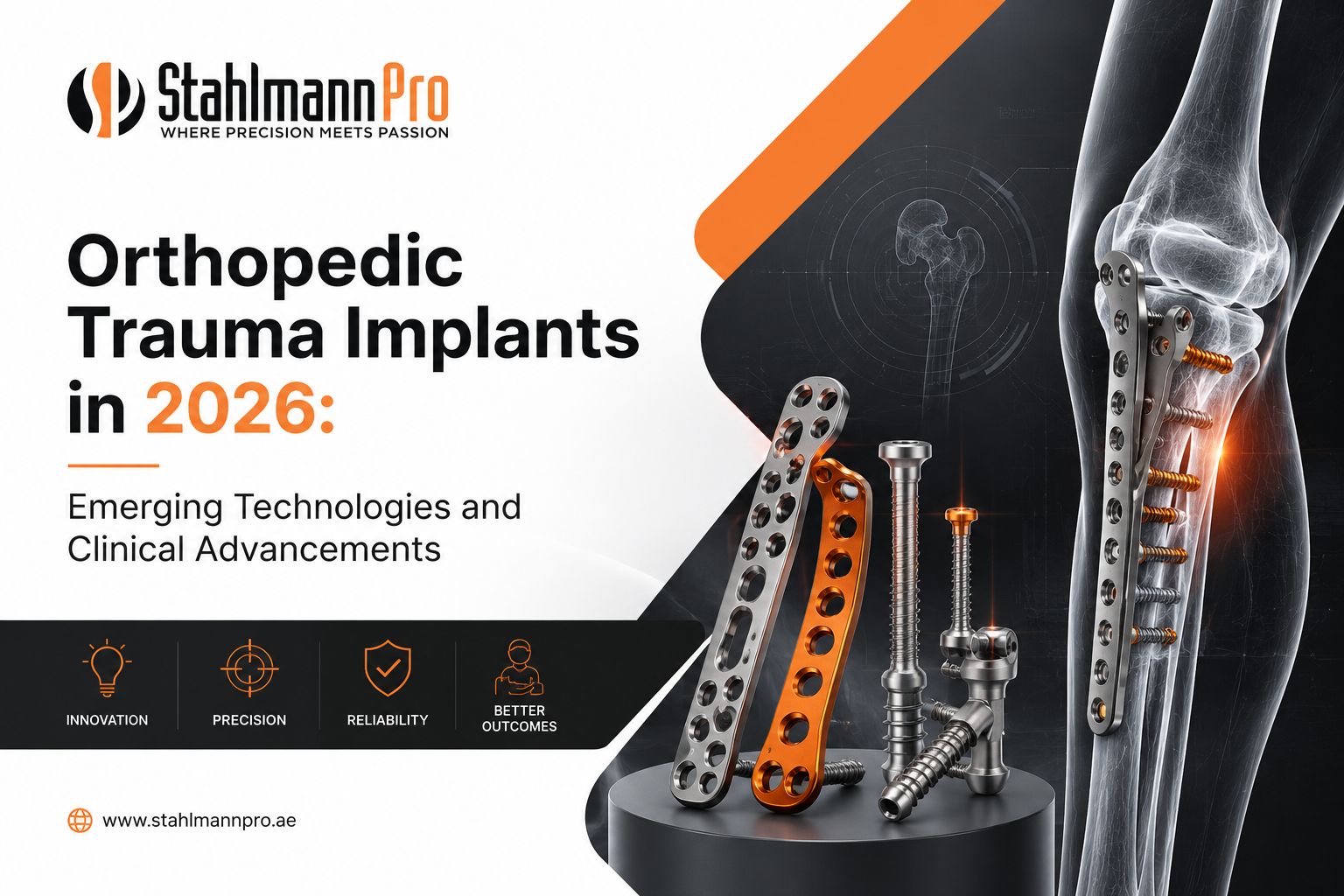
Orthopedic trauma care has entered a new era in 2026, driven by rapid advancements in implant technology, surgical techniques, and biomedical engineering. Orthopedic trauma implants—used to stabilize and support fractured bones—are no longer limited to traditional plates, screws, and rods. Today, they are becoming smarter, lighter, more biocompatible, and increasingly personalized for each patient.
From 3D-printed titanium implants to bioresorbable fixation systems and AI-assisted surgical planning, the field is evolving toward precision medicine in orthopedics. These innovations are not only improving patient outcomes but also reducing recovery times, surgical complications, and long-term implant failure rates.
This blog explores the latest trends, technologies, and clinical advancements shaping orthopedic trauma implants in 2026, with a focus on evidence-based progress and real-world clinical impact.
What Are Orthopedic Trauma Implants?
Orthopedic trauma implants are medical devices used to stabilize fractured or damaged bones during healing. They are commonly used in cases such as:
- Road traffic accidents
- Sports injuries
- Osteoporotic fractures
- Complex bone trauma
- Post-surgical reconstruction
Traditional implants include:
- Plates and screws
- Intramedullary nails
- External fixation systems
In 2026, these devices have evolved significantly with enhanced materials, smart functionality, and patient-specific customization.
Emerging Technologies in Orthopedic Trauma Implants (2026)
1. 3D-Printed Patient-Specific Implants
One of the most transformative advancements is additive manufacturing (3D printing). Surgeons can now design implants based on CT scans and MRI imaging, ensuring a perfect anatomical fit.
Key benefits:
- Improved alignment and stability
- Reduced surgical time
- Lower risk of implant rejection
- Faster bone healing
Titanium and PEEK (Polyether ether ketone) are commonly used materials due to their strength and biocompatibility.
2. Bioabsorbable (Bioresorbable) Implants
A major shift in trauma surgery is the rise of bioresorbable implants, which gradually dissolve in the body after healing.
Instead of requiring a second surgery for removal, these implants safely degrade over time.
Advantages:
- No need for implant removal surgery
- Reduced long-term complications
- Ideal for pediatric and sports medicine cases
Materials such as polylactic acid (PLA) and magnesium alloys are widely used in modern bioabsorbable systems.
3. Smart Orthopedic Implants with Sensors
The integration of smart sensor technology is revolutionizing post-operative care.
Smart implants can now:
- Monitor bone healing progress
- Detect infection early
- Measure pressure and load distribution
- Send real-time data to surgeons via connected devices
This innovation allows doctors to make data-driven decisions and intervene early if complications arise.
4. AI-Assisted Surgical Planning
Artificial Intelligence (AI) has become a critical tool in orthopedic trauma surgery. AI algorithms analyze patient scans and help surgeons:
- Predict fracture healing outcomes
- Choose optimal implant size and type
- Simulate surgical procedures
- Reduce human error in complex cases
This has significantly improved surgical precision and reduced revision surgeries.
5. Advanced Biocompatible Materials
Material science has made major contributions to implant innovation. Modern orthopedic implants now use:
- Titanium alloys (high strength, low weight)
- Carbon fiber-reinforced polymers
- Nano-coated surfaces for infection resistance
- Antibacterial coatings to reduce post-surgical infections
These materials improve durability and reduce the risk of implant-related complications.
6. Minimally Invasive Fixation Systems
Minimally invasive surgery (MIS) techniques are now standard in trauma care. New implant systems are designed specifically for smaller incisions and reduced tissue damage.
Clinical benefits:
- Less blood loss
- Faster recovery
- Reduced hospital stay
- Lower infection risk
Locking plates and percutaneous screw systems are widely used in 2026 MIS procedures.
Clinical Advancements in Orthopedic Trauma Care
Faster Bone Healing Protocols
Modern implants are now paired with biological enhancers such as:
- Bone morphogenetic proteins (BMPs)
- Stem cell therapy
- Growth factor coatings
These improve bone regeneration and significantly reduce healing time.
Enhanced Post-Operative Monitoring
With digital health integration, patients are now monitored using:
- Wearable sensors
- Mobile health apps
- Remote orthopedic consultation platforms
This improves follow-up care and reduces hospital dependency.
Improved Outcomes in Elderly Patients
With the rise in aging populations, orthopedic trauma implants are being optimized for osteoporotic bones. New fixation systems provide:
- Better grip in weak bone
- Reduced implant loosening
- Safer mobility restoration
Challenges in Modern Orthopedic Implant Technology
Despite progress, several challenges remain:
- High cost of advanced implants
- Limited access in developing regions
- Regulatory approval delays for new materials
- Need for specialized surgical training
Addressing these challenges is essential for global adoption of advanced orthopedic solutions.
The Future of Orthopedic Trauma Implants
Looking ahead, orthopedic trauma care is expected to become even more advanced with:
- Fully biodegradable smart implants
- AI-powered autonomous surgical systems
- Nanotechnology-based bone regeneration
- Personalized genetic-based implant selection
- Robotics-integrated trauma surgery
These innovations will further shift the focus from treatment to predictive and regenerative orthopedics.
Conclusion
Orthopedic trauma implants in 2026 represent a powerful combination of engineering, biology, and digital technology. From 3D printing and smart sensors to AI-assisted planning and bioresorbable materials, the field is rapidly moving toward precision-driven, patient-specific care.
For surgeons, hospitals, and medical device manufacturers, staying updated with these advancements is essential for delivering better clinical outcomes. Most importantly, patients benefit from safer procedures, faster recovery, and improved quality of life.
As technology continues to evolve, orthopedic trauma care is set to become more intelligent, minimally invasive, and biologically integrated than ever before.
FAQs (Frequently Asked Questions)
1. What are orthopedic trauma implants used for?
They are used to stabilize broken or fractured bones and support proper healing in trauma cases such as accidents, sports injuries, and bone deformities.
2. What is the latest technology in orthopedic implants in 2026?
The latest technologies include 3D-printed implants, bioresorbable materials, AI-assisted surgical planning, and smart implants with embedded sensors.
3. Are bioresorbable implants safe?
Yes, bioresorbable implants are clinically tested and safely dissolve in the body after fulfilling their function, reducing the need for removal surgery.
4. How does AI help in orthopedic surgery?
AI helps in pre-surgical planning, predicting outcomes, selecting implant types, and improving surgical precision.
5. What material is best for orthopedic implants?
Titanium alloys are widely considered the best due to their strength, durability, and high biocompatibility.
6. Can orthopedic implants fail?
While rare, implant failure can occur due to infection, improper healing, or mechanical stress. Advanced technologies are significantly reducing these risks.
