
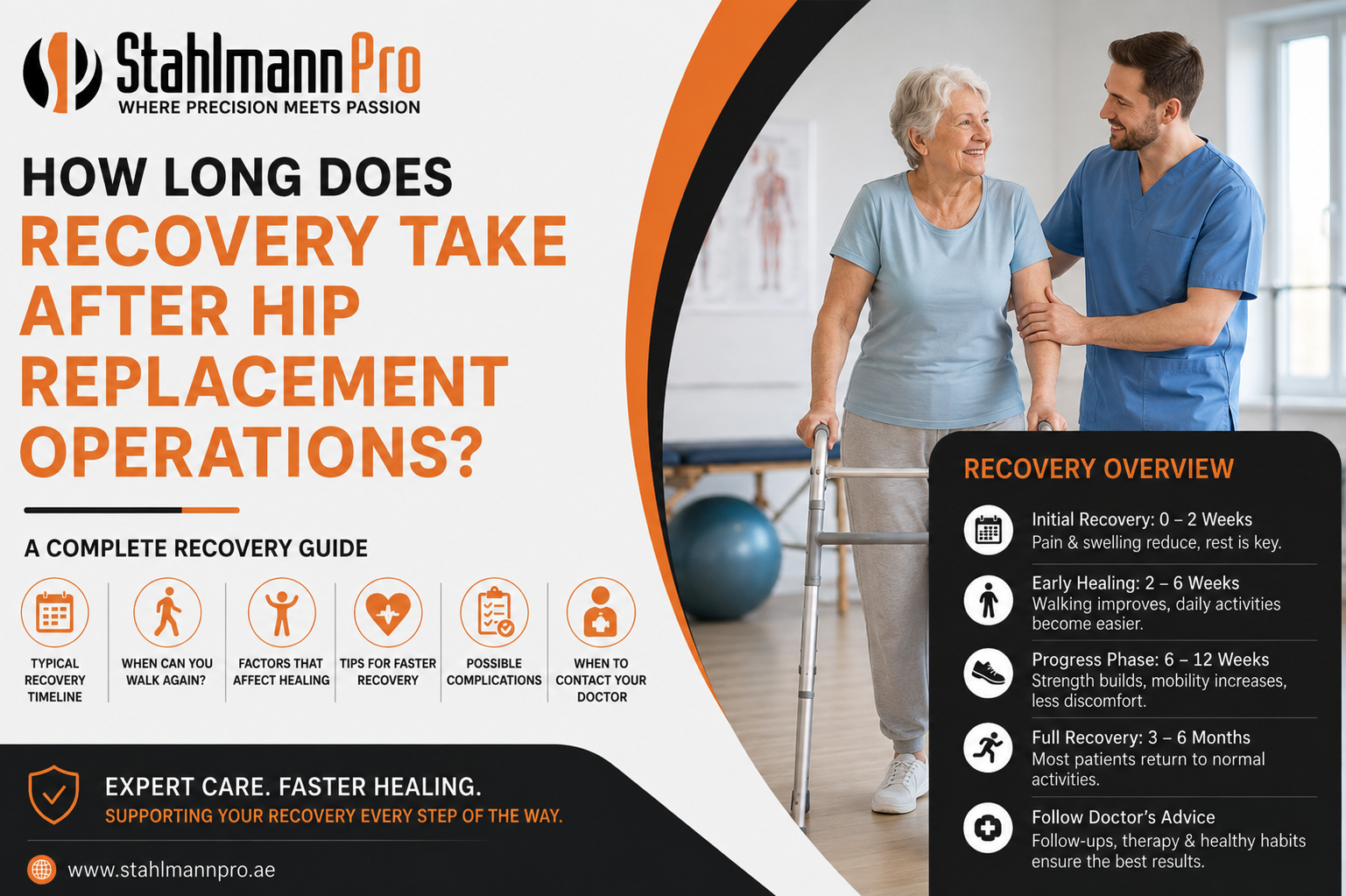
Hip replacement surgery can significantly improve mobility, reduce pain, and make everyday activities easier for people with severe hip joint damage. However, recovery does not happen overnight. Most patients make noticeable progress during the first few weeks, while complete healing and strengthening can continue for several months.
The exact recovery period varies from person to person. Age, general health, fitness level, type of surgery, muscle strength, rehabilitation, and the condition of the hip before surgery can all influence how quickly someone returns to normal activities.
What Are Hip Replacement Operations?
Hip replacement surgery involves removing damaged parts of the hip joint and replacing them with artificial components. A total hip replacement generally replaces both the ball and socket, while a partial replacement replaces only the ball portion of the joint.
People may undergo hip replacement operations because of conditions such as severe osteoarthritis, significant joint damage, or certain serious hip injuries.
Typical Hip Replacement Recovery Timeline
There is no single recovery schedule that applies to everyone, but understanding the general stages can help patients know what to expect.
First Few Days After Surgery
Patients are usually encouraged to begin moving soon after surgery. A physiotherapist may help the patient sit up, stand, and walk with a walker or crutches.
Depending on recovery and overall health, some patients may be discharged within one to three days when they can safely move around and their wound is healing appropriately.
Pain, swelling, tiredness, and stiffness are common during the early period. Medication prescribed by the medical team can help control discomfort.
Weeks 1 to 3
During the first few weeks at home, walking and prescribed exercises become important parts of rehabilitation. Patients generally increase their walking distance gradually rather than trying to return immediately to their previous activity level.
The surgical wound also continues to heal. Some medical guidance indicates that the wound may take around four to six weeks to heal fully, although individual healing times vary.
Patients should follow their surgeon’s instructions regarding wound care, medication, physical activity, and movement restrictions.
Weeks 4 to 6
Many people begin feeling considerably stronger during this period. Walking may become easier, and some patients can reduce their reliance on walking aids as their strength and balance improve.
Returning to work may be possible for around six weeks for some people, particularly when the job is not physically demanding. People with physically intensive jobs may require additional recovery time.
Driving should only resume when the surgeon or healthcare professional confirms that it is safe. NHS guidance advises waiting at least six weeks and checking that the patient is fit to drive.
Two to Three Months
At this stage, many patients can perform more everyday activities with less discomfort. Strength, flexibility, balance, and walking ability can continue improving through rehabilitation.
However, feeling better does not necessarily mean the hip is completely healed. Soft tissues, muscles, and bone can continue strengthening beyond the first few months.
Three to Six Months
Many patients are functioning well by four to six months, although recovery can continue beyond this point. Some rehabilitation guidance notes that bone and muscles may take up to six months to fully heal and strengthen.
For some people, improvements in strength and function may continue for considerably longer. Therefore, patients should not become concerned if their recovery does not exactly match someone else’s timeline.
What Factors Affect Recovery Time?
Several factors can influence recovery after hip replacement surgery:
Age and General Health
People who are physically healthy before surgery may find it easier to participate in rehabilitation. Existing health conditions can sometimes make recovery slower.
Muscle Strength Before Surgery
Stronger muscles around the hip and legs can support mobility after surgery. Some doctors recommend appropriate strengthening exercises before the operation to help prepare the body for recovery.
Type of Hip Surgery
Total and partial hip replacements involve different surgical procedures, so recovery can vary. NHS guidance notes that partial hip replacement can have a faster recovery in some circumstances.
Physiotherapy and Exercise
Following the exercise program provided by the physiotherapist can help restore movement and strength. Early, appropriate mobility is an important part of many modern recovery programs.
Lifestyle and Activity Level
Nutrition, smoking status, physical fitness, sleep, and the ability to follow postoperative instructions can all affect recovery.
Tips for Supporting a Smooth Recovery
Patients can support their recovery by:
- Following the surgeon’s postoperative instructions.
- Completing recommended physiotherapy exercises.
- Increasing walking gradually.
- Using walking aids for as long as medically recommended.
- Taking prescribed medications as directed.
- Keeping the surgical wound clean and following wound care instructions.
- Avoiding activities that the healthcare team has restricted.
- Maintaining a balanced diet and adequate hydration.
- Attending follow-up appointments.
It is important not to push through significant pain or attempt demanding activities simply because another person recovered quickly.
When Should You Contact Your Doctor?
Some discomfort and swelling can be expected after surgery, but new or worsening symptoms should not be ignored.
Contact your healthcare team if you experience concerns such as increasing pain, problems with the surgical wound, unusual swelling, fever, or difficulty moving the hip.
Symptoms that could indicate a blood clot, including significant leg pain or swelling, warmth, or discoloration, require prompt medical attention.
Final Thoughts
Recovery after hip replacement operations is a gradual process rather than a single event. Many patients begin walking within days, experience significant improvement during the first four to six weeks, and continue rebuilding strength over the following months.
The most important approach is to follow the personalized instructions provided by your surgeon and physiotherapy team. Every patient’s recovery is different, so your medical team should guide decisions about exercise, driving, work, and returning to more demanding activities.
Frequently Asked Questions
How long does it take to recover from hip replacement surgery?
Many patients make substantial progress within the first six weeks, but complete recovery can take several months. Some tissues and muscles may continue strengthening for six months or longer.
How soon can I walk after a hip replacement?
Patients are generally encouraged to begin walking soon after surgery with assistance from nurses or physiotherapists. A walker, crutches, or another walking aid may be needed initially.
When can I return to work?
Some people can return to work at around six weeks, particularly when their work is relatively light. Physically demanding jobs may require a longer recovery period. Your surgeon should determine when returning to work is appropriate.
When can I drive after hip replacement?
Driving commonly needs to be delayed for at least six weeks. You should only drive after your healthcare professional confirms that you can safely control the vehicle and perform an emergency stop.
Is pain normal after hip replacement?
Some pain and swelling are expected during the early recovery period. These symptoms generally improve over the following weeks. Persistent, severe, or worsening pain should be discussed with your medical team.
Can recovery take longer than six months?
Yes. While many patients function well within several months, strength and soft tissue recovery can continue beyond six months. Recovery speed varies considerably between individuals.
