
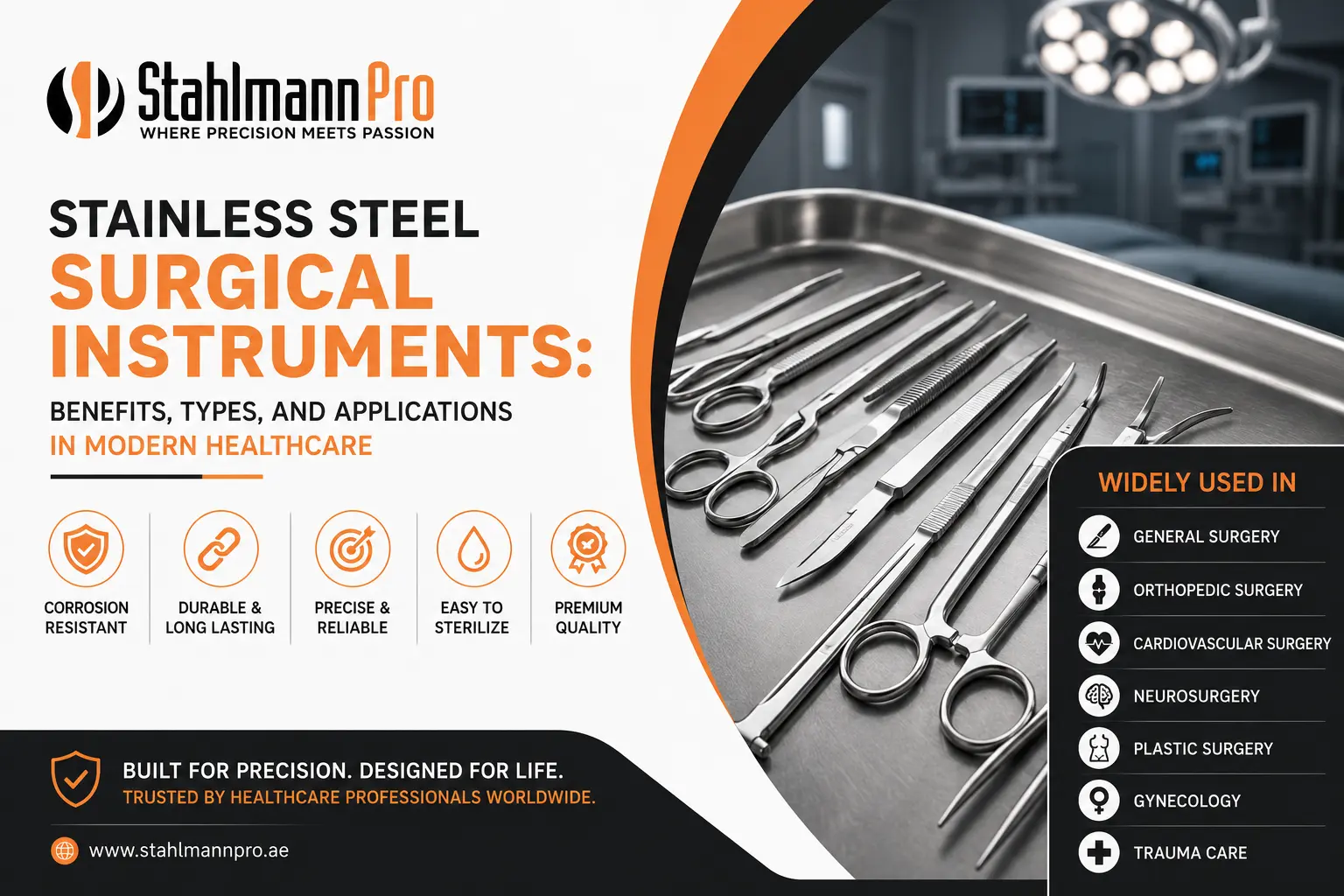
Stainless steel surgical instruments are the foundation of modern surgical procedures. From general surgery to orthopedic, cardiovascular, and neurosurgical operations, these instruments provide the precision, strength, and reliability that healthcare professionals depend on every day. Their exceptional durability, corrosion resistance, and ability to withstand repeated sterilization make them the preferred choice for hospitals, clinics, and surgical centers worldwide.
Whether performing routine procedures or highly complex operations, surgeons require instruments that maintain sharpness, structural integrity, and consistent performance. High quality stainless steel surgical instruments help improve surgical accuracy, reduce complications, and support better patient outcomes.
In this guide, we will explore the advantages, common types, applications, and essential factors to consider when selecting stainless steel surgical instruments.
What Are Stainless Steel Surgical Instruments?
Stainless steel surgical instruments are medical tools manufactured from high grade stainless steel alloys specifically designed for surgical use. These instruments are engineered to resist corrosion, staining, and wear while maintaining their mechanical strength after repeated cleaning and sterilization.
Medical grade stainless steel contains chromium, which forms a protective layer that prevents rust and extends the instrument’s lifespan. Many premium surgical instruments also include additional elements such as molybdenum and nickel to improve corrosion resistance and durability.
Benefits of Stainless Steel Surgical Instruments
Excellent Corrosion Resistance
One of the primary advantages of stainless steel surgical instruments is their ability to resist rust and corrosion. This is essential because surgical tools are exposed to blood, bodily fluids, cleaning chemicals, and high temperature sterilization throughout their service life.
Long Lasting Durability
High quality stainless steel offers outstanding strength and wear resistance. Instruments maintain their shape and functionality even after thousands of surgical procedures and sterilization cycles.
Superior Precision
Precision is critical in every surgical procedure. Stainless steel instruments are manufactured with tight tolerances to provide excellent control, allowing surgeons to perform delicate procedures with confidence.
Easy Sterilization
Medical grade stainless steel withstands steam sterilization, chemical disinfection, and other approved sterilization methods without losing performance or structural integrity.
Cost Effective Investment
Although premium surgical instruments require an initial investment, their long service life reduces replacement costs and provides excellent value for healthcare facilities.
Common Types of Stainless Steel Surgical Instruments
Healthcare facilities rely on a wide range of stainless steel surgical instruments designed for specific surgical functions.
Cutting Instruments
These instruments are used to cut tissue, sutures, and other materials during surgery. Common examples include:
- Surgical scissors
- Surgical knives
- Bone cutters
- Osteotomes
Grasping Instruments
Grasping instruments securely hold tissues or surgical materials during procedures.
Examples include:
- Tissue forceps
- Dressing forceps
- Thumb forceps
- Allis forceps
Clamping Instruments
Clamps help control bleeding and temporarily occlude blood vessels.
Common examples include:
- Hemostatic forceps
- Artery forceps
- Bulldog clamps
- Vascular clamps
Retracting Instruments
Retractors improve surgical visibility by holding tissues away from the operating field.
Examples include:
- Hand held retractors
- Self retaining retractors
- Abdominal retractors
- Orthopedic retractors
Needle Holders
Needle holders securely grip surgical needles during suturing and wound closure.
Applications of Stainless Steel Surgical Instruments
Stainless steel surgical instruments are used across numerous medical specialties.
General Surgery
General surgeons depend on these instruments for abdominal, gastrointestinal, and soft tissue procedures.
Orthopedic Surgery
Orthopedic specialists use stainless steel instruments for fracture fixation, joint replacement, trauma surgery, and bone reconstruction.
Neurosurgery
Precision instruments made from stainless steel support delicate brain and spinal procedures requiring exceptional accuracy.
Cardiovascular Surgery
Cardiac surgeons require corrosion resistant instruments capable of maintaining precision during complex vascular and heart surgeries.
Plastic and Reconstructive Surgery
Fine surgical instruments allow plastic surgeons to perform delicate tissue handling with minimal trauma.
Gynecology and Obstetrics
Many gynecological procedures rely on stainless steel instruments for examination, tissue manipulation, and surgical intervention.
Why Medical Grade Stainless Steel Matters
Not all stainless steel is suitable for medical applications. Medical grade stainless steel is specifically engineered to meet strict quality standards for healthcare environments.
Key characteristics include:
- High corrosion resistance
- Excellent hardness
- Superior edge retention
- Resistance to repeated sterilization
- Biocompatibility
- Long operational lifespan
These qualities ensure safe and reliable surgical performance.
Features of High Quality Stainless Steel Surgical Instruments
When purchasing surgical instruments, healthcare professionals should evaluate several important features.
Precision Manufacturing
Accurate machining ensures consistent instrument performance and ergonomic handling.
Smooth Surface Finish
A polished finish reduces contamination risks and simplifies cleaning.
Ergonomic Design
Comfortable handles reduce hand fatigue during lengthy surgical procedures.
Balanced Weight
Proper weight distribution improves control and surgical precision.
Quality Inspection
Each instrument should undergo comprehensive quality testing before reaching healthcare providers.
How to Maintain Stainless Steel Surgical Instruments
Proper maintenance significantly extends instrument life.
Clean Immediately After Use
Remove blood and surgical debris before they dry on the instrument surface.
Use Approved Cleaning Solutions
Avoid harsh chemicals that may damage the protective surface layer.
Inspect Regularly
Check for damaged tips, loose joints, corrosion, or misalignment before every procedure.
Lubricate Hinged Instruments
Medical grade lubricants help maintain smooth instrument movement.
Sterilize Properly
Always follow manufacturer recommendations and hospital sterilization protocols.
Store Carefully
Keep instruments organized in protective trays to prevent unnecessary damage.
How to Choose Stainless Steel Surgical Instruments
Selecting the right surgical instruments involves more than comparing prices.
Consider the following:
- Choose medical grade stainless steel.
- Verify compliance with international quality standards.
- Select instruments designed for your surgical specialty.
- Evaluate precision, finish, and ergonomic design.
- Purchase from trusted manufacturers with strict quality control.
- Consider long term durability instead of initial purchase cost.
Investing in premium quality instruments improves surgical efficiency and reduces replacement expenses.
Future Trends in Stainless Steel Surgical Instruments
Medical technology continues to improve surgical instrument manufacturing. Modern production methods offer:
- Higher dimensional accuracy
- Enhanced corrosion resistance
- Improved ergonomic designs
- Better surface finishing
- Advanced quality assurance processes
These innovations help surgeons perform increasingly complex procedures with greater confidence and precision.
Conclusion
Stainless steel surgical instruments remain the industry standard for modern surgical care because they combine durability, precision, corrosion resistance, and long term reliability. Their versatility allows healthcare professionals to perform procedures across virtually every surgical specialty while maintaining consistent clinical performance.
By choosing high quality stainless steel surgical instruments from a reputable manufacturer, hospitals and surgical centers can improve operational efficiency, extend instrument lifespan, and support safer patient care. Proper maintenance and sterilization further maximize the value of these essential medical tools, making them a dependable investment for any healthcare facility.
Frequently Asked Questions
Why are stainless steel surgical instruments widely used?
They provide excellent corrosion resistance, durability, precision, and compatibility with repeated sterilization, making them ideal for surgical environments.
Can stainless steel surgical instruments rust?
Medical grade stainless steel is highly resistant to rust, but improper cleaning, storage, or exposure to harsh chemicals can cause corrosion over time.
How long do stainless steel surgical instruments last?
With proper maintenance and sterilization, premium quality instruments can remain functional for many years.
Are stainless steel surgical instruments reusable?
Yes. Most stainless steel surgical instruments are designed for repeated use after proper cleaning and sterilization according to healthcare guidelines.
How should surgical instruments be maintained?
Clean them immediately after use, inspect them regularly, lubricate moving parts when necessary, sterilize correctly, and store them in protective trays to maximize their lifespan.
