
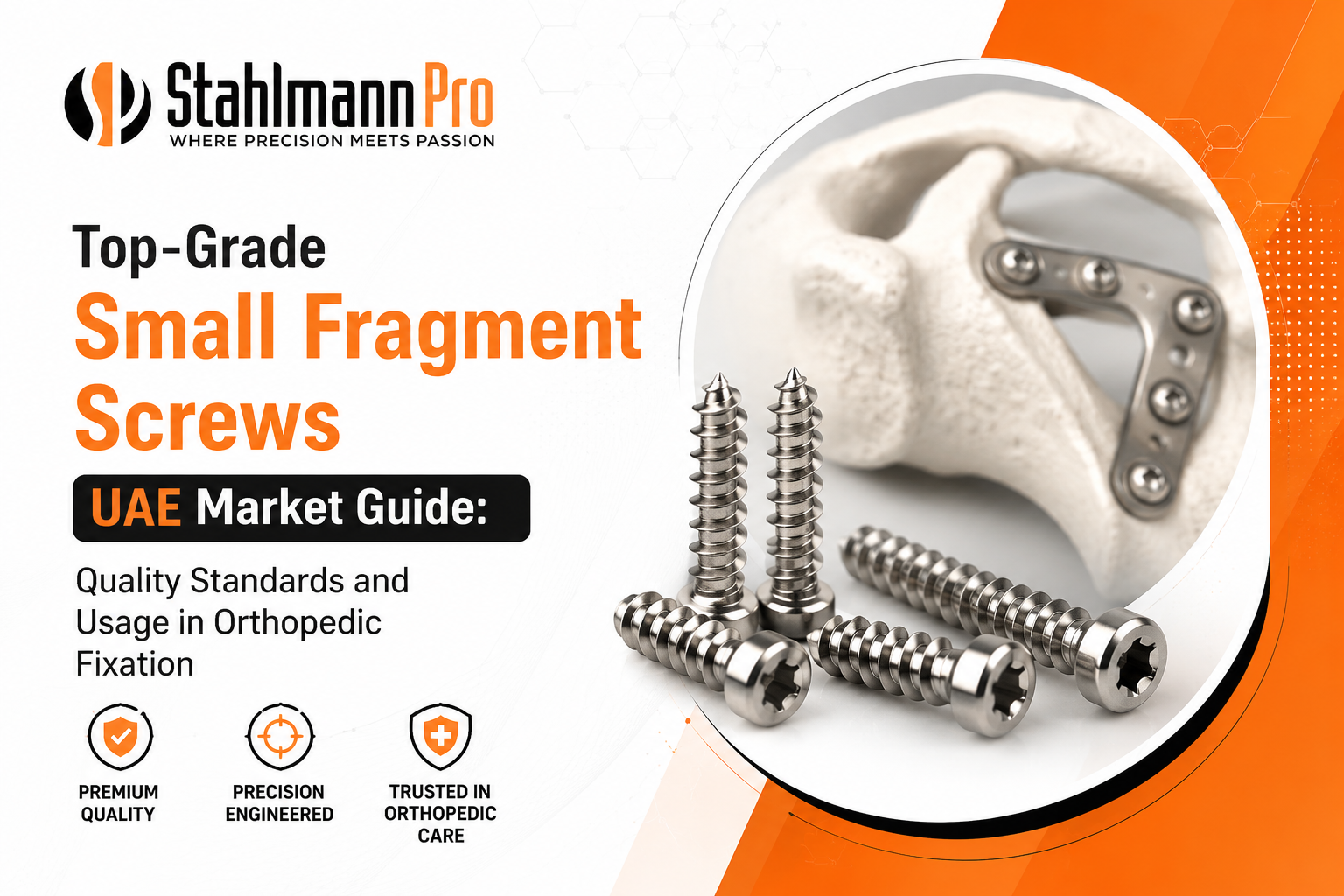
Orthopedic surgery has advanced significantly over the last few decades, and one of the most critical innovations supporting this progress is the development of small fragment screws. These precision-engineered implants play a vital role in fracture fixation, especially in small bone segments where stability, alignment, and minimal tissue disruption are essential.
In the UAE’s rapidly growing healthcare sector, demand for top-grade small fragment screws is increasing due to rising trauma cases, sports injuries, road accidents, and elective orthopedic procedures. Hospitals and surgical centers across Dubai, Abu Dhabi, and other emirates are increasingly focusing on high-quality implant systems that meet international standards such as ISO and CE certification.
This guide explores everything you need to know about small fragment screws in the UAE market, including quality standards, clinical applications, material selection, and best practices in orthopedic fixation.
What Are Small Fragment Screws in Orthopedic Surgery?
Small fragment screws are specialized orthopedic implants designed for fixing fractures in smaller bones or bone segments. They are commonly used in combination with plates to stabilize fractures in areas such as:
- Radius and ulna (forearm bones)
- Humerus (upper arm bone)
- Fibula and tibia (lower leg bones)
- Small peri-articular regions
These screws are typically used in 3.5 mm and 4.5 mm systems, depending on anatomical requirements and surgical protocols.
Their primary role is to provide compression, stability, and alignment during bone healing while minimizing movement at the fracture site.
Importance of Small Fragment Screws in Orthopedic Fixation
Orthopedic fixation relies heavily on precision. Small fragment screws are essential because they:
1. Ensure Stable Bone Alignment
They hold fractured bone segments in the correct anatomical position, preventing malunion or deformity.
2. Promote Faster Healing
By reducing micro-movements at the fracture site, they allow natural bone healing to progress efficiently.
3. Minimize Surgical Trauma
Modern screw designs support minimally invasive techniques, reducing soft tissue damage.
4. Improve Functional Recovery
Proper fixation ensures patients regain mobility and function faster after surgery.
Types of Small Fragment Screws Used in the UAE Market
The UAE medical device market offers a variety of small fragment screws depending on surgical needs.
1. Cortical Screws
Designed for dense bone regions, these screws provide strong fixation in diaphyseal bone areas.
2. Cancellous Screws
Used in spongy or soft bone, especially near joints, offering better grip in porous structures.
3. Locking Screws
These screws lock into plates, creating a fixed-angle construct ideal for osteoporotic or complex fractures.
4. Self-Tapping Screws
These eliminate the need for pre-drilling threads, reducing surgical time and improving efficiency.
5. Partially Threaded Screws
Used for achieving interfragmentary compression in fracture management.
Each type plays a specific role depending on the fracture pattern and patient condition.
Quality Standards for Small Fragment Screws in the UAE
The UAE healthcare system follows strict regulatory guidelines to ensure patient safety and surgical effectiveness. Small fragment screws must comply with international standards such as:
ISO 13485 Certification
Ensures that medical devices are manufactured under a controlled quality management system.
CE Marking
Indicates compliance with European safety, health, and environmental protection standards.
FDA Approval (where applicable)
Some imported implants also follow U.S. FDA regulations for added assurance.
Biocompatibility Standards
Materials must be non-toxic and safe for long-term implantation in the human body.
Mechanical Strength Testing
Includes torque resistance, fatigue testing, and load-bearing capacity assessments.
Hospitals in the UAE typically source implants only from certified orthopedic manufacturers to ensure compliance with these standards.
Materials Used in Small Fragment Screws
Material selection is critical for implant performance. The most commonly used materials include:
Titanium Alloy (Ti-6Al-4V)
- Lightweight and highly biocompatible
- Excellent corrosion resistance
- Ideal for long-term implantation
Stainless Steel (316L)
- High mechanical strength
- Cost-effective option
- Widely used in trauma surgeries
Bioabsorbable Materials (in advanced systems)
- Gradually dissolve in the body
- Eliminate need for removal surgery
- Used in select pediatric and sports cases
Titanium remains the preferred choice in the UAE due to its balance of strength and safety.
Applications of Small Fragment Screws in Orthopedic Surgery
Small fragment screws are used across a wide range of orthopedic procedures:
Trauma Fixation
Used in emergency cases involving fractures caused by accidents or falls.
Sports Injuries
Common in athletes suffering from fractures or ligament-related bone damage.
Reconstructive Surgery
Helps restore bone structure after deformities or previous surgical failures.
Pediatric Orthopedics
Specialized screw systems are used for growing bones with minimal disruption.
Joint-Related Fixation
Used in peri-articular fractures where precision is essential for joint mobility.
UAE Market Overview for Orthopedic Screws
The UAE orthopedic implant market is expanding rapidly due to:
- Increasing population and healthcare investments
- Rising incidence of road traffic accidents
- Growth in private hospitals and surgical centers
- Medical tourism in Dubai and Abu Dhabi
Hospitals demand high-performance implant systems that ensure predictable surgical outcomes. As a result, suppliers must maintain strict compliance with international regulatory frameworks.
Additionally, UAE healthcare providers prefer suppliers that offer:
- Consistent product availability
- Fast logistics and distribution
- Technical surgical support
- Training for orthopedic surgeons
Challenges in the Orthopedic Implant Market
Despite strong growth, the market faces several challenges:
1. Counterfeit Medical Devices
Unregulated imports can compromise patient safety.
2. Cost Variability
High-quality implants often come at a premium price.
3. Regulatory Compliance
Manufacturers must continuously meet evolving standards.
4. Surgeon Preference Variability
Different surgeons prefer different systems, requiring broad product availability.
Best Practices for Using Small Fragment Screws
To ensure optimal surgical outcomes, orthopedic surgeons follow key best practices:
- Proper preoperative planning with imaging (X-ray, CT scans)
- Selection of correct screw size and type
- Maintaining sterile surgical environments
- Ensuring proper torque application during insertion
- Postoperative monitoring for healing progress
These steps significantly reduce complications and improve patient recovery rates.
Future Trends in Small Fragment Screw Technology
The orthopedic implant industry is evolving with new innovations such as:
Smart Implants
Embedded sensors to monitor healing progress.
3D-Printed Screws
Custom-designed implants for complex fractures.
Bioactive Coatings
Enhanced bone integration and faster healing.
Minimally Invasive Systems
Designed for faster recovery and reduced scarring.
The UAE is expected to adopt these innovations quickly due to its advanced healthcare infrastructure.
Conclusion
Small fragment screws are a cornerstone of modern orthopedic fixation, providing stability, precision, and improved patient outcomes. In the UAE, the demand for top-grade orthopedic implants continues to grow as healthcare standards rise and surgical technologies advance.
Understanding material quality, regulatory compliance, and clinical applications is essential for hospitals, surgeons, and medical suppliers operating in this competitive market.
As innovation continues, the future of orthopedic fixation in the UAE will increasingly rely on advanced, biocompatible, and highly precise implant systems that enhance both surgical efficiency and patient recovery.
FAQs
1. What are small fragment screws used for in orthopedics?
Small fragment screws are used to fix fractures in small bones or bone segments, ensuring stability and proper alignment during healing.
2. What materials are commonly used for orthopedic screws?
The most common materials are titanium alloy, stainless steel, and in some cases bioabsorbable polymers.
3. Why are titanium screws preferred in the UAE?
Titanium screws are preferred due to their strength, lightweight nature, and excellent biocompatibility.
4. Are small fragment screws safe for long-term use?
Yes, when manufactured under ISO and CE standards, they are safe for long-term implantation.
5. What is the difference between locking and non-locking screws?
Locking screws secure into plates for fixed-angle stability, while non-locking screws compress bone fragments directly.
