
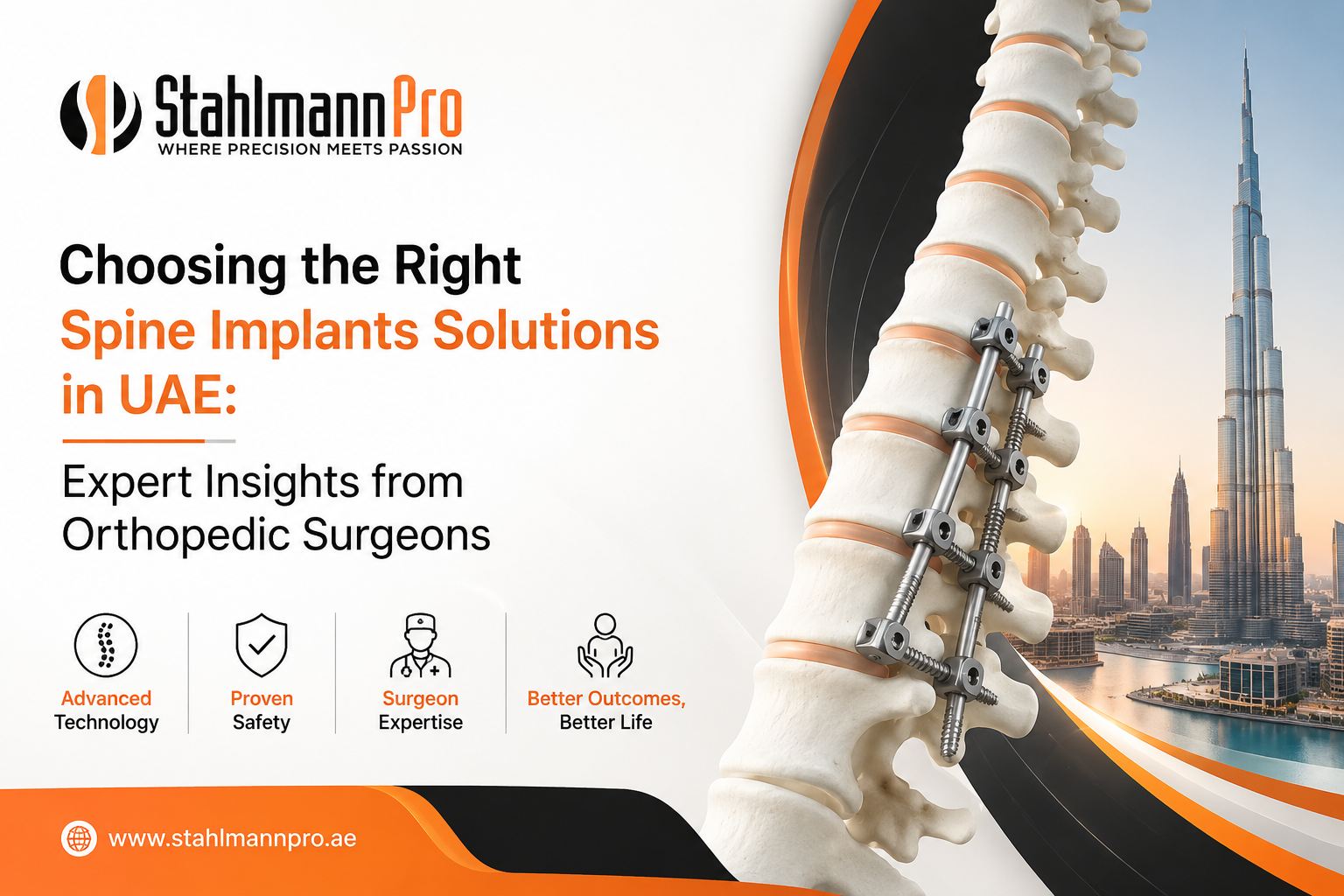
Spine disorders are among the most common causes of chronic pain and disability worldwide, and the UAE is no exception. With a growing population, active lifestyles, and increasing cases of degenerative spinal conditions, the demand for advanced spinal care has significantly increased. In modern orthopedic practice, spine implants play a crucial role in restoring stability, correcting deformities, and improving quality of life for patients suffering from spinal injuries or diseases.
However, choosing the right spine implant solution is not a simple decision. It requires careful evaluation by experienced orthopedic and spine surgeons, advanced imaging, and a personalized treatment plan. This article provides expert insights into how spine implants are selected in the UAE, the types available, and what patients should know before undergoing surgery.
Understanding Spine Implants and Their Role
Spine implants are medical devices designed to support, stabilize, and correct the spine during or after surgical procedures. They are commonly used in conditions such as:
- Degenerative disc disease
- Scoliosis and spinal deformities
- Spinal fractures due to trauma
- Herniated discs requiring fusion surgery
- Spinal tumors or infections
These implants are typically made from biocompatible materials like titanium, stainless steel, or PEEK (polyether ether ketone), which integrate safely with the human body.
The primary goal of spine implants is to restore spinal alignment, reduce pain, and enable proper healing after surgical intervention.
Why Spine Implants Are Increasingly Important in the UAE
The UAE has become a regional hub for advanced healthcare, especially in orthopedics and neurosurgery. Several factors are contributing to the rising need for spinal implant procedures:
1. Lifestyle and Occupational Strain
Long working hours, sedentary office jobs, and reduced physical activity contribute to spine-related issues such as slipped discs and chronic back pain.
2. Road Traffic Accidents
High-speed road networks increase the risk of traumatic spinal injuries, often requiring surgical stabilization with implants.
3. Aging Population
As life expectancy increases, degenerative spinal conditions like osteoarthritis and disc degeneration are becoming more common.
4. Medical Tourism in UAE
The UAE attracts patients from across the Middle East, Asia, and Africa due to its advanced surgical technologies and internationally trained surgeons.
Types of Spine Implants Used by Surgeons in the UAE
Orthopedic and spine surgeons select implants based on the patient’s condition, anatomy, and surgical goals. The most commonly used types include:
1. Pedicle Screws and Rod Systems
These are widely used in spinal fusion surgeries to stabilize the vertebrae. They help correct deformities and provide strong internal support during healing.
2. Interbody Cages
Used in disc replacement or fusion surgeries, these implants maintain disc height and support bone growth between vertebrae.
3. Artificial Disc Replacements
Instead of fusing the spine, artificial discs preserve motion and are ideal for younger, active patients with disc degeneration.
4. Plates and Hooks
Often used in cervical spine surgeries, these implants stabilize the neck region after trauma or decompression surgery.
5. Minimally Invasive Spine Implants
Modern surgical advancements allow the use of smaller implants inserted through minimally invasive techniques, reducing recovery time and hospital stay.
How Orthopedic Surgeons Choose the Right Implant
Selecting the right spine implant is a highly specialized process. In the UAE, orthopedic surgeons follow a structured evaluation process:
1. Detailed Diagnosis and Imaging
MRI, CT scans, and X-rays help determine the exact location and severity of the spinal condition.
2. Patient-Specific Factors
Surgeons consider:
- Age of the patient
- Bone density and overall health
- Activity level and lifestyle
- Presence of other medical conditions
3. Type of Spinal Condition
Different conditions require different solutions. For example:
- Trauma cases often require rigid fixation
- Degenerative conditions may benefit from motion-preserving implants
- Deformities require corrective alignment systems
4. Surgical Approach
The choice between open surgery and minimally invasive procedures also influences implant selection.
5. Long-Term Outcomes
Surgeons prioritize implants that offer durability, compatibility, and long-term spinal stability.
Advancements in Spine Implant Technology
The UAE healthcare sector is known for adopting cutting-edge medical technologies. Some recent advancements include:
1. 3D-Printed Spine Implants
Customized implants designed according to the patient’s spinal anatomy improve accuracy and surgical outcomes.
2. Biodegradable Materials
New research is focusing on implants that gradually dissolve as the bone heals.
3. Navigation-Assisted Surgery
Robotic and computer-assisted systems help surgeons place implants with extreme precision.
4. Enhanced Surface Coatings
Modern implants are coated to improve bone integration and reduce the risk of infection.
Risks and Considerations
Although spine implant surgery is highly effective, it is not without risks. Patients should be aware of:
- Infection at the surgical site
- Implant displacement or loosening
- Nerve irritation or damage
- Blood clots or anesthesia-related risks
- Need for revision surgery in rare cases
Choosing an experienced orthopedic surgeon significantly reduces these risks and improves success rates.
Recovery and Post-Surgery Care
Recovery after spine implant surgery varies depending on the procedure, but typically includes:
Hospital Stay
Patients may stay 2–5 days depending on surgical complexity.
Physiotherapy
Rehabilitation plays a key role in restoring mobility and strengthening spinal muscles.
Lifestyle Adjustments
Patients are advised to:
- Avoid heavy lifting
- Maintain proper posture
- Follow exercise routines recommended by physiotherapists
- Attend regular follow-ups
Full recovery can take anywhere from a few weeks to several months.
Importance of Choosing the Right Surgeon in UAE
The success of spine implant surgery depends heavily on the expertise of the orthopedic surgeon. In the UAE, leading spine specialists are internationally trained and experienced in advanced surgical techniques.
When selecting a surgeon, patients should consider:
- Board certification and specialization in spine surgery
- Experience with complex spinal cases
- Access to advanced surgical facilities
- Patient reviews and success rates
A skilled surgeon ensures not only correct implant selection but also better long-term outcomes and reduced complications.
Conclusion
Choosing the right spine implant solution in the UAE is a critical medical decision that requires expert evaluation, advanced technology, and personalized care. With rapid advancements in orthopedic surgery and world-class healthcare infrastructure, patients now have access to highly effective treatments that restore mobility and improve quality of life.
However, success depends on the right combination of accurate diagnosis, appropriate implant selection, and experienced surgical expertise. Consulting a qualified orthopedic spine surgeon is the first and most important step toward recovery.
FAQs
1. What are spine implants used for?
Spine implants are used to stabilize the spine, correct deformities, and support healing after injuries or degenerative conditions.
2. Are spine implant surgeries safe?
Yes, when performed by experienced orthopedic surgeons, spine implant surgeries are generally safe with high success rates.
3. How long do spine implants last?
Most modern spine implants are designed to last a lifetime, depending on patient health and activity level.
4. Is surgery the only option for spine problems?
No, many cases are treated with physiotherapy and medication. Surgery is recommended only when conservative treatments fail.
5. How long is the recovery period after spine implant surgery?
Recovery can range from a few weeks to several months depending on the complexity of the procedure.
