
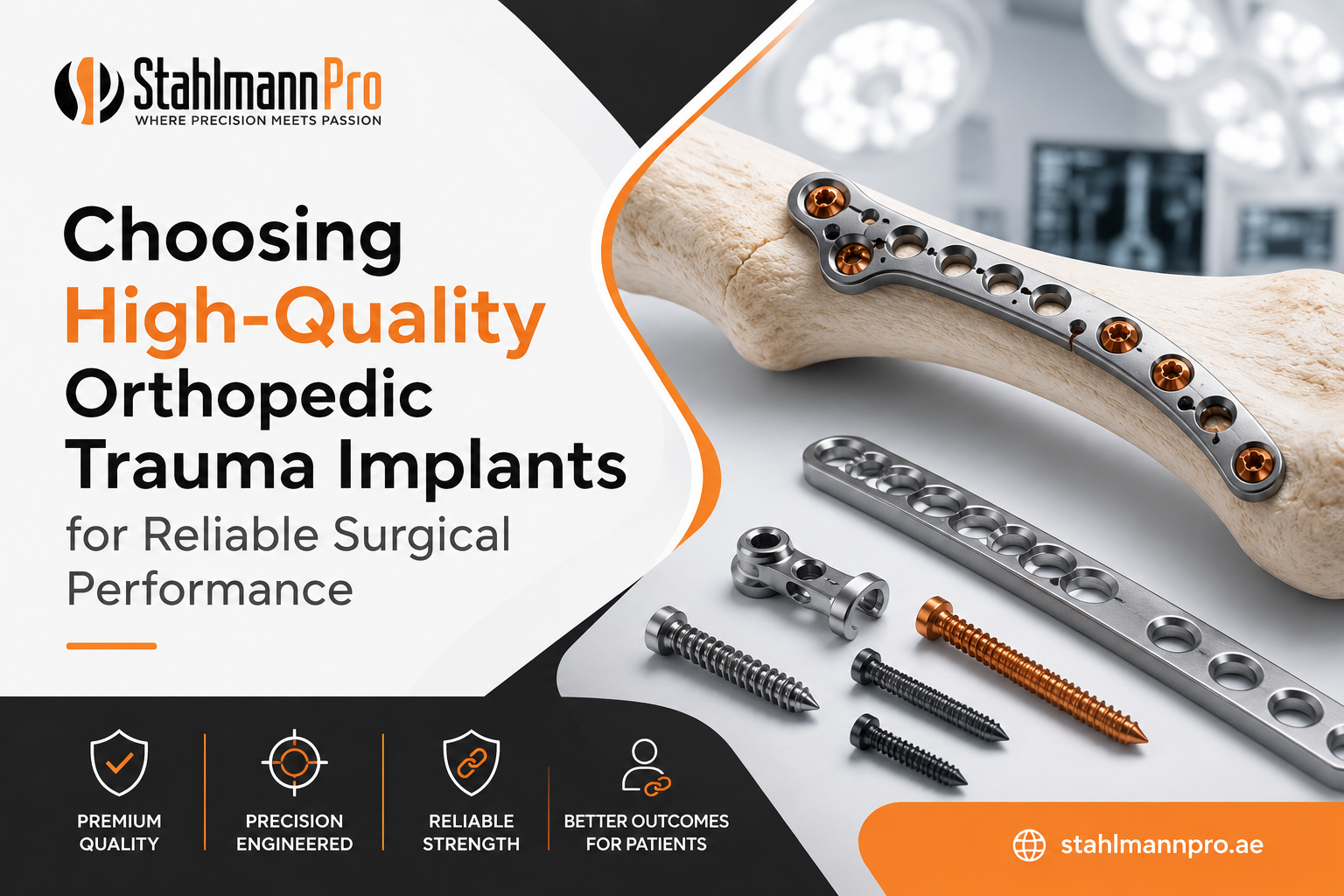
Orthopedic trauma implants play a critical role in modern surgical procedures, helping surgeons stabilize fractured bones, restore mobility, and improve patient recovery outcomes. As healthcare standards continue to evolve, the demand for high-quality orthopedic trauma implants has increased significantly across hospitals, trauma centers, and orthopedic clinics worldwide.
Selecting the right implant is not simply about product availability—it directly impacts surgical precision, patient safety, healing efficiency, and long-term clinical performance. From trauma plates and locking screws to intramedullary nails and external fixation systems, every implant must meet strict quality and performance standards to support successful orthopedic surgeries.
In this guide, we will explore the key factors to consider when choosing orthopedic trauma implants, the importance of material quality, regulatory compliance, surgical compatibility, and how premium implants contribute to reliable surgical performance.
Understanding Orthopedic Trauma Implants
Orthopedic trauma implants are specialized medical devices used to repair and stabilize broken or damaged bones caused by accidents, falls, sports injuries, or other traumatic conditions. These implants are designed to maintain proper bone alignment during the healing process while supporting structural stability.
Common types of orthopedic trauma implants include:
- Bone plates
- Locking plates
- Screws and pins
- Intramedullary nails
- External fixation devices
- Wires and cables
- Hip and femoral fixation systems
Each implant type serves a specific orthopedic application depending on the fracture location, severity, and patient condition.
Why Implant Quality Matters in Orthopedic Surgery
The quality of orthopedic trauma implants directly influences surgical outcomes and patient recovery. Poor-quality implants may lead to complications such as implant failure, infection, improper bone healing, or revision surgeries.
High-quality orthopedic implants offer several advantages, including:
Improved Surgical Precision
Precision-engineered implants ensure accurate fixation and alignment during surgery. This helps surgeons perform procedures more efficiently while minimizing surgical risks.
Enhanced Patient Recovery
Reliable implants provide strong structural support, allowing bones to heal correctly and reducing recovery time for patients.
Long-Term Durability
Premium implants are manufactured using advanced materials that resist corrosion, wear, and mechanical stress over time.
Reduced Risk of Complications
High-standard implants undergo strict quality control and sterilization processes, lowering the risk of infections or implant rejection.
Key Factors to Consider When Choosing Orthopedic Trauma Implants
Choosing the right orthopedic trauma implant requires careful evaluation of multiple factors. Healthcare providers and procurement teams should prioritize quality, compatibility, and regulatory compliance.
1. Material Quality and Biocompatibility
The material used in orthopedic trauma implants significantly affects performance and patient safety. High-quality implants are commonly manufactured from:
- Titanium alloys
- Stainless steel
- Cobalt-chromium alloys
Titanium implants are especially popular due to their lightweight nature, corrosion resistance, and excellent biocompatibility. These materials reduce the chances of allergic reactions and support long-term implantation.
Biocompatibility is essential because implants remain inside the human body for extended periods. Inferior materials can cause inflammation, implant rejection, or tissue damage.
2. Regulatory Certifications and Compliance
Always choose orthopedic trauma implants that comply with international medical standards and certifications. Reliable manufacturers follow strict regulatory guidelines to ensure product safety and performance.
Important certifications may include:
- ISO certifications
- CE marking
- FDA approvals
- GMP compliance
Certified implants undergo rigorous testing for strength, sterilization, and clinical safety. This ensures consistent surgical reliability and improved patient outcomes.
3. Precision Engineering and Manufacturing Standards
Orthopedic trauma implants must be designed with exceptional precision. Even minor inconsistencies in implant dimensions can affect surgical performance and bone alignment.
Advanced manufacturing technologies such as:
- CNC machining
- Laser cutting
- Surface treatment technologies
- Automated quality inspections
help ensure implant accuracy and consistency.
Reliable manufacturers invest heavily in research, innovation, and advanced production systems to deliver high-performance orthopedic solutions.
4. Implant Design and Surgical Compatibility
Different trauma cases require different implant designs. Choosing implants that are compatible with modern surgical techniques improves procedural efficiency and surgeon confidence.
Key design considerations include:
Anatomical Fit
Implants should match the natural anatomy of the patient for improved comfort and stability.
Locking Mechanisms
Modern locking plates and screw systems enhance fixation strength, especially in complex fractures.
Minimally Invasive Compatibility
Many surgeons prefer implants compatible with minimally invasive surgical procedures, which help reduce tissue damage and accelerate recovery.
Modular Systems
Modular trauma systems provide flexibility during surgery and allow surgeons to adapt implants according to patient-specific requirements.
5. Sterilization and Packaging Standards
Sterility is a critical factor in orthopedic surgeries. High-quality trauma implants are packaged using advanced sterilization methods to minimize infection risks.
Manufacturers should follow strict sterilization protocols and provide:
- Tamper-proof packaging
- Clear labeling
- Batch traceability
- Sterility assurance documentation
Proper packaging also protects implants during storage and transportation.
The Growing Importance of Innovation in Orthopedic Trauma Care
The orthopedic industry is rapidly evolving with technological advancements and improved surgical techniques. Innovative trauma implant systems now focus on:
- Faster healing support
- Improved load distribution
- Better fixation strength
- Reduced surgical time
- Enhanced patient mobility
3D implant modeling, bioactive coatings, and advanced implant geometry are transforming orthopedic trauma management worldwide.
Hospitals and surgeons increasingly prefer manufacturers that prioritize innovation, clinical research, and continuous product improvement.
How High-Quality Implants Improve Surgical Performance
Reliable surgical performance depends heavily on implant stability, ease of use, and intraoperative efficiency. High-quality orthopedic trauma implants support surgeons in several ways.
Better Fracture Stabilization
Strong fixation systems maintain proper bone alignment throughout the healing phase.
Reduced Surgical Complexity
Well-designed implants simplify implantation procedures and improve surgical workflow.
Enhanced Surgeon Confidence
Surgeons rely on implants that provide predictable performance and consistent results during complex procedures.
Lower Revision Surgery Rates
Durable implants reduce implant failure risks and minimize the need for corrective surgeries.
Choosing a Trusted Orthopedic Trauma Implant Supplier
Selecting the right supplier is equally important as choosing the implant itself. A reliable orthopedic implant manufacturer or supplier should demonstrate:
- Proven industry experience
- International certifications
- Strong quality assurance systems
- Advanced manufacturing capabilities
- Technical support and training
- Consistent product availability
Healthcare providers should also evaluate the supplier’s reputation, product portfolio, and commitment to innovation.
A trusted supplier ensures healthcare facilities receive safe, durable, and clinically effective orthopedic solutions.
Future Trends in Orthopedic Trauma Implants
The future of orthopedic trauma implants is being shaped by innovation, digital technology, and patient-specific treatment approaches.
Emerging trends include:
Smart Implants
Sensor-enabled implants may help monitor healing progress and implant performance in real-time.
3D Printed Implants
Customized implants designed through 3D printing technology can improve anatomical accuracy and patient outcomes.
Bioactive Surface Coatings
Advanced coatings may enhance bone integration and reduce infection risks.
Minimally Invasive Implant Systems
New implant designs continue to support less invasive surgical techniques with faster recovery times.
As orthopedic technology advances, the demand for reliable, high-performance trauma implants will continue to grow globally.
Conclusion
Choosing high-quality orthopedic trauma implants is essential for achieving reliable surgical performance, improved patient safety, and successful long-term outcomes. From material quality and precision engineering to regulatory compliance and surgical compatibility, every factor contributes to the effectiveness of orthopedic trauma care.
Healthcare providers and surgeons should prioritize implants manufactured under strict quality standards by trusted suppliers with proven expertise in orthopedic solutions. Investing in premium orthopedic trauma implants not only enhances surgical efficiency but also supports faster recovery and better patient satisfaction.
As the orthopedic industry continues to innovate, high-performance trauma implants will remain a cornerstone of modern fracture management and surgical excellence.
Frequently Asked Questions (FAQs)
What are orthopedic trauma implants used for?
Orthopedic trauma implants are medical devices used to stabilize and support broken bones during the healing process after fractures or traumatic injuries.
Which material is best for orthopedic trauma implants?
Titanium alloys are commonly preferred due to their strength, lightweight properties, corrosion resistance, and excellent biocompatibility.
Why is implant quality important in orthopedic surgery?
High-quality implants improve surgical accuracy, reduce complication risks, support faster healing, and provide long-term durability.
Are orthopedic trauma implants safe?
Yes, certified orthopedic trauma implants manufactured according to international medical standards are considered safe and reliable for surgical use.
How do surgeons choose the right trauma implant?
Surgeons evaluate factors such as fracture type, implant design, material quality, patient anatomy, and surgical compatibility before selecting an implant.
What certifications should orthopedic implants have?
Reliable orthopedic implants should comply with certifications such as ISO, CE marking, FDA approval, and GMP standards.
