
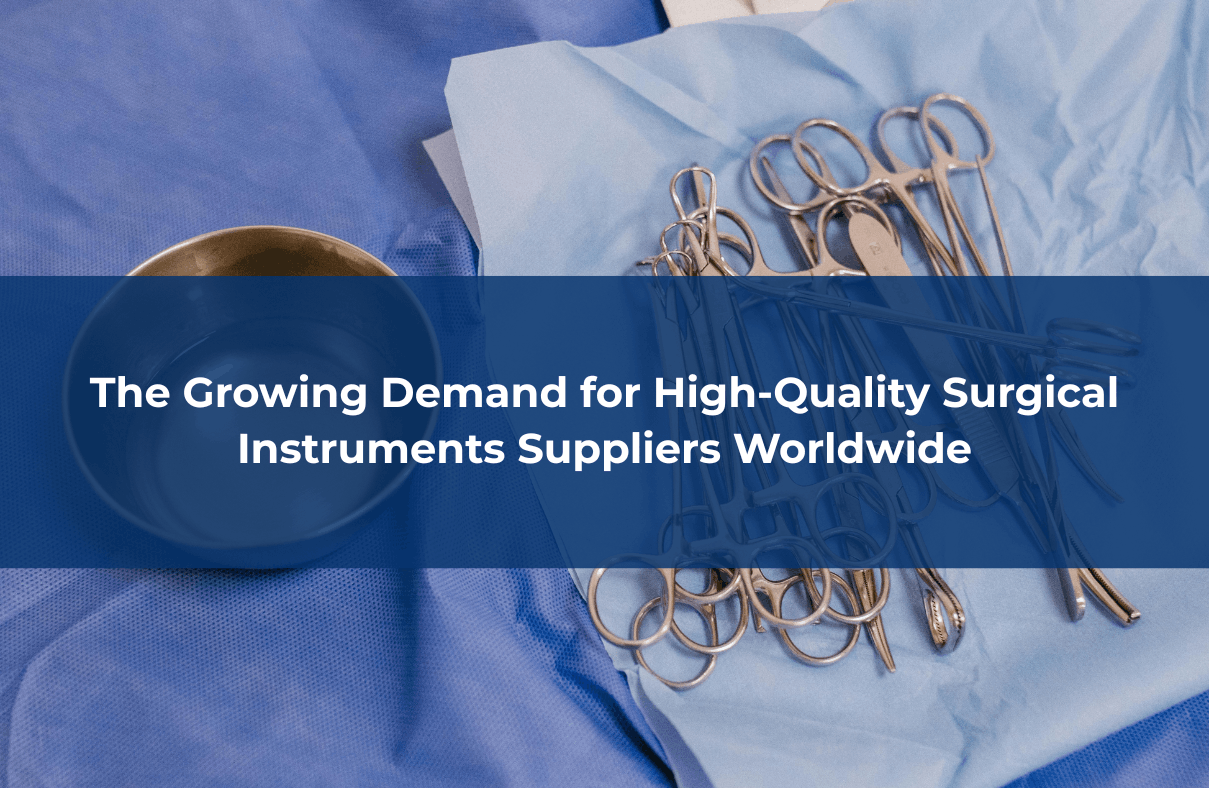
The global healthcare industry is experiencing rapid transformation, driven by technological advancement, increasing surgical procedures, and rising patient expectations for safer and more precise treatments. At the center of this transformation lies a critical yet often overlooked sector: high-quality surgical instruments suppliers.
From routine operations to complex, life-saving procedures, the demand for precision-engineered surgical tools has never been higher. Hospitals, clinics, and surgical centers across the world are now prioritizing reliability, durability, and compliance when sourcing their instruments. This shift has significantly increased global demand for trusted surgical instruments suppliers who can consistently meet international quality standards.
In this article, we will explore why this demand is rising, what defines a high-quality supplier, global market trends, and what healthcare providers should consider when selecting the right partner.
Understanding the Role of Surgical Instruments Suppliers in Healthcare
Surgical instruments suppliers play a vital role in the healthcare ecosystem. They are responsible for manufacturing, sourcing, and distributing tools used in surgical procedures, ranging from scalpels and forceps to advanced laparoscopic and robotic surgery instruments.
A reliable supplier ensures:
- Precision manufacturing of instruments
- Compliance with international medical standards
- Sterilization and safety assurance
- Long-term durability and performance
- Consistent supply chain availability
Without dependable suppliers, healthcare systems would struggle to maintain operational efficiency, especially in high-pressure surgical environments where accuracy is critical.
Why the Global Demand for Surgical Instruments Is Increasing
1. Rising Number of Surgical Procedures
One of the primary drivers of demand is the growing number of surgical procedures worldwide. Factors contributing to this include:
- Aging global population
- Increase in chronic diseases such as cardiovascular conditions and diabetes
- Growth in trauma and emergency surgeries
- Expanding access to healthcare in developing countries
As surgeries become more common, hospitals require a steady supply of high-quality instruments to maintain efficiency and safety.
2. Technological Advancements in Surgery
Modern medicine has shifted toward minimally invasive and robotic-assisted surgeries. These advanced procedures require highly specialized instruments that offer:
- Greater precision
- Enhanced flexibility
- Improved ergonomics
- Compatibility with digital surgical systems
This evolution has pushed hospitals to seek suppliers capable of providing cutting-edge surgical tools rather than traditional equipment alone.
3. Increasing Focus on Patient Safety
Healthcare institutions are now more focused on reducing surgical risks and improving patient outcomes. Poor-quality instruments can lead to:
- Surgical errors
- Infections
- Procedure delays
- Equipment failure during operations
As a result, hospitals are prioritizing certified suppliers who adhere to strict quality control standards such as ISO and CE certifications.
4. Expansion of Healthcare Infrastructure in Emerging Markets
Countries in Asia, Africa, and the Middle East are investing heavily in healthcare infrastructure. New hospitals and surgical centers are being built at a rapid pace, increasing demand for reliable suppliers who can provide:
- Bulk surgical instrument supply
- Affordable yet high-quality tools
- Long-term supply agreements
This global expansion has significantly widened the market for surgical instrument manufacturers and distributors.
What Defines a High-Quality Surgical Instruments Supplier?
Not all suppliers are the same. In a highly regulated and sensitive industry like healthcare, quality and reliability are non-negotiable. A high-quality supplier is defined by several key factors:
1. Compliance with International Standards
Top suppliers adhere to global regulations such as:
- ISO 13485 (Medical Devices Quality Management)
- CE Certification (European safety standards)
- FDA approval (for U.S. markets)
These certifications ensure that instruments are safe, reliable, and suitable for clinical use.
2. Use of Premium-Grade Materials
High-quality surgical instruments are typically made from:
- Stainless steel (medical-grade)
- Titanium alloys
- Carbon steel (for specific applications)
These materials ensure durability, corrosion resistance, and long-term performance.
3. Precision Engineering and Manufacturing
Leading suppliers invest in advanced manufacturing technologies such as:
- CNC machining
- Laser cutting
- Automated polishing systems
This ensures every instrument meets exact specifications required for surgical precision.
4. Strong Quality Control Systems
Before reaching hospitals, each instrument undergoes strict quality checks, including:
- Dimensional accuracy testing
- Sterility verification
- Performance testing under simulated conditions
This reduces the risk of failure during surgical procedures.
Global Market Trends in Surgical Instrument Supply
Growth of Disposable Surgical Instruments
One major trend is the increasing demand for disposable instruments. These are widely used in:
- Emergency surgeries
- Infection-prone environments
- Short procedures
They help reduce cross-contamination risks and improve hospital hygiene standards.
Digital Transformation in Supply Chains
Surgical instrument suppliers are adopting digital systems for:
- Inventory management
- Real-time tracking
- Automated reordering systems
This improves efficiency and ensures hospitals never face shortages.
Outsourcing Manufacturing to Specialized Regions
Many global brands now outsource production to countries with specialized manufacturing expertise. This allows them to:
- Reduce costs
- Maintain quality standards
- Scale production efficiently
Sustainability in Medical Manufacturing
Environmental concerns are also shaping the industry. Suppliers are now focusing on:
- Eco-friendly manufacturing processes
- Recyclable packaging
- Waste reduction strategies
Sustainability is becoming a key differentiator in supplier selection.
Challenges Faced by Surgical Instrument Suppliers
Despite strong demand, suppliers face several challenges:
1. Strict Regulatory Compliance
Meeting international regulations requires constant investment in quality systems and certifications.
2. Supply Chain Disruptions
Global events such as pandemics and trade restrictions can disrupt the availability of raw materials and logistics.
3. Rising Competition
The market is highly competitive, with both established manufacturers and new entrants competing on price and quality.
4. Counterfeit Products
The presence of low-quality counterfeit instruments in the market can damage trust and affect patient safety.
How Healthcare Providers Choose the Right Supplier
Hospitals and surgical centers typically evaluate suppliers based on:
- Product quality and certifications
- Reputation and industry experience
- Pricing structure and value for money
- Delivery reliability
- After-sales support and service
Choosing the right supplier is not just a procurement decision—it directly impacts patient safety and surgical success rates.
The Future of Surgical Instruments Supply Industry
The future of this industry is expected to be shaped by:
- AI-assisted surgical tools
- Robotic surgery expansion
- Smart instruments with embedded sensors
- Greater automation in manufacturing
- Stronger global regulatory frameworks
As healthcare continues to evolve, suppliers who adapt quickly to innovation will lead the market.
Conclusion
The demand for high-quality surgical instruments suppliers is growing at an unprecedented rate due to advancements in medical technology, rising surgical procedures, and increasing global healthcare investments. In such a critical industry, quality, precision, and compliance are not optional—they are essential.
Suppliers who focus on innovation, maintain strict quality standards, and adapt to global healthcare needs will continue to thrive in this competitive landscape. For healthcare providers, selecting the right supplier is a long-term investment in patient safety and surgical excellence.
FAQs
1. Why are high-quality surgical instruments important in healthcare?
High-quality instruments ensure precision, reduce surgical risks, and improve patient outcomes during medical procedures.
2. What certifications should surgical instrument suppliers have?
Reputable suppliers should have ISO 13485, CE certification, and FDA approval depending on the market they serve.
3. What materials are used in surgical instruments?
Most instruments are made from medical-grade stainless steel, titanium, and carbon steel for durability and safety.
4. How is technology changing surgical instruments?
Modern surgical instruments now include robotic integration, digital tracking, and enhanced precision engineering.
5. What is the future of surgical instrument supply chains?
The future includes AI integration, automation, smart instruments, and more sustainable manufacturing practices.
