
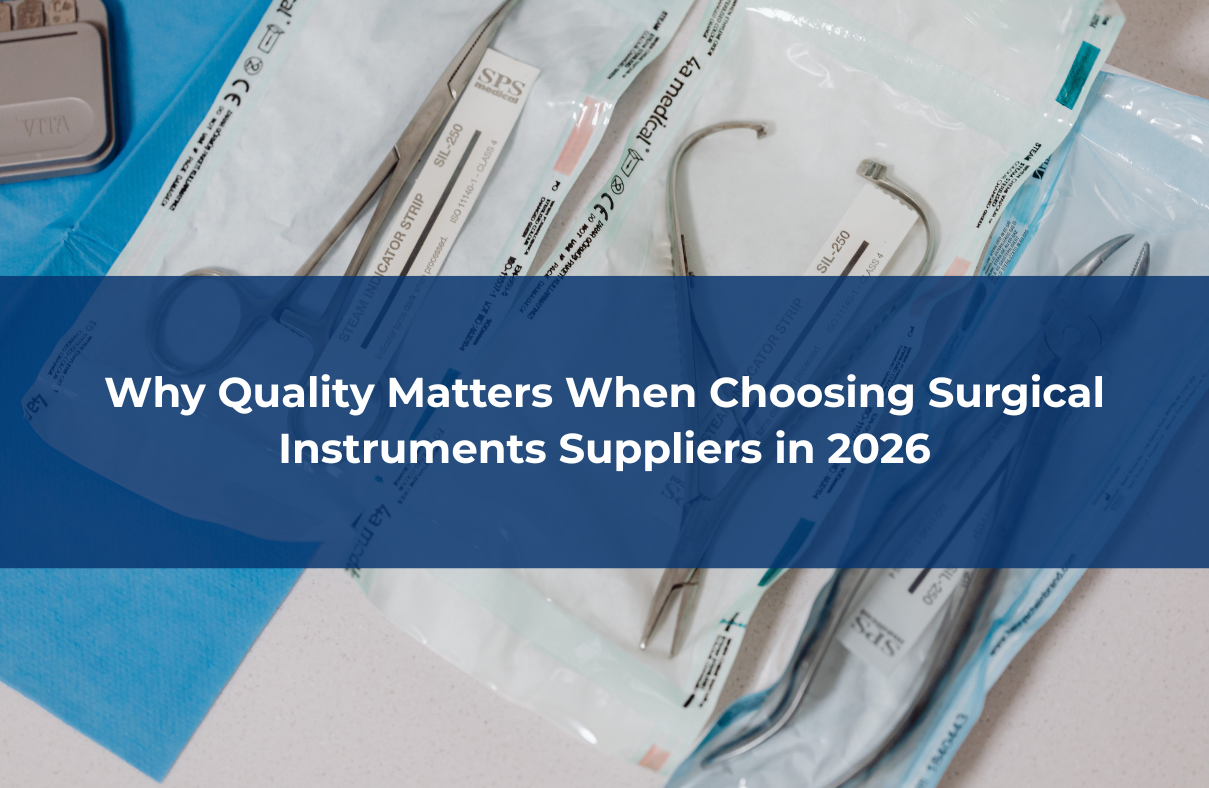
In modern healthcare, precision is not optional—it is a necessity. As hospitals, clinics, and surgical centers continue to evolve in 2026, the demand for reliable and high-performance surgical tools has never been higher. One critical factor that directly influences surgical success rates, patient safety, and operational efficiency is the quality of surgical instruments.
Choosing the right surgical instruments suppliers is no longer just a procurement decision; it is a clinical responsibility. Poor-quality instruments can lead to surgical complications, increased infection risks, equipment failure, and long-term financial losses for healthcare facilities. On the other hand, premium-quality instruments improve surgical accuracy, reduce operational risks, and enhance patient outcomes.
This article explores why quality should be the top priority when selecting surgical instruments suppliers in 2026, what factors define quality, and how healthcare providers can make informed procurement decisions aligned with modern medical standards.
The Rising Importance of Quality in Surgical Instruments (2026 Perspective)
The healthcare industry in 2026 is heavily driven by technological advancement, regulatory compliance, and patient-centered care. Surgical procedures are now more complex and minimally invasive than ever before, requiring tools that offer absolute precision and durability.
Several global factors have increased the importance of quality:
- Stricter medical regulations and compliance standards
- Rise in advanced surgical procedures (robotic and laparoscopic surgeries)
- Increased focus on patient safety and infection control
- Global competition among healthcare providers
- Higher expectations for surgical accuracy and outcomes
In this environment, even minor defects in surgical instruments can compromise entire procedures. That is why healthcare providers must carefully evaluate suppliers rather than focusing only on cost.
Why Quality Matters When Choosing Surgical Instruments Suppliers
1. Patient Safety Comes First
The most critical reason quality matters is patient safety. Surgical instruments directly interact with internal tissues, organs, and blood systems. If instruments are poorly manufactured or not properly sterilized, they can lead to:
- Surgical site infections (SSIs)
- Tissue damage
- Cross-contamination
- Post-operative complications
High-quality instruments are designed using medical-grade stainless steel and undergo strict sterilization compatibility testing, significantly reducing these risks.
2. Precision Directly Impacts Surgical Outcomes
Surgeries require extreme accuracy. Whether it is a delicate neurological procedure or a routine general surgery, even a millimeter of deviation can affect outcomes.
Quality instruments ensure:
- Sharp and consistent cutting edges
- Proper alignment of surgical tools
- Smooth handling and grip control
- Reduced hand fatigue for surgeons
Suppliers who maintain high manufacturing standards provide tools that enhance surgeon performance and confidence.
3. Durability and Long-Term Cost Efficiency
Many healthcare facilities make the mistake of choosing cheaper suppliers to reduce upfront costs. However, low-quality instruments often wear out quickly, requiring frequent replacements.
High-quality surgical instruments:
- Last longer under repeated sterilization cycles
- Resist corrosion and rust
- Maintain functionality over time
- Reduce long-term procurement costs
In the long run, investing in quality suppliers is far more cost-effective than repeatedly replacing substandard tools.
4. Compliance with International Standards
In 2026, healthcare compliance is stricter than ever. Hospitals must ensure that all equipment meets international regulatory standards such as:
- ISO medical device standards
- FDA-approved manufacturing processes
- CE certification (for global markets)
Reliable surgical instruments suppliers ensure their products meet these standards, reducing legal and operational risks for healthcare providers.
5. Infection Control and Sterilization Compatibility
One of the biggest concerns in modern healthcare is infection prevention. Poorly manufactured instruments often have microscopic defects that can harbor bacteria.
High-quality surgical instruments are:
- Designed for repeated autoclave sterilization
- Made with non-porous, medical-grade materials
- Resistant to microbial contamination
- Easy to clean and maintain
This significantly reduces hospital-acquired infections (HAIs), which remain a global healthcare challenge.
6. Surgeon Efficiency and Comfort
A surgeon’s performance is directly influenced by the tools they use. Poor-quality instruments can cause:
- Hand strain
- Reduced precision
- Longer operation times
In contrast, well-designed instruments enhance ergonomics, allowing surgeons to perform procedures with greater ease and confidence.
Key Factors to Consider When Choosing Surgical Instruments Suppliers
Selecting the right supplier requires more than just browsing catalogs. Healthcare institutions must evaluate suppliers based on multiple quality indicators.
1. Material Quality
Look for instruments made from:
- Surgical-grade stainless steel (304 or 316 grade)
- Titanium alloys (for specialized tools)
- Rust-resistant coatings
2. Manufacturing Standards
Ensure the supplier follows:
- Certified production processes
- Quality control inspections at each stage
- Batch testing for consistency
3. Reputation and Experience
A supplier’s track record in the medical industry matters. Established suppliers are more likely to provide consistent quality and reliable support.
4. Product Range
A good supplier should offer a wide range of instruments such as:
- Surgical scissors and forceps
- Retractors
- Clamps and needle holders
- Specialty surgical kits
5. After-Sales Support
Reliable suppliers offer:
- Warranty policies
- Replacement guarantees
- Maintenance support
- Technical consultation
The Role of Technology in Modern Surgical Instruments (2026 Trend)
Technology is reshaping surgical instrument manufacturing. Leading suppliers now integrate:
- Laser precision cutting technology
- AI-assisted quality inspection systems
- Advanced coating techniques for durability
- Smart inventory tracking systems
These innovations ensure consistent quality and reduce human error during manufacturing.
Common Mistakes Hospitals Make When Choosing Suppliers
Despite the importance of quality, many healthcare facilities still make avoidable mistakes:
- Choosing suppliers based only on price
- Ignoring certification and compliance checks
- Overlooking long-term durability
- Not testing sample instruments before bulk purchase
- Failing to verify supplier reputation
Avoiding these mistakes can significantly improve surgical outcomes and reduce operational risks.
Future of Surgical Instruments Suppliers
The future of surgical instrument supply chains is moving toward:
- Fully digitized procurement systems
- Smart instruments with embedded sensors
- Sustainable and eco-friendly manufacturing
- Increased automation in quality testing
By 2026 and beyond, only suppliers that prioritize quality, innovation, and compliance will remain competitive in the global healthcare market.
Conclusion
In the evolving healthcare landscape of 2026, quality is not just a preference—it is a necessity when selecting surgical instruments suppliers. From ensuring patient safety to improving surgical precision and reducing long-term costs, high-quality instruments play a critical role in every medical procedure.
Healthcare providers must prioritize certified, experienced, and technologically advanced suppliers to ensure the highest standards of care. Ultimately, investing in quality today leads to better outcomes, safer surgeries, and a stronger healthcare system tomorrow.
FAQs
1. Why is quality important in surgical instruments?
Quality ensures patient safety, surgical accuracy, and reduces the risk of infection or instrument failure during procedures.
2. How do I choose the best surgical instruments supplier?
Check certifications, material quality, manufacturing standards, reputation, and after-sales support before selecting a supplier.
3. What materials are best for surgical instruments?
Medical-grade stainless steel (304/316) and titanium are commonly used due to their durability and corrosion resistance.
4. Do cheap surgical instruments affect surgery outcomes?
Yes, low-quality instruments can lead to poor precision, higher infection risks, and frequent replacements.
5. What trends are shaping surgical instruments in 2026?
AI-based manufacturing, smart instruments, advanced coatings, and sustainable production are key trends.
