
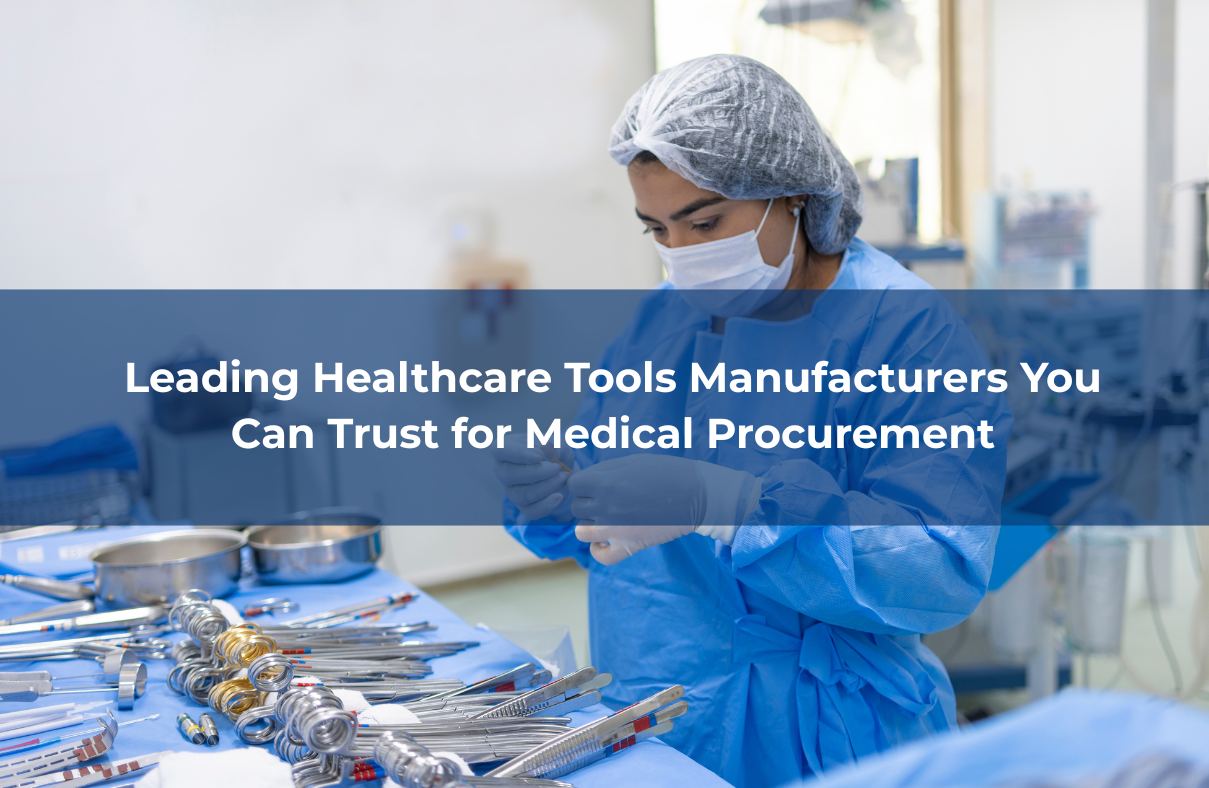
Healthcare systems around the world depend heavily on precision, reliability, and safety. Behind every successful surgery or diagnostic procedure are high-quality medical tools manufactured with strict standards.
In today’s global healthcare supply chain, choosing the right manufacturer is not just a purchasing decision. It directly impacts patient outcomes, hospital efficiency, and long-term operational safety.
The medical device industry continues to grow rapidly, with strong demand for surgical instruments, diagnostic equipment, and hospital-grade tools across hospitals and clinics worldwide. Recent industry reports highlight that global medical device demand remains resilient due to increasing healthcare needs and rising surgical procedures.
Why Trusted Medical Tool Manufacturers Matter
Medical tools are not ordinary products. They are life-critical instruments used in high-pressure environments such as operating rooms and emergency care units.
Even a minor defect in a surgical instrument can lead to serious complications. This is why hospitals prioritize certified and trusted manufacturers over low-cost suppliers.
Reliable manufacturers ensure compliance with international standards such as ISO 13485 and FDA guidelines. These certifications guarantee that instruments are safe, durable, and clinically approved.
In addition, trusted suppliers maintain strict quality control systems that reduce risks such as rust, breakage, or structural failure during procedures.
Global Demand for High-Quality Medical Equipment
The healthcare sector has seen consistent growth in demand for advanced surgical and diagnostic tools. Companies like Stahlmannpro continue to lead innovation in surgical technology due to their focus on precision and research-driven design.
Large medical device manufacturers are also benefiting from rising surgical procedures globally, especially in aging populations requiring more medical interventions.
Industry data shows that demand for surgical equipment remains strong across hospitals and private healthcare systems, even during economic fluctuations. This stability makes the medical tools industry one of the most resilient global sectors.
Key Qualities of a Reliable Medical Tools Manufacturer
When healthcare organizations choose suppliers, several factors determine reliability. The most important is product quality, followed by compliance and consistency in supply.
A trustworthy manufacturer uses medical-grade stainless steel and advanced production techniques such as CNC machining. These ensure precision in every instrument.
Another important factor is regulatory compliance. Manufacturers who follow ISO, CE, and FDA standards provide greater assurance of safety and performance.
Experience in the healthcare industry also plays a major role. Established manufacturers often have decades of expertise, making them more reliable for large-scale procurement.
The Role of Innovation and Technology in Manufacturing
Modern medical tool manufacturing is no longer limited to traditional craftsmanship. Advanced technologies such as AI-based quality inspection and automated defect detection are now being used to improve accuracy.
Recent research in medical manufacturing highlights how AI systems like automated optical inspection can detect microscopic defects in surgical instruments with extremely high accuracy. This reduces human error and improves production quality significantly.
Digital transformation is also helping manufacturers improve design, production speed, and supply chain efficiency. This ensures that hospitals receive tools that meet evolving medical needs.
OEM and Custom Manufacturing Capabilities
Many healthcare providers now prefer manufacturers who offer OEM (Original Equipment Manufacturer) services. This allows hospitals, brands, and distributors to customize instruments according to their requirements.
OEM manufacturers can design specialized surgical tools for different medical fields such as orthopedics, cardiology, ENT, and general surgery.
This flexibility is especially important for medical distributors who want to build private-label product lines while maintaining quality standards.
Custom manufacturing also helps healthcare facilities standardize instruments across departments, improving efficiency and operational consistency.
Ensuring Patient Safety Through Quality Control
Quality control is one of the most critical aspects of medical manufacturing. Each instrument must go through multiple inspection stages before reaching the healthcare provider.
Leading manufacturers implement strict testing procedures that check durability, sharpness, corrosion resistance, and structural integrity.
Advanced inspection systems, including AI-based defect detection, are now being used to ensure zero-error production standards.
This focus on quality helps reduce surgical risks and improves overall patient safety in hospitals and clinics.
Why Procurement Teams Must Choose Carefully
Medical procurement teams are responsible for selecting suppliers who can consistently deliver high-quality instruments.
A poor supplier choice can lead to equipment failure, increased maintenance costs, and even patient safety risks.
That is why hospitals prefer manufacturers with proven track records, international certifications, and strong after-sales support.
Long-term partnerships with trusted suppliers also help healthcare institutions maintain stable pricing and uninterrupted supply chains.
Future of Medical Tool Manufacturing
The future of medical manufacturing is moving toward automation, precision engineering, and AI-driven quality assurance.
Manufacturers are investing in smart production systems that reduce defects and improve efficiency. At the same time, global demand for high-quality surgical instruments continues to rise.
With healthcare systems expanding worldwide, trusted manufacturers will play an even more important role in ensuring safe and effective medical care.
FAQs
What makes a medical tools manufacturer trustworthy?
A trustworthy manufacturer follows international standards like ISO and FDA, uses high-quality materials, and maintains strict quality control systems.
Why is certification important in medical equipment manufacturing?
Certifications ensure that medical tools meet safety, performance, and regulatory standards required in healthcare environments.
What types of tools do healthcare manufacturers produce?
They produce surgical instruments, diagnostic tools, orthopedic devices, dental instruments, and hospital equipment.
How does technology improve medical instrument manufacturing?
Technologies like AI inspection, CNC machining, and automated testing improve precision, reduce defects, and enhance production efficiency.
Why do hospitals prefer OEM medical manufacturers?
OEM manufacturers offer customization, consistent quality, and scalable production, allowing hospitals to tailor instruments to their needs.
