
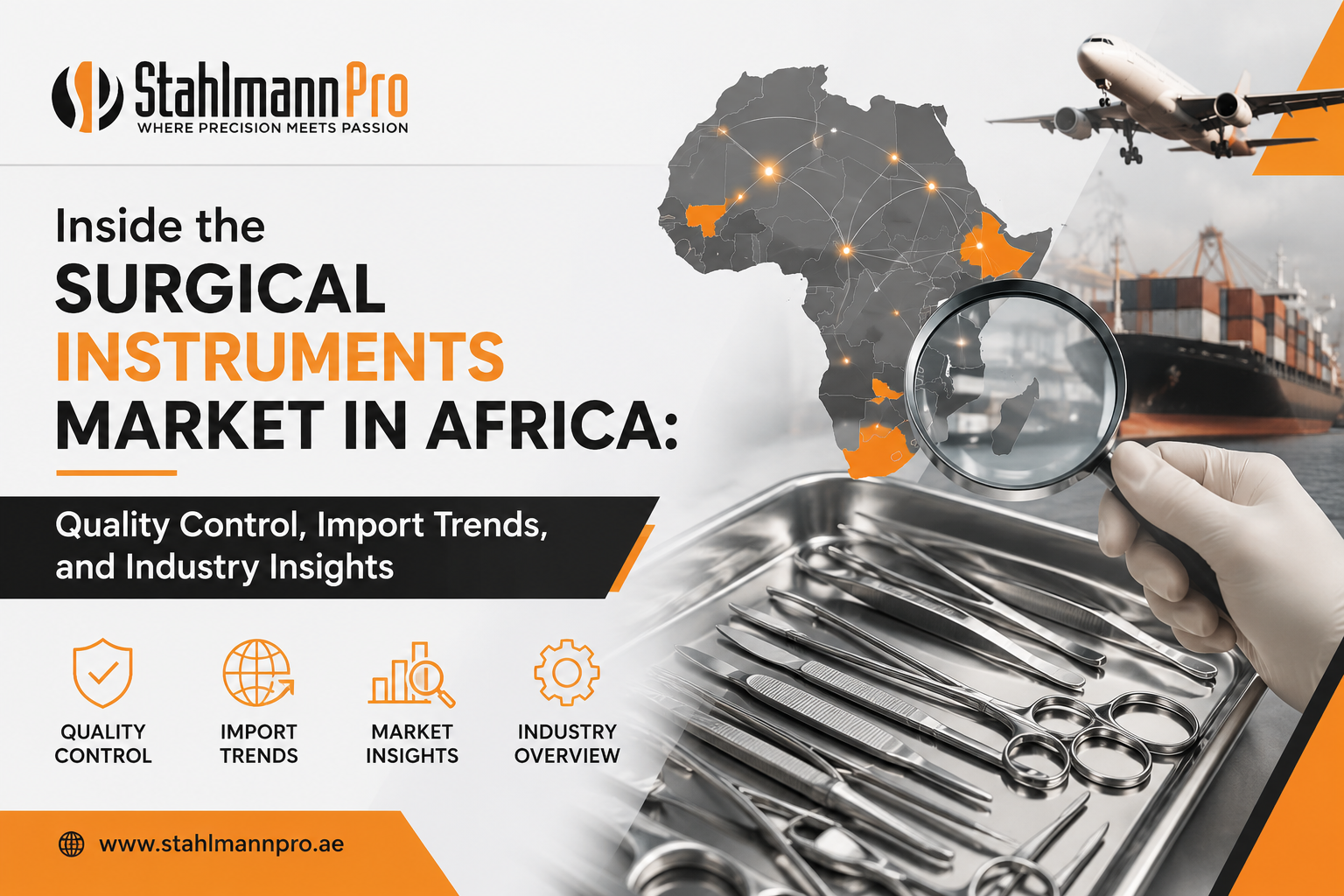
The surgical instruments market in Africa is undergoing a significant transformation, driven by growing healthcare demand, expanding hospital infrastructure, and increased international trade. As healthcare systems across African countries continue to modernize, the need for reliable, high-quality surgical instruments has never been greater. However, this growth also brings challenges related to quality control, import dependency, and regulatory compliance.
Understanding the dynamics of this market is essential for hospitals, distributors, and manufacturers aiming to operate successfully in the region. This article explores the key aspects of Africa’s surgical instruments market, including quality assurance practices, import trends, and industry insights shaping its future.
Growing Demand for Surgical Instruments in Africa
Africa’s healthcare sector is expanding rapidly due to population growth, rising awareness of medical care, and increased investment in public and private healthcare facilities. As a result, the demand for surgical instruments such as scalpels, forceps, clamps, scissors, and retractors is rising steadily.
Hospitals and clinics are increasingly performing advanced surgical procedures, which require precision-engineered instruments. Countries like South Africa, Nigeria, Kenya, Egypt, and Ghana are leading this growth due to their developing healthcare infrastructure and government support.
However, demand is not just limited to quantity—there is a strong shift toward high-quality, durable, and internationally certified surgical tools.
Quality Control Challenges in the Market
One of the biggest concerns in the African surgical instruments market is maintaining consistent quality standards. Since a large portion of instruments are imported, quality control often depends on the manufacturing country and supplier credibility.
Common challenges include:
- Inconsistent product quality from unverified suppliers
- Lack of standardized inspection systems in some regions
- Presence of low-cost but substandard instruments in the market
- Limited local testing facilities for surgical-grade materials
To overcome these issues, hospitals and distributors are increasingly prioritizing suppliers with certifications such as ISO 13485 and CE marking. These certifications help ensure that instruments meet international medical device standards.
Additionally, procurement teams are adopting stricter supplier vetting processes and batch testing to reduce risks associated with poor-quality instruments.
Import Trends and Supply Chain Dynamics
Africa heavily relies on imported surgical instruments, with major supply coming from countries such as Germany, Pakistan, China, and India. Each of these regions plays a significant role in fulfilling Africa’s growing demand.
Key import trends include:
Rising Demand for Cost-Effective Supplies
Due to budget constraints in public healthcare systems, many African countries prefer affordable surgical instruments without compromising basic quality standards.
Expansion of Private Healthcare Sector
Private hospitals and specialty clinics are driving demand for premium surgical instruments with advanced precision and durability.
Growing Role of Distributors
Local distributors are becoming essential intermediaries, ensuring faster supply chains and better access to international brands.
Shift Toward Long-Term Supplier Partnerships
Hospitals are moving away from one-time purchases and forming long-term contracts with reliable suppliers to ensure consistency in quality and pricing.
Regulatory and Compliance Landscape
Regulatory frameworks in African countries are gradually improving, but they still vary significantly from one nation to another. Medical device approval processes are becoming more structured, especially in larger markets like South Africa and Nigeria.
Key regulatory priorities include:
- Ensuring medical device safety standards
- Import documentation and clearance compliance
- Quality certification verification
- Post-market surveillance of medical instruments
International organizations and local governments are also working together to strengthen regulatory enforcement and reduce the circulation of substandard medical products.
Industry Insights: Opportunities and Challenges
The surgical instruments market in Africa presents both opportunities and challenges for stakeholders.
Opportunities
- Rapid expansion of healthcare infrastructure
- Increasing government healthcare budgets
- Rising demand for specialized surgical procedures
- Growing medical tourism in select regions
Challenges
- Dependence on imports
- Price sensitivity in public healthcare procurement
- Quality assurance inconsistencies
- Logistics and distribution inefficiencies
Companies that can balance affordability with international quality standards are well-positioned for long-term success in this market.
The Future of Surgical Instruments in Africa
The future of Africa’s surgical instruments market looks promising, with steady growth expected over the next decade. Key trends likely to shape the future include:
- Increased localization of medical device assembly
- Digital procurement systems for hospitals
- Stronger regulatory harmonization across countries
- Greater emphasis on sustainable and reusable instruments
- Expansion of training programs for surgical equipment handling
As healthcare systems continue to evolve, the demand for precision, safety, and innovation will drive further improvements in the industry.
FAQs About the Surgical Instruments Market in Africa
1. Why is the demand for surgical instruments increasing in Africa?
The demand is increasing due to population growth, expanding healthcare infrastructure, and a rising number of surgical procedures across African countries.
2. Which countries supply most surgical instruments to Africa?
Major suppliers include Germany, China, India, and Pakistan, with each contributing different product categories based on price and quality.
3. What are the biggest challenges in this market?
Key challenges include inconsistent quality control, dependence on imports, regulatory differences, and supply chain inefficiencies.
4. How do hospitals ensure instrument quality?
Hospitals rely on certified suppliers, ISO/CE-marked products, supplier audits, and batch testing to maintain quality standards.
5. Is the African market good for surgical instrument exporters?
Yes, it is a high-growth market with strong demand, especially for affordable yet high-quality surgical tools.
6. What is the future trend of this industry?
The market is expected to grow steadily with more focus on localization, digital procurement, and stricter quality regulations.
