
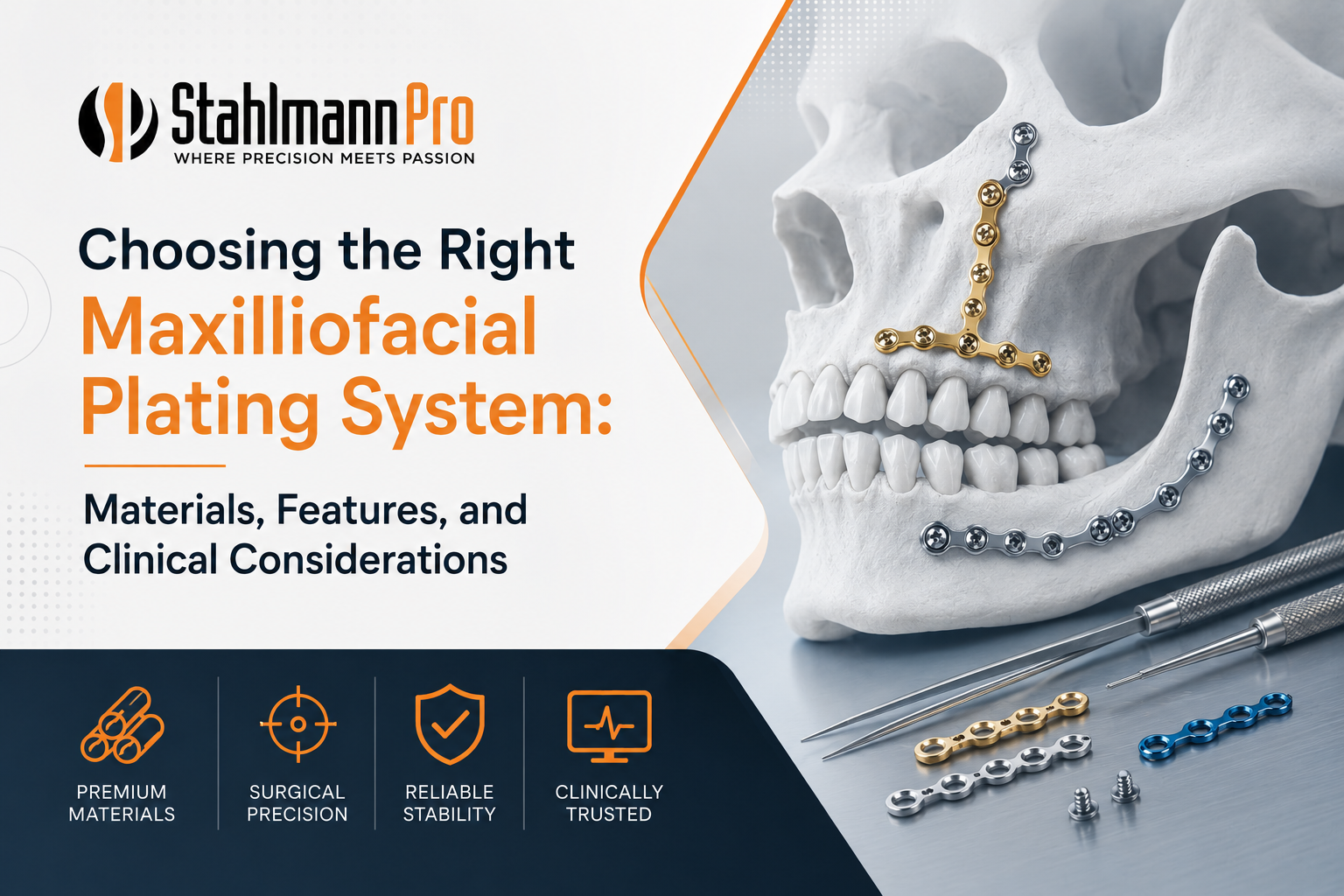
Maxillofacial trauma and reconstructive surgery require a high level of precision, stability, and biological compatibility. One of the most critical decisions surgeons make is selecting the appropriate maxillofacial plating system. The success of fracture fixation, bone healing, and post-operative outcomes often depends on this choice.
A well-selected plating system ensures proper alignment, minimizes complications, and supports early functional recovery. This article provides a detailed, evidence-based overview of materials, design features, and clinical factors that should guide the selection process.
Understanding Maxillofacial Plating Systems
A maxillofacial plating system consists of plates and screws used to stabilize fractured bones of the face and jaw. These systems are commonly used in:
- Mandibular fractures
- Midface fractures (zygoma, maxilla, orbital floor)
- Reconstructive jaw surgery
- Orthognathic surgery
- Craniofacial trauma repair
The primary goal is to restore anatomical alignment while ensuring rigid or semi-rigid fixation for proper healing.
Materials Used in Maxillofacial Plating Systems
The choice of material directly impacts biocompatibility, strength, and long-term outcomes.
1. Titanium Plates
Titanium is considered the gold standard in maxillofacial fixation.
Advantages:
- Excellent biocompatibility
- High strength-to-weight ratio
- Corrosion resistance
- Low risk of allergic reaction
- MRI compatibility
Limitations:
- Higher cost
- Can cause imaging artifacts in CT scans
- May require removal in some cases
Titanium systems are widely preferred for most trauma and reconstructive cases due to their reliability and long-term stability.
2. Resorbable (Bioabsorbable) Plates
Made from polymers such as PLLA (polylactic acid) and PGA (polyglycolic acid).
Advantages:
- Gradually absorbed by the body
- No need for secondary removal surgery
- Reduced long-term hardware complications
Limitations:
- Lower mechanical strength
- Risk of inflammatory reaction
- Not ideal for load-bearing regions
These are commonly used in pediatric patients and non-load-bearing midface fractures.
3. Stainless Steel Plates
Less commonly used today but still relevant in certain settings.
Advantages:
- Cost-effective
- High strength
Limitations:
- Lower biocompatibility compared to titanium
- Higher risk of corrosion
- Increased soft tissue irritation
Key Features to Consider in a Plating System
1. Plate Design and Profile
Low-profile plates reduce palpability and soft tissue irritation. Modern systems are designed with anatomical contouring to match facial bone structures.
2. Screw Locking Mechanism
Locking plate systems provide angular stability, reducing dependency on bone quality. This is particularly important in:
- Osteoporotic bone
- Comminuted fractures
- Load-bearing regions
3. Plate Thickness and Strength
Surgeons must balance rigidity with flexibility:
- Thin plates → better aesthetics, less irritation
- Thick plates → higher strength for complex fractures
4. Modularity and Versatility
A good system should offer:
- Multiple plate shapes (straight, L-shaped, Y-shaped)
- Various screw lengths and diameters
- Compatibility with different anatomical regions
5. Instrumentation and Ease of Use
Ergonomic instruments improve surgical efficiency and reduce operative time. Color-coded systems and pre-loaded trays also help in trauma settings.
Clinical Considerations for Selection
Choosing the right plating system is not just about material—it requires clinical judgment.
1. Location of Fracture
- Mandibular angle → requires strong load-bearing fixation
- Midface fractures → often need lighter, contourable plates
- Orbital fractures → delicate, thin resorbable or titanium mesh
2. Patient Age
- Pediatric patients: resorbable systems preferred
- Adults: titanium commonly used
3. Bone Quality
Poor bone quality may require locking systems for better stability.
4. Type of Trauma
- Simple fractures → mini plates may suffice
- Comminuted fractures → reconstruction plates needed
5. Infection Risk
In contaminated wounds, surgeons may prefer materials with lower infection risk and easier removal potential.
Complications and Risk Management
Even with advanced systems, complications may occur:
- Infection at surgical site
- Plate exposure
- Hardware failure or loosening
- Malocclusion
- Nerve injury
Proper surgical technique and appropriate system selection significantly reduce these risks.
Future Trends in Maxillofacial Plating
The field is evolving rapidly with innovations such as:
- Patient-specific 3D printed plates
- Bioactive coatings promoting bone growth
- Smart implants with monitoring capabilities
- Improved resorbable materials with higher strength
These advancements aim to improve precision, reduce complications, and enhance healing outcomes.
Conclusion
Selecting the right maxillofacial plating system requires a balance between material properties, mechanical strength, anatomical considerations, and patient-specific factors. Titanium remains the most widely used material due to its reliability, but resorbable systems are gaining importance in selected cases.
A thorough understanding of system design and clinical context ensures better surgical outcomes and faster patient recovery.
Frequently Asked Questions (FAQs)
1. What is the best material for maxillofacial plates?
Titanium is generally considered the best due to its strength, biocompatibility, and durability.
2. Are resorbable plates safe?
Yes, they are safe for selected cases, especially in children and non-load-bearing fractures.
3. Do maxillofacial plates need to be removed?
Titanium plates may be removed if they cause discomfort or complications, while resorbable plates naturally dissolve.
4. How long do plates stay in the body?
Titanium plates can remain indefinitely unless removal is needed; resorbable plates dissolve over months to years.
5. What is a locking plate system?
It is a system where screws lock into the plate, providing enhanced stability without relying heavily on bone quality.
