
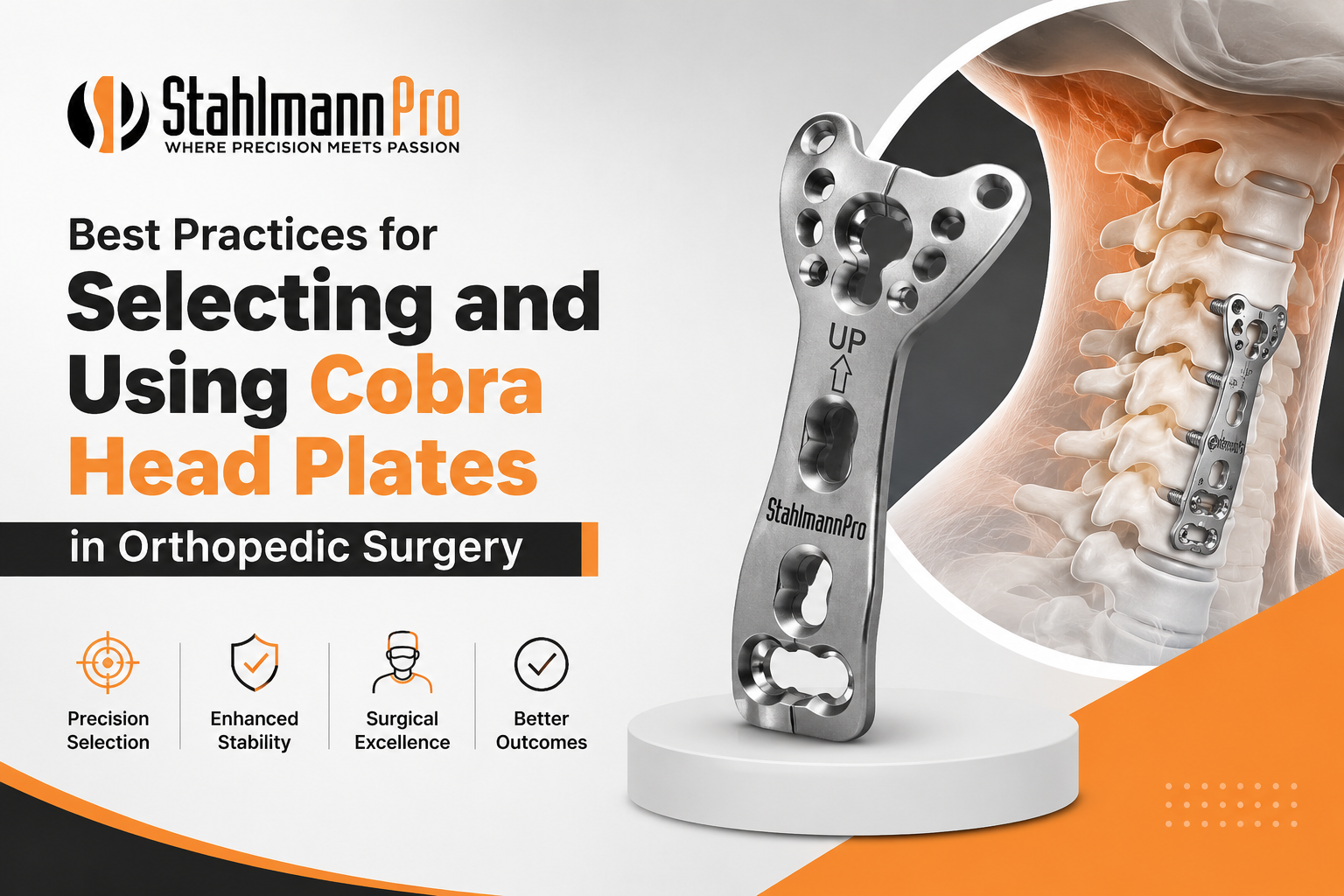
Orthopedic surgery has evolved significantly over the past few decades, with advancements in implant design improving patient outcomes and reducing recovery times. Among the many fixation devices available today, Cobra Head Plates have become a trusted solution for stabilizing fractures and osteotomies in specific anatomical regions. Their unique design provides reliable fixation while minimizing soft tissue disruption, making them a preferred choice for many orthopedic surgeons.
However, selecting the right Cobra Head Plate and using it correctly requires careful consideration of factors such as fracture type, bone quality, implant material, surgical technique, and postoperative care. Understanding these best practices helps improve surgical success, reduce complications, and support faster patient recovery.
This guide explores everything healthcare professionals should know about selecting and using Cobra Head Plates effectively.
What Are Cobra Head Plates?
Cobra Head Plates are specialized orthopedic fixation implants designed to stabilize fractures, osteotomies, and reconstructive procedures involving small to medium-sized bones. Their distinctive cobra-shaped head allows multiple screw placement options, providing enhanced stability while conforming to complex anatomical structures.
These plates are commonly manufactured using:
- Medical-grade stainless steel
- Titanium alloy
- Biocompatible implant materials meeting international quality standards
The anatomical design helps distribute forces evenly across the fixation site, reducing stress concentration while promoting proper bone healing.
Common Applications of Cobra Head Plates
Cobra Head Plates are frequently used in orthopedic procedures involving:
- Distal radius fractures
- Clavicle reconstruction
- Foot and ankle surgery
- Upper extremity fracture fixation
- Corrective osteotomies
- Trauma reconstruction
- Small bone fixation procedures
Their versatility makes them valuable in both trauma and elective orthopedic surgeries.
Why Proper Plate Selection Matters
Choosing the appropriate implant is one of the most important decisions during orthopedic surgery. The wrong plate size, material, or configuration can compromise fixation stability and delay healing.
Proper implant selection contributes to:
- Improved fracture alignment
- Enhanced mechanical stability
- Faster bone healing
- Lower risk of implant failure
- Reduced revision surgeries
- Better long-term patient outcomes
Each patient presents unique anatomical and clinical considerations that must be evaluated before surgery.
Best Practices for Selecting Cobra Head Plates
1. Evaluate the Fracture Pattern
Every fracture behaves differently under load.
Surgeons should carefully assess:
- Fracture location
- Degree of comminution
- Bone displacement
- Joint involvement
- Stability requirements
Simple fractures may require straightforward fixation, while complex fractures often demand stronger constructs with multiple fixation points.
2. Consider Bone Quality
Bone density significantly affects implant performance.
Patients with:
- Osteoporosis
- Reduced cortical thickness
- Elderly bone structure
- Metabolic bone disorders
may require stronger fixation strategies or locking screw configurations to maintain stability.
Preoperative imaging helps determine the most suitable fixation approach.
3. Select the Appropriate Plate Size
Oversized or undersized implants may create unnecessary complications.
The ideal Cobra Head Plate should:
- Match patient anatomy
- Cover sufficient bone length
- Allow adequate screw placement
- Avoid excessive prominence beneath soft tissue
Proper sizing improves fixation strength while reducing irritation after surgery.
4. Choose High-Quality Implant Materials
Material selection directly influences durability and biocompatibility.
The most commonly used materials include:
Titanium Alloy
Benefits include:
- Lightweight
- Excellent corrosion resistance
- Superior biocompatibility
- MRI compatibility
- Reduced allergic reactions
Stainless Steel
Advantages include:
- High mechanical strength
- Cost-effectiveness
- Excellent fatigue resistance
- Proven long-term clinical performance
Selection depends on patient needs and surgeon preference.
5. Verify International Quality Standards
Always ensure implants comply with recognized quality certifications such as:
- ISO 13485
- CE Certification (where applicable)
- ASTM material standards
- FDA regulatory requirements (market dependent)
Certified implants undergo rigorous testing for safety, durability, and performance.
Best Practices During Surgical Placement
Successful outcomes depend not only on implant selection but also on precise surgical execution.
Accurate Plate Positioning
The plate should closely follow the natural bone contour.
Poor positioning may cause:
- Malalignment
- Soft tissue irritation
- Reduced fixation strength
- Delayed healing
Intraoperative fluoroscopy assists in confirming proper placement.
Achieve Stable Screw Fixation
Screw placement should maximize stability without compromising surrounding structures.
Surgeons should:
- Use appropriate screw lengths
- Avoid joint penetration
- Achieve bicortical fixation when indicated
- Maintain balanced screw distribution
Locking screws may provide additional stability in osteoporotic bone.
Preserve Soft Tissue
Minimizing soft tissue disruption helps preserve blood supply essential for bone healing.
Modern orthopedic techniques emphasize:
- Gentle tissue handling
- Minimally invasive approaches when appropriate
- Careful periosteal preservation
- Reduced surgical trauma
Confirm Fracture Reduction
Before final fixation, surgeons should verify:
- Anatomical alignment
- Joint congruity
- Restoration of limb mechanics
- Stable construct under fluoroscopy
Accurate reduction significantly influences long-term function.
Postoperative Best Practices
Proper postoperative management is equally important.
Recommended measures include:
Regular Follow-Up Imaging
Radiographs monitor:
- Bone healing progression
- Implant stability
- Alignment maintenance
- Early detection of complications
Gradual Rehabilitation
Physical therapy should progress according to:
- Fracture healing stage
- Surgical stability
- Pain tolerance
- Functional goals
Controlled movement helps restore mobility while protecting fixation.
Monitor for Complications
Although complications are relatively uncommon with proper technique, clinicians should monitor for:
- Infection
- Hardware irritation
- Delayed union
- Nonunion
- Implant loosening
- Screw back-out
- Soft tissue irritation
Early intervention improves outcomes.
Common Mistakes to Avoid
Healthcare professionals should avoid:
- Selecting incorrect plate size
- Inadequate preoperative planning
- Poor fracture reduction
- Improper screw placement
- Excessive soft tissue stripping
- Ignoring bone quality
- Using non-certified implants
- Insufficient postoperative follow-up
Avoiding these errors helps reduce complications and revision procedures.
Advantages of Cobra Head Plates
When selected and used appropriately, Cobra Head Plates offer numerous benefits:
- Excellent anatomical fit
- Strong multidirectional fixation
- Reliable fracture stabilization
- Improved load distribution
- Reduced implant prominence
- Enhanced patient comfort
- Faster rehabilitation potential
- Long-term durability
These advantages have made Cobra Head Plates a dependable option in modern orthopedic surgery.
Choosing a Trusted Orthopedic Implant Manufacturer
The quality of an implant begins with its manufacturer. Healthcare facilities should partner with companies that prioritize:
- Precision engineering
- Medical-grade materials
- Strict quality control
- Regulatory compliance
- Product traceability
- Comprehensive technical support
Reliable manufacturers invest in continuous innovation and testing to ensure surgeons receive implants they can trust.
Future Trends in Cobra Head Plate Technology
Orthopedic implant technology continues to advance through innovations such as:
- Patient-specific implant designs
- 3D-printed orthopedic implants
- Enhanced locking plate systems
- Improved titanium alloys
- Smart implant monitoring technologies
- Advanced minimally invasive fixation systems
These developments aim to improve surgical precision, patient comfort, and long-term clinical outcomes.
Conclusion
Selecting and using Cobra Head Plates effectively requires more than simply choosing an implant. Successful orthopedic fixation depends on careful preoperative assessment, selecting the appropriate plate size and material, following meticulous surgical techniques, and providing structured postoperative care.
By adhering to these best practices, orthopedic surgeons can enhance fixation stability, promote faster healing, minimize complications, and achieve better functional outcomes for patients. As implant technology continues to evolve, Cobra Head Plates will remain an important component of modern orthopedic trauma and reconstructive surgery.
Frequently Asked Questions (FAQs)
1. What is a Cobra Head Plate used for?
A Cobra Head Plate is primarily used to stabilize fractures, osteotomies, and reconstructive procedures involving small to medium-sized bones by providing secure internal fixation.
2. Which material is better for Cobra Head Plates: titanium or stainless steel?
Both materials are widely used. Titanium offers superior biocompatibility and corrosion resistance, while stainless steel provides exceptional strength and cost-effectiveness. The choice depends on the patient’s needs and the surgeon’s preference.
3. Are Cobra Head Plates suitable for osteoporotic bone?
Yes. When combined with appropriate locking screw technology and proper surgical planning, Cobra Head Plates can provide stable fixation in patients with reduced bone density.
4. How long do Cobra Head Plates remain in the body?
In many cases, they can remain permanently unless they cause discomfort, become infected, or require removal based on the surgeon’s recommendation.
5. What factors should surgeons consider before selecting a Cobra Head Plate?
Important considerations include fracture type, bone quality, anatomical location, plate size, implant material, patient health, and surgical objectives.
6. Can Cobra Head Plates be used in minimally invasive orthopedic surgery?
Yes. Many modern Cobra Head Plate systems are designed to support minimally invasive surgical techniques that reduce soft tissue damage and encourage faster recovery.
7. How can hospitals ensure implant quality?
Hospitals should source implants from reputable manufacturers that comply with international standards such as ISO 13485, ASTM specifications, and applicable regulatory requirements.
