
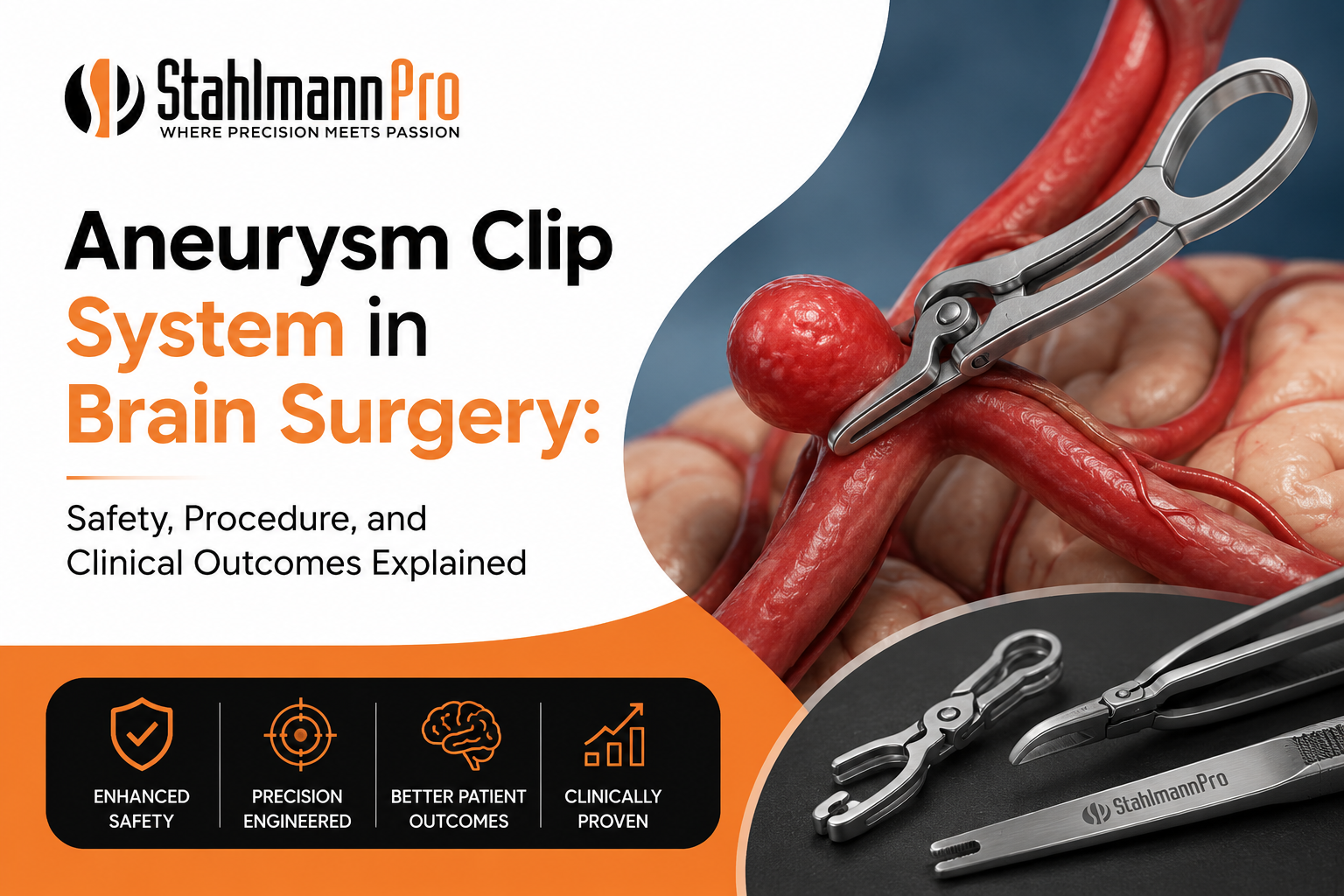
Brain aneurysms are among the most serious neurovascular conditions, often developing silently until they rupture and cause life-threatening complications. One of the most trusted and widely used treatment methods in neurosurgery is the aneurysm clip system. This surgical technique has evolved significantly over the years, offering improved safety, precision, and long-term outcomes for patients.
In this article, we will explore what an aneurysm clip system is, how the procedure is performed, its safety profile, and the clinical outcomes supported by modern neurosurgical practice.
What Is an Aneurysm Clip System?
An aneurysm clip system is a microsurgical device used in brain surgery to treat cerebral aneurysms. A small metal clip is placed at the neck of the aneurysm (a weakened, bulging blood vessel in the brain) to stop blood flow into it. This prevents rupture or re-bleeding.
The clip is typically made from titanium or cobalt alloy, which is durable, biocompatible, and MRI-safe in most modern designs.
Key Purpose:
- Isolate the aneurysm from normal blood circulation
- Prevent rupture or hemorrhagic stroke
- Preserve blood flow in surrounding healthy vessels
When Is Aneurysm Clipping Recommended?
Neurosurgeons may recommend clipping when:
- The aneurysm is large or irregular in shape
- There is a high risk of rupture
- The aneurysm has already ruptured
- Endovascular coiling is not suitable
- The patient is medically fit for open microsurgery
Each case is carefully evaluated using imaging techniques like CT angiography, MRI, and cerebral angiography.
The Surgical Procedure: Step-by-Step
Aneurysm clipping is a highly delicate microsurgical procedure performed by an experienced neurosurgeon.
1. Preoperative Planning
Before surgery, detailed brain imaging is used to map:
- Aneurysm size and shape
- Location in the brain
- Relationship with surrounding blood vessels
2. Anesthesia and Craniotomy
The patient is placed under general anesthesia. A section of the skull (craniotomy) is temporarily removed to access the brain.
3. Microsurgical Exposure
Using an operating microscope, the surgeon carefully navigates brain tissues to reach the aneurysm without damaging surrounding structures.
4. Clip Placement
A specialized aneurysm clip is placed across the neck of the aneurysm, blocking blood flow into it while preserving normal circulation.
5. Verification
Intraoperative imaging or Doppler techniques are used to confirm successful clipping.
6. Closure
The skull bone is replaced and secured, and the scalp is sutured.
Safety of Aneurysm Clip System Surgery
Aneurysm clipping is considered a highly effective and durable treatment, but like all brain surgeries, it carries risks.
Potential Risks:
- Infection
- Bleeding
- Stroke
- Temporary or permanent neurological deficits
- Seizures
Safety Factors That Improve Outcomes:
- Experienced neurosurgical team
- Advanced operating microscopes
- Intraoperative imaging guidance
- Proper patient selection
Modern surgical advancements have significantly reduced complication rates, making clipping a reliable long-term solution.
Clinical Outcomes and Success Rates
Clinical studies show that aneurysm clipping offers excellent long-term results, especially for suitable patients.
Benefits:
- Permanent exclusion of aneurysm from circulation
- Very low recurrence rate
- Reduced risk of future rupture
- Long-term durability compared to some endovascular methods
Recovery:
- Hospital stay: typically 5–10 days
- Full recovery: 4–8 weeks depending on condition
- Regular follow-ups with imaging may be required
Patients treated early often experience significantly improved survival rates and neurological outcomes.
Clipping vs. Coiling: A Brief Comparison
While clipping is an open surgical approach, another common method is endovascular coiling.
| Feature | Aneurysm Clipping | Endovascular Coiling |
|---|---|---|
| Procedure Type | Open brain surgery | Minimally invasive |
| Durability | Very high | Moderate |
| Recurrence Risk | Low | Higher in some cases |
| Recovery Time | Longer | Shorter |
Both techniques are valuable, and the choice depends on aneurysm location, size, and patient condition.
Advances in Aneurysm Clip Technology
Modern aneurysm clips have improved significantly:
- Titanium-based MRI-compatible materials
- Spring-loaded precision designs
- Better vessel preservation mechanisms
- Enhanced microsurgical tools and navigation systems
These innovations have made surgery safer and more predictable than ever before.
Expert Insight (EEAT Perspective)
From a neurosurgical standpoint, aneurysm clipping remains a cornerstone treatment in cerebrovascular surgery. Experienced neurosurgeons emphasize that success depends heavily on:
- Early diagnosis
- Accurate imaging interpretation
- Surgical expertise
- Post-operative care and monitoring
Hospitals with specialized neurosurgical units consistently report better outcomes due to multidisciplinary care and advanced equipment.
FAQs: Aneurysm Clip System in Brain Surgery
1. Is aneurysm clipping a permanent solution?
Yes, in most cases aneurysm clipping provides a permanent solution with a very low risk of recurrence.
2. How long does aneurysm clipping surgery take?
The procedure usually takes 2 to 6 hours depending on the complexity and location of the aneurysm.
3. Is brain clipping surgery risky?
Yes, it is a major brain surgery, but with modern techniques and experienced surgeons, risks are significantly reduced.
4. Can patients live normally after aneurysm clipping?
Most patients return to normal life after recovery, especially if treated before rupture.
5. What is the success rate of aneurysm clipping?
Success rates are generally high, often exceeding 90% in appropriately selected patients.
6. Is MRI safe after aneurysm clipping?
Most modern clips are MRI-compatible, but always confirm with your surgeon.
Conclusion
The aneurysm clip system remains one of the most effective and time-tested treatments for cerebral aneurysms. With advancements in microsurgical techniques and imaging technology, the procedure has become safer and more precise, offering excellent long-term outcomes for patients.
Early diagnosis and expert surgical care are key to preventing life-threatening complications and ensuring successful recovery.
