
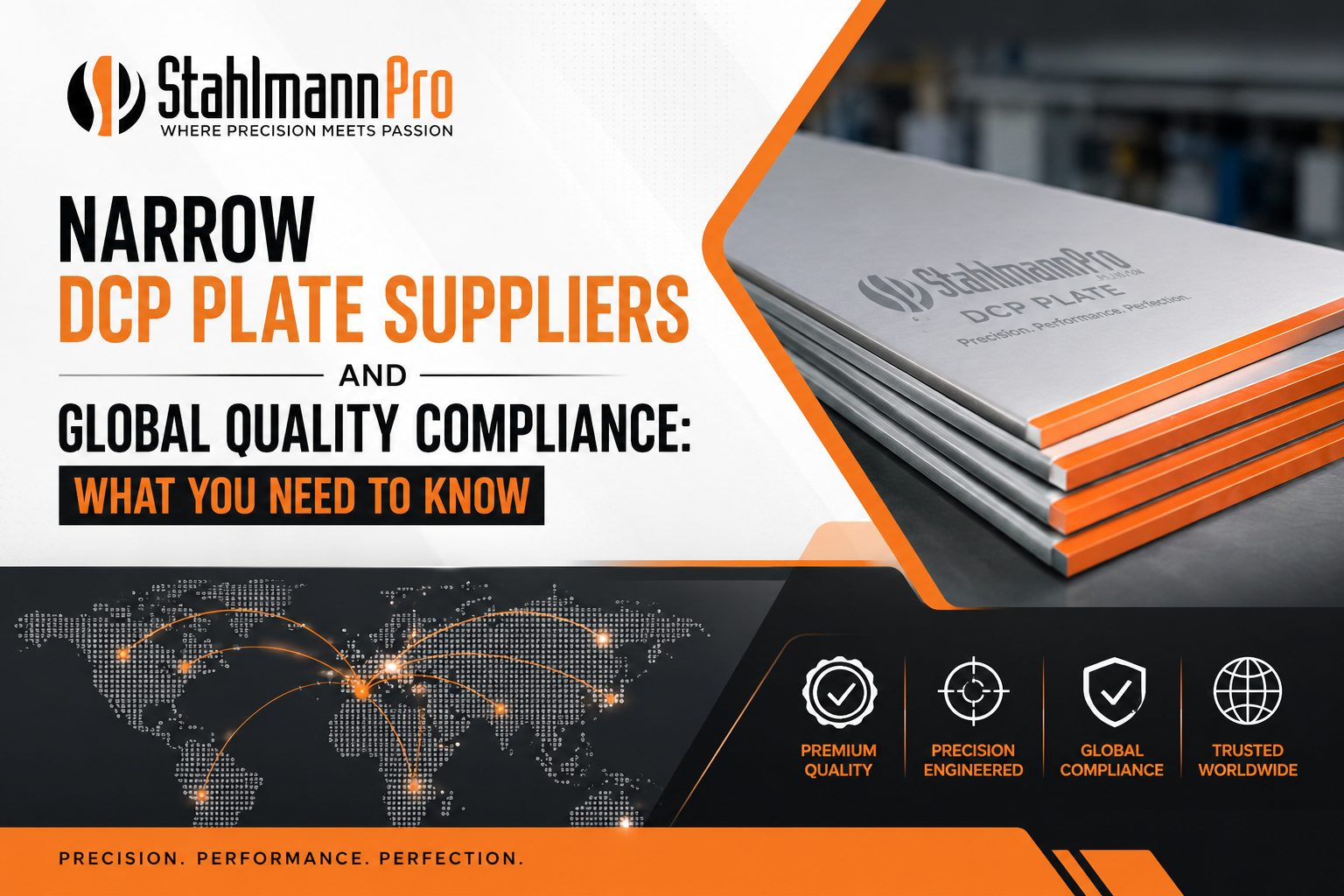
In the orthopedic trauma industry, implant quality is directly linked to patient safety, surgical outcomes, and regulatory compliance. Among the most widely used fixation devices, Narrow Dynamic Compression Plates (DCPs) play a critical role in the treatment of long-bone fractures, non-unions, and osteopenic bone conditions. As global demand for orthopedic implants continues to grow, healthcare providers, distributors, and procurement managers are placing greater emphasis on sourcing implants from reliable Narrow DCP plate suppliers that meet international quality standards.
However, not all suppliers follow the same manufacturing and compliance requirements. Choosing a supplier without proper certifications can lead to regulatory issues, product recalls, delayed approvals, and potential risks for patients. Understanding global quality compliance standards is therefore essential before selecting a Narrow DCP plate manufacturer or supplier.
This guide explores the importance of quality compliance, key certifications, supplier evaluation criteria, and emerging regulatory trends shaping the orthopedic implant industry in 2026 and beyond.
Understanding Narrow DCP Plates
A Narrow Dynamic Compression Plate (DCP) is an orthopedic implant designed to stabilize fractured bones through controlled compression across the fracture site. These plates are commonly used in the fixation of the humerus, femur, tibia, and other long bones. Their design enables surgeons to achieve optimal bone alignment while promoting faster healing and improved structural stability.
Modern Narrow DCP plates are typically manufactured from medical-grade stainless steel or titanium alloys, ensuring strength, durability, and biocompatibility. They are available in multiple hole configurations to accommodate varying fracture patterns and surgical requirements.
Why Quality Compliance Matters in Orthopedic Implants
Orthopedic implants remain inside the human body for extended periods, making quality assurance a non-negotiable requirement. A poorly manufactured implant can lead to complications such as:
- Implant failure
- Delayed bone healing
- Infection risks
- Revision surgeries
- Regulatory penalties for healthcare institutions
Studies evaluating orthopedic bone plates have shown that manufacturing quality standards and certifications significantly influence mechanical performance and reliability. Suppliers operating under recognized quality management systems generally demonstrate better consistency, traceability, and product performance.
For hospitals and distributors, working with compliant suppliers helps reduce legal risks while ensuring that implants meet international safety and performance expectations.
Key Global Certifications Every Narrow DCP Plate Supplier Should Have
ISO 13485 Certification
ISO 13485 is considered the gold standard for medical device quality management systems. It establishes requirements for design, manufacturing, risk management, documentation, traceability, and post-market monitoring of medical devices. Manufacturers operating under ISO 13485 must maintain rigorous quality controls throughout production.
When evaluating a Narrow DCP plate supplier, ISO 13485 certification should be one of the first credentials you verify.
CE Marking Under EU MDR
For suppliers targeting European markets, CE marking under the European Union Medical Device Regulation (EU MDR 2017/745) is essential. This certification demonstrates that the implant meets strict European safety, clinical evaluation, and performance requirements.
The MDR framework has significantly increased compliance requirements, making CE-certified manufacturers more attractive to global buyers.
FDA Registration and Compliance
For access to the United States market, manufacturers must comply with FDA regulatory requirements and quality system regulations. FDA compliance demonstrates adherence to stringent manufacturing controls and device safety requirements.
Additional Certifications
Leading orthopedic implant manufacturers often maintain additional certifications such as:
- ISO 9001 Quality Management
- MDSAP Certification
- GMP Compliance
- Country-specific medical device approvals
These certifications further strengthen supplier credibility and global market acceptance.
Critical Factors to Evaluate When Choosing a Narrow DCP Plate Supplier
1. Manufacturing Expertise
Experience matters significantly in orthopedic implant production. Suppliers with established manufacturing facilities, dedicated R&D teams, and proven export histories are generally better equipped to maintain consistent quality standards. Many globally recognized manufacturers export implants to dozens of countries while maintaining strict quality protocols.
2. Material Quality
The quality of raw materials directly impacts implant performance. Reliable suppliers use:
- Medical-grade titanium alloys
- Surgical stainless steel
- Certified biocompatible materials
Material traceability should be available for every production batch to ensure compliance and accountability.
3. Quality Control Processes
A trustworthy supplier should implement multi-stage inspection procedures throughout production. Quality checks should include:
- Raw material verification
- Precision machining inspections
- Surface finishing evaluation
- Mechanical testing
- Sterility validation where applicable
Comprehensive quality control minimizes defects and ensures consistency across product batches.
4. Documentation and Traceability
Modern regulatory frameworks require complete documentation for medical devices. Suppliers should provide:
- Product certificates
- Technical files
- Material certificates
- Batch traceability records
- Risk management documentation
Strong documentation simplifies regulatory approvals and procurement audits.
5. Global Distribution Experience
Suppliers serving multiple international markets are often more familiar with evolving regulatory requirements. Their experience can help distributors navigate import regulations, registrations, and compliance procedures more effectively.
The Growing Impact of EU MDR on Orthopedic Implant Suppliers
One of the most significant regulatory developments in recent years has been the implementation of the European Medical Device Regulation (MDR).
Compared to previous regulations, MDR requires:
- Enhanced clinical evidence
- Comprehensive technical documentation
- Improved post-market surveillance
- Unique Device Identification (UDI)
- Stronger risk management systems
As a result, suppliers without robust compliance frameworks may struggle to maintain market access within Europe. Buyers increasingly prioritize suppliers that have successfully transitioned to MDR compliance.
Emerging Trends in Narrow DCP Plate Manufacturing
Advanced Titanium Technologies
Titanium implants continue gaining popularity due to their excellent biocompatibility, corrosion resistance, and strength-to-weight ratio. Many modern Narrow DCP plates are now manufactured using advanced titanium alloys that support improved patient outcomes.
Enhanced Traceability Systems
Digital traceability systems are becoming increasingly common. Manufacturers are implementing advanced tracking mechanisms that allow every implant to be traced throughout its lifecycle.
Risk-Based Quality Management
Modern quality systems emphasize proactive risk management rather than reactive problem-solving. Standards such as ISO 14971 are increasingly integrated into implant manufacturing processes to identify and mitigate risks early.
Global Harmonization of Standards
Regulatory bodies worldwide are moving toward greater alignment of medical device regulations. This trend simplifies international trade while encouraging higher quality standards across the orthopedic industry.
Warning Signs of Non-Compliant Suppliers
Not every supplier claiming international quality standards can provide adequate proof. Procurement teams should be cautious if a supplier:
- Cannot provide valid certification documents
- Lacks traceability systems
- Offers unusually low pricing without explanation
- Has limited quality documentation
- Cannot demonstrate compliance with ISO 13485
- Fails to provide clinical or technical support
These warning signs may indicate potential quality risks that could impact patient safety and business operations.
How Compliance Benefits Hospitals and Distributors
Partnering with certified Narrow DCP plate suppliers offers numerous advantages:
Improved Patient Safety
Certified implants undergo rigorous testing and quality verification, reducing the risk of device-related complications.
Regulatory Confidence
Healthcare institutions can confidently meet procurement requirements and regulatory obligations.
Reduced Legal Risks
Using compliant implants minimizes exposure to liability issues and product-related claims.
Better Long-Term Partnerships
Reliable suppliers provide ongoing support, regulatory updates, technical documentation, and consistent product availability.
Conclusion
The global orthopedic implant market continues to evolve, with regulatory compliance becoming more important than ever. For hospitals, distributors, and procurement professionals, selecting the right Narrow DCP plate supplier requires more than simply comparing prices. Quality certifications, manufacturing standards, documentation, traceability, and regulatory compliance should all be key decision-making factors.
Suppliers that maintain ISO 13485 certification, CE MDR compliance, FDA registrations, and robust quality management systems are better positioned to deliver safe, reliable, and globally accepted orthopedic implants. By prioritizing compliance and quality, healthcare organizations can improve patient outcomes while ensuring long-term business success in an increasingly regulated market.
Frequently Asked Questions (FAQs)
What is a Narrow DCP plate used for?
A Narrow Dynamic Compression Plate is used for the fixation of fractures, non-unions, and osteopenic bone conditions, particularly in long bones such as the femur, tibia, and humerus.
Why is ISO 13485 important for orthopedic implant suppliers?
ISO 13485 ensures that manufacturers follow internationally recognized medical device quality management standards, improving product consistency, safety, and traceability.
What certifications should a Narrow DCP plate supplier have?
The most important certifications include ISO 13485, CE Marking under EU MDR, FDA compliance, ISO 9001, and other relevant medical device approvals.
How can I verify a supplier’s compliance status?
Request copies of certification documents, audit reports, technical files, and product traceability records. Always verify certification validity through authorized bodies.
Does CE marking guarantee product quality?
CE marking indicates compliance with European regulatory requirements, including safety, performance, and clinical evaluation standards, making it a strong indicator of quality compliance.
Are titanium Narrow DCP plates better than stainless steel plates?
Titanium plates offer excellent biocompatibility, corrosion resistance, and lower weight, while stainless steel plates provide strong mechanical performance and cost efficiency. The best choice depends on clinical requirements.
