
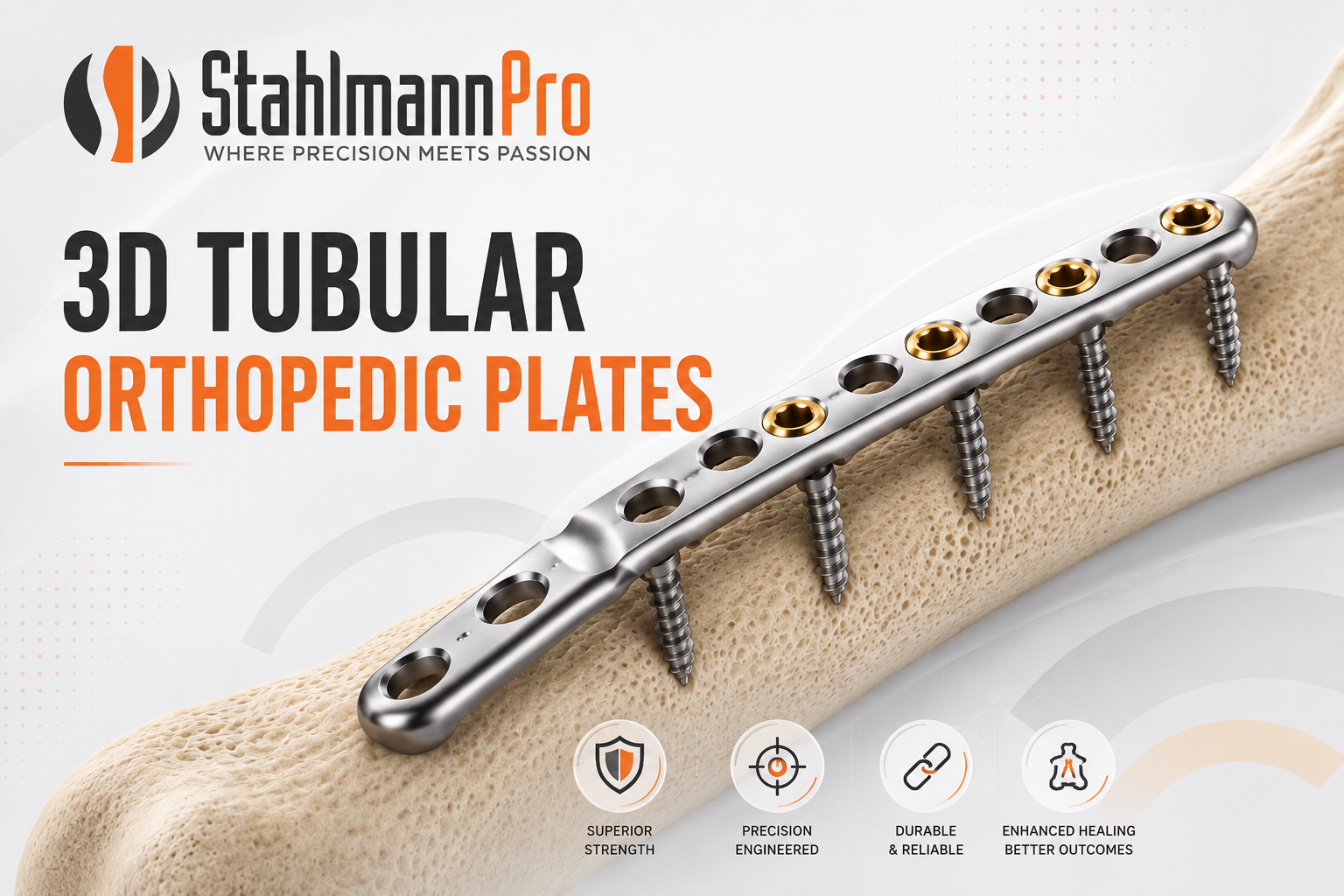
Orthopedic surgery has changed dramatically over the past decade. Surgeons no longer rely solely on traditional metal fixation devices that offer limited flexibility and generic sizing. Today, advanced implant systems are reshaping trauma care, sports medicine, and reconstructive surgery. Among these innovations, 3D Tubular Orthopedic Plates stand out as one of the most effective and reliable solutions for fracture fixation and bone stabilization. These plates are specifically engineered to provide superior anatomical fitting, improved load distribution, and enhanced patient recovery outcomes. Whether used in trauma centers, sports injury clinics, or advanced orthopedic hospitals, they are becoming an essential part of modern surgical practice.
The increasing popularity of 3D orthopedic implants is not accidental. The global orthopedic 3D printed implant market is experiencing rapid growth due to increasing demand for patient-specific implants and advanced surgical technologies. Industry reports indicate that the market may surpass billions of dollars within the next decade, with annual growth rates reaching over 14% in some sectors. Surgeons and healthcare providers are actively seeking implants that can improve precision, reduce surgery time, and enhance long-term outcomes. This is where 3D tubular plates truly shine.
Think about the human skeleton like the framework of a skyscraper. When a supporting beam breaks, the repair material must not only be strong but also perfectly shaped to handle pressure and movement. Traditional flat plates often struggle with anatomical adaptation, but 3D tubular orthopedic plates are designed to mirror natural bone contours. This results in better stability, reduced tissue irritation, and quicker rehabilitation for patients. It is a technological leap that combines biomechanics, metallurgy, and digital engineering into one compact surgical solution.
Understanding 3D Tubular Orthopedic Plates
What Makes 3D Tubular Plates Different
At first glance, a 3D tubular orthopedic plate may look similar to a standard fixation plate, but the engineering behind it is far more sophisticated. Traditional orthopedic plates are often flat or minimally contoured, requiring surgeons to manually bend and shape them during surgery. That process can increase operating time and reduce implant integrity. In contrast, 3D tubular plates are pre-contoured using advanced digital modeling techniques to match the anatomical structure of bones more naturally.
The “3D” aspect refers to the multidimensional design that accommodates bone curvature and load distribution. These plates provide stronger fixation because they align more accurately with skeletal anatomy. This precision reduces stress concentration on both the implant and the bone. As a result, patients often experience improved healing and fewer post-operative complications. In many trauma cases, stability is everything. A poorly fitted implant can lead to delayed healing, discomfort, or even implant failure.
Tubular orthopedic plates are especially valuable in fractures involving small or curved bones, such as the fibula, clavicle, radius, ulna, or metatarsals. The tubular structure enhances torsional resistance while maintaining a lightweight profile. Surgeons appreciate how these implants simplify procedures and reduce the need for excessive intraoperative adjustments. Modern hospitals are increasingly adopting anatomically contoured fixation systems because they streamline surgeries and improve patient satisfaction.
Evolution of Orthopedic Plate Technology
Orthopedic fixation has come a long way from basic stainless steel plates developed decades ago. Early implants focused primarily on rigidity, often ignoring biological compatibility and anatomical alignment. While these systems provided mechanical stability, they frequently caused irritation, soft tissue damage, and stress shielding. Over time, orthopedic science evolved toward more biologically friendly implant designs that encourage natural healing.
The introduction of titanium alloys was a game changer. Titanium offered high strength with lower weight and significantly better biocompatibility than conventional materials. Surgeons quickly recognized the benefits of implants that could remain stable without causing excessive inflammation or corrosion. As medical imaging and computer-assisted design advanced, manufacturers began creating implants tailored to anatomical structures instead of relying on generic shapes.
Today’s 3D tubular orthopedic plates represent the fusion of biomechanics and digital precision. Advanced CAD software, CNC machining, and even additive manufacturing technologies are now used to produce implants with microscopic accuracy. Research also shows that 3D-printed and anatomically optimized orthopedic implants improve osseointegration and surgical outcomes. This shift is transforming orthopedic surgery from a standardized practice into a more personalized and patient-focused discipline.
Materials Used in 3D Tubular Orthopedic Plates
Titanium Alloy Advantages
When discussing high-performance orthopedic implants, titanium alloy almost always enters the conversation. There is a good reason for that. Titanium alloys combine exceptional mechanical strength with outstanding biological compatibility, making them ideal for long-term implantation. In the world of 3D tubular orthopedic plates, titanium has become one of the most preferred materials by surgeons and manufacturers alike.
One of titanium’s biggest advantages is its lightweight nature. Patients benefit from implants that provide strong support without adding unnecessary bulk or pressure. Titanium also possesses remarkable corrosion resistance, which is critical because implants remain inside the body for extended periods. Exposure to bodily fluids can degrade inferior metals over time, but titanium maintains its structural integrity exceptionally well.
Another important factor is osseointegration. Titanium supports better interaction between bone tissue and implant surfaces, encouraging stable bone healing. Imagine planting roots into fertile soil instead of rocky ground. That is essentially how titanium behaves within the body. It creates an environment where bone cells can attach and grow more effectively. This contributes to long-term implant success and reduces the likelihood of loosening or rejection.
Stainless Steel Versus Titanium
Although titanium dominates the premium implant market, stainless steel still plays a role in orthopedic surgery. Stainless steel implants are generally more affordable and offer strong mechanical performance. For some temporary fixation procedures or cost-sensitive healthcare systems, stainless steel remains a practical option. However, when comparing it directly with titanium in advanced orthopedic applications, titanium usually comes out ahead.
| Feature | Titanium Alloy | Stainless Steel |
|---|---|---|
| Weight | Lightweight | Heavier |
| Corrosion Resistance | Excellent | Moderate |
| Biocompatibility | Superior | Good |
| MRI Compatibility | Better | Limited |
| Flexibility | Higher Elasticity | More Rigid |
| Long-Term Performance | Excellent | Good |
Titanium’s flexibility is particularly important because it mimics the natural elasticity of bone more closely than stainless steel. Excessively rigid implants can create stress shielding, where the implant absorbs too much load and prevents proper bone stimulation. Titanium helps maintain a healthier balance between implant support and natural bone loading.
Key Features of 3D Tubular Orthopedic Plates
Anatomical Contouring
One of the standout features of 3D tubular orthopedic plates is their anatomical contouring. Traditional implants often require manual bending during surgery, which increases operation time and risks weakening the implant structure. Anatomically pre-shaped plates eliminate much of that challenge. They fit the natural bone surface more accurately, reducing surgical complexity and improving fixation precision.
This design advantage becomes especially important in complex fractures where alignment is critical. A plate that hugs the bone properly distributes forces more evenly and minimizes soft tissue irritation. Surgeons can position the implant with greater confidence, which contributes to shorter operation times and more predictable outcomes.
High Strength and Stability
Orthopedic implants must endure immense mechanical stress. Every step, twist, and movement places pressure on the fixation system. 3D tubular plates are engineered to resist bending, torsion, and compression while maintaining structural integrity. Their tubular geometry enhances strength without significantly increasing implant thickness.
This balance between strength and lightweight performance is vital in orthopedic surgery. Patients need implants that are durable enough to support healing but comfortable enough for long-term mobility. Advanced plate geometry and locking screw systems further improve fixation stability, especially in osteoporotic or fragile bone conditions.
Corrosion Resistance
Corrosion may sound like a problem limited to bridges and industrial machinery, but it is equally important in medical implants. The human body contains moisture, salts, and biochemical compounds that can degrade low-quality metals over time. High-grade titanium and stainless steel implants are specifically engineered to resist these corrosive effects.
Corrosion resistance ensures implant longevity and minimizes the risk of inflammatory reactions. Patients undergoing fracture fixation often expect implants to remain functional for years, sometimes permanently. High-quality 3D tubular plates maintain their integrity even under demanding physiological conditions.
Applications in Modern Orthopedic Surgery
Fracture Fixation
Fracture fixation remains the primary application for 3D tubular orthopedic plates. These implants are widely used in trauma surgery to stabilize broken bones and restore anatomical alignment. Their design makes them particularly suitable for fractures involving long bones, small bones, and anatomically curved structures.
Modern trauma care prioritizes minimally invasive techniques whenever possible. Anatomically contoured plates help surgeons achieve stable fixation with smaller incisions and reduced tissue disruption. This contributes to less post-operative pain and faster recovery.
Trauma and Sports Injuries
Sports medicine has become one of the fastest-growing orthopedic specialties worldwide. Athletes demand rapid recovery and reliable performance after injury. Whether dealing with clavicle fractures, wrist injuries, or ankle trauma, surgeons increasingly rely on advanced fixation systems to restore mobility quickly.
3D tubular plates provide the stability needed for early rehabilitation. Athletes benefit from implants that support aggressive physiotherapy while minimizing the risk of displacement. In high-performance sports, every week of recovery matters, making advanced orthopedic implants a valuable tool.
Pediatric Orthopedic Procedures
Children present unique orthopedic challenges because their bones are still growing. Implant systems used in pediatric surgery must balance stability with biological adaptability. Lightweight and anatomically designed plates are especially useful in these situations.
Pediatric surgeons often prefer implants that minimize tissue irritation and allow natural bone growth patterns. Modern tubular plates provide effective fixation while reducing the need for bulky hardware. This improves comfort and lowers complication risks in younger patients.
Manufacturing Process of 3D Tubular Plates
CNC Machining and Precision Engineering
Manufacturing orthopedic implants is not like producing ordinary metal products. The process demands microscopic precision and strict quality control. CNC machining technology allows manufacturers to create implants with extremely tight tolerances, ensuring consistent quality and reliability.
Computer-controlled machining improves implant symmetry, screw alignment, and surface finishing. Precision engineering also helps reduce manufacturing defects, which is critical in medical applications where patient safety is non-negotiable.
Role of 3D Printing Technology
Additive manufacturing is reshaping orthopedic implant production. 3D printing allows manufacturers to create highly complex implant geometries that were previously impossible using traditional machining methods. Patient-specific implants and porous structures designed for enhanced bone integration are becoming increasingly common.
Industry analysts predict significant growth in 3D orthopedic manufacturing over the coming years due to rising demand for customized solutions and advanced surgical technologies. The future of orthopedic implants will likely involve even greater personalization, enabling surgeons to select implants tailored precisely to individual anatomy.
Global Market Trends in Orthopedic Implants
Rising Demand for Customized Implants
Healthcare is moving steadily toward personalization. Patients no longer want one-size-fits-all treatments, especially in complex orthopedic procedures. Customized implants improve anatomical matching, surgical efficiency, and patient outcomes. This demand is fueling rapid growth in the orthopedic implant industry.
The orthopedic 3D printed device market is projected to grow at a strong annual rate due to increasing adoption of patient-specific solutions and technological advancements. Hospitals and surgical centers are investing heavily in digital planning systems and advanced implant technologies to remain competitive.
Future Growth of 3D Orthopedic Solutions
The future of orthopedic surgery looks incredibly promising. Artificial intelligence, robotic surgery, and additive manufacturing are converging to create smarter and more efficient treatment systems. Researchers are already exploring implants with enhanced surface coatings, bioactive materials, and improved osseointegration capabilities.
As technology advances, 3D tubular orthopedic plates will likely become even more sophisticated. Future implants may include smart monitoring capabilities, antimicrobial coatings, and fully customized patient-specific designs generated directly from CT scans. Orthopedic surgery is rapidly entering an era where implants are not just mechanical supports but highly engineered biological solutions.
Choosing the Right Orthopedic Implant Manufacturer
Selecting the right implant manufacturer is critical for hospitals, distributors, and surgeons. Quality certifications, manufacturing standards, and material sourcing all play major roles in implant reliability. Reputable manufacturers invest heavily in R&D, precision engineering, and quality assurance to ensure consistent performance.
A strong orthopedic manufacturer should offer:
- ISO-certified production facilities
- High-grade titanium alloy materials
- Advanced CNC and 3D printing capabilities
- Comprehensive implant testing
- Reliable global distribution support
Manufacturers specializing in trauma and sports medicine implants often provide broader product portfolios, including locking plates, intramedullary nails, screws, and customized fixation systems. Hospitals increasingly prefer suppliers capable of delivering complete orthopedic solutions under one brand.
Conclusion
3D Tubular Orthopedic Plates represent a major advancement in orthopedic trauma care and reconstructive surgery. Their anatomically contoured design, lightweight structure, and superior fixation capabilities make them highly effective for treating fractures and complex orthopedic conditions. As healthcare shifts toward personalized medicine, these implants are becoming essential tools for surgeons seeking precision and improved patient outcomes.
The combination of titanium alloy technology, digital engineering, and 3D manufacturing has opened new possibilities in orthopedic surgery. Patients benefit from faster recovery, reduced complications, and improved long-term comfort. Surgeons benefit from streamlined procedures and better implant performance. The global orthopedic implant market continues to grow rapidly as hospitals adopt more advanced fixation systems and customized surgical solutions.
The future of orthopedic innovation is not just about stronger implants. It is about smarter, more adaptive, and more patient-focused solutions. In that evolving landscape, 3D tubular orthopedic plates are positioned to play a central role in modern trauma and reconstructive care.
FAQs
1. What are 3D tubular orthopedic plates used for?
They are primarily used for fracture fixation and bone stabilization in orthopedic surgeries involving trauma, sports injuries, and reconstructive procedures.
2. Why is titanium preferred for orthopedic implants?
Titanium offers excellent strength, corrosion resistance, lightweight performance, and superior biocompatibility compared to many other metals.
3. Are 3D tubular plates better than traditional plates?
Yes, they provide improved anatomical fitting, stronger stability, reduced surgical adjustments, and better patient comfort.
4. Can 3D orthopedic implants be customized for patients?
Yes, modern manufacturing technologies allow implants to be customized according to patient anatomy using digital imaging and 3D printing.
5. How long do orthopedic plates remain in the body?
Some implants remain permanently, while others may be removed after complete bone healing depending on the patient’s condition and surgeon’s recommendation.
